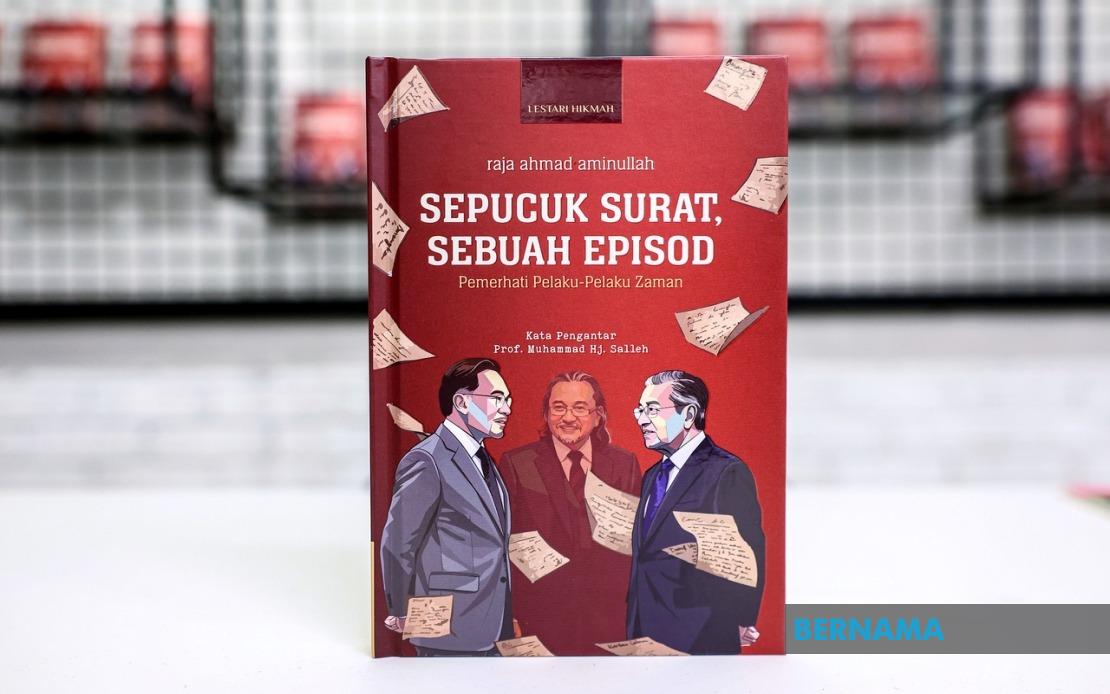
Cultural luminary Raja Ahmad Aminullah, affectionately known as Pak Engku, has released a distinctive historical document that transcends conventional political memoir. His latest publication, "Sepucuk Surat Sebuah Episod: Rakaman Pelaku-Pelaku Zaman", compiles personal correspondence and exchanges involving some of Malaysia's most consequential public figures, providing readers with an intimate window into the relationships and observations that influenced the nation's trajectory during a formative period.
The book launch, orchestrated by the National Book Council of Malaysia (MBKM) director Mohd Khair Ngadiron on July 23, drew a diverse gathering of artists, scholars, literary practitioners, and associates spanning Raja Ahmad's decades-long career in cultural commentary. Rather than positioning itself as a partisan political tract, the work deliberately adopts a socio-cultural framework, grounded in the author's sustained observations of Malaysian society's evolution over approximately 25 years.
Raja Ahmad's approach represents a deliberate methodological choice. He emphasizes that his scholarly interests centre on documenting social and cultural phenomena rather than engaging with electoral politics or institutional power struggles. This distinction carries significance for understanding how the volume might be received across Malaysia's ideologically fragmented landscape. By framing the letters and interactions as documentary evidence of a particular historical moment rather than as endorsements or critiques of individual leaders, Raja Ahmad creates intellectual space for readers to form independent assessments.
The author explicitly clarifies that the publication does not constitute biographical celebration of any particular figure. Whether discussing historical Prime Minister Tun Dr Mahathir Mohamad or prominent opposition leader Datuk Seri Anwar Ibrahim, Raja Ahmad positions himself as chronicler rather than advocate. This methodology echoes approaches employed in oral history and archival scholarship, where the collector's role involves preservation rather than interpretation. The author notes that his own position within these historical narratives remains decidedly secondary, emphasizing that the volume's significance lies in its evidentiary value for future scholarly analysis.
For Malaysian readers interested in the nation's political and social history, such primary documentation offers valuable material often absent from official records or mainstream biographical accounts. Personal correspondence frequently reveals motivations, uncertainties, and interpersonal dynamics that formal institutional records obscure. The letters likely illuminate how prominent figures communicated privately about public challenges, providing texture to understanding decision-making processes during a crucial developmental period in post-independence Malaysia.
The publication's timing and positioning carry implications for contemporary Malaysian intellectual discourse. As the nation confronts recurring questions about institutional governance, leadership integrity, and national direction, historical documentation of how previous generations of leaders engaged with one another acquires fresh relevance. Readers may discern patterns in how Malaysian elites navigate factional disagreements, accommodate competing ideologies, or construct consensus around national priorities—patterns potentially informative for current policymaking discussions.
Raja Ahmad's background as cultural commentator and intellectual figure provides particular credibility for this archival enterprise. His consistent focus on societal observation rather than partisan advocacy has positioned him as a trusted documentary voice across Malaysia's varied cultural and ideological constituencies. This reputation likely enhances the volume's reception among serious readers who value sources perceived as analytically balanced and historically conscientious.
The physical publication details underscore accessibility considerations important for reaching diverse Malaysian readers. Published by Lestari Hikmah, the 169-page volume appears in both softcover (RM30) and hardcover (RM80) formats, with distribution through conventional bookstores supplemented by online channels. This multi-format, multi-channel approach recognizes Malaysia's varied reading populations and purchasing preferences, from university libraries and institutional collections to individual collectors and casual readers.
For Southeast Asian studies scholars and students, the volume potentially serves broader regional purposes. Malaysia's experience navigating post-colonial governance, managing ethnic and religious diversity, establishing democratic institutions, and balancing competing development objectives carries instructive relevance throughout Southeast Asia. Documentary sources revealing how Malaysian leaders grappled with such challenges offer comparative context for understanding similar processes elsewhere in the region, from Indonesia's democratic consolidation to Singapore's governance model.
The work's categorization as socio-cultural rather than strictly political documentation invites interdisciplinary engagement. Historians examining institutional development, sociologists studying elite networks and communications patterns, literary scholars analyzing epistolary conventions, and cultural analysts investigating public figure self-representation all find potential research value in such correspondence. This scholarly portability extends the volume's influence beyond political historians alone.
Raja Ahmad's insistence that readers approach the material as historical documentation requiring independent analytical engagement rather than as conclusive narrative reflects intellectual maturity appropriate for managing sensitive contemporary figures. By declining to offer interpretive frameworks that might unduly influence reader understanding, he positions the correspondence as raw material for scholarly analysis—an approach that enhances rather than diminishes the work's long-term historical utility.
The publication ultimately represents a significant contribution to Malaysian archival culture. As national memory institutions and scholars increasingly recognize personal correspondence as crucial historical material, such privately compiled collections bridge gaps between official archives and lived experience. Raja Ahmad Aminullah's decision to share these materials with the broader Malaysian public, supported by established publishing infrastructure and institutional cultural bodies, strengthens the nation's collective historical consciousness at a moment when such documentation increasingly requires deliberate preservation efforts.

