Cuba's President Miguel Diaz-Canel fired back this week at a fresh round of American sanctions, characterizing the move as part of a coordinated international effort to suppress leftist political movements globally. Speaking via social media platform X, the Cuban leader drew explicit parallels to the McCarthy era of 1950s America, when the US government pursued widespread campaigns targeting alleged communist sympathizers. The comparison underscores how Havana views current US policy as fundamentally rooted in ideological hostility rather than legitimate security concerns, a narrative that resonates with left-leaning governments and movements across Latin America and beyond.
Diaz-Canel's rhetoric extended further into historical comparison, invoking what he characterized as echoes of Nazi fascism and the sinister Operation Condor, the covert intelligence and assassination programme that ravaged Latin America during the 1970s and 1980s. His framing suggests that contemporary geopolitical alignments, particularly those involving far-right movements and transnational conservative coalitions, represent patterns of political aggression reminiscent of darker chapters in modern history. By positioning the current ideological struggle within this historical continuum, the Cuban president attempts to construct a moral equivalency between past atrocities and present-day policy decisions, appealing to regional sensibilities shaped by decades of authoritarian military rule.
The Cuban government interprets the sanctions regime as merely a pretext for expanding what it views as American imperial intervention. Officials question whether allegations targeting left-wing governments serve as justification for intensifying economic pressure and military posturing rather than addressing genuine governance concerns. This framing allows Havana to reposition itself as a victim of systematic harassment rather than acknowledging domestic policy failures, a strategic narrative that maintains political cohesion domestically and solidifies alignment with sympathetic international actors.
Beyond the rhetorical posturing, Diaz-Canel attributed a sweeping catalogue of global crises to American and allied actions, ranging from the Gaza conflict to alleged extrajudicial killings, migration persecution, and the bombing of civilian infrastructure in Iran. The Cuban leader characterizes these phenomena as manifestations of what he terms the "philosophy of dispossession" guiding far-right transnational movements, arguing that genuine threats to international peace originate from conservative and nationalist political forces rather than from Cuba itself. This wholesale reorientation of blame aims to redirect global attention and moral condemnation away from Havana's domestic governance record.
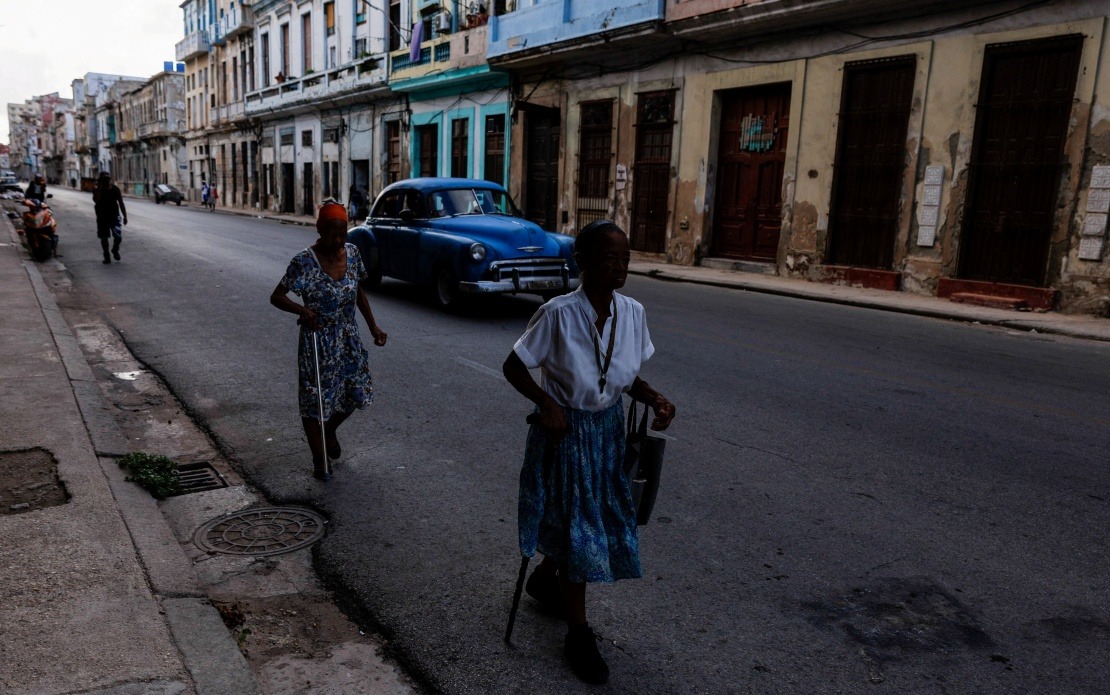
The timing of these statements occurs against the backdrop of Cuba's deepest economic contraction in generations, creating domestic pressure that Havana must manage carefully. Official statistics reveal that the Cuban economy contracted significantly during the first half of 2026, with the situation exacerbated by catastrophic energy deficits. Daily power outages have stretched to twenty hours in many regions, with the electricity shortfall reaching 1,955 megawatts, effectively paralyzing industrial production and eroding public confidence in government competence.
Cuban authorities consistently attribute these economic ravages to American sanctions rather than to structural inefficiencies or policy failures. Government statements emphasize how Washington's measures have disrupted traditional oil supply chains, successfully pressured international corporations to limit commercial engagement with the island, and effectively strangled Cuba's capacity to access global credit markets. While these external constraints certainly impose real hardships, the emphasis on foreign responsibility deflects scrutiny from domestic mismanagement and the regime's inability to adapt to post-Cold War economic realities.
The Trump administration has progressively tightened the sanctions framework through executive action. In May, President Donald Trump signed an order targeting Cuban officials and government entities, justified on grounds of repression and threats to American security and foreign policy interests. This action built upon earlier measures taken in January, when Trump declared a national emergency and authorized tariff mechanisms against any nation supplying or selling oil to Cuba, effectively weaponizing American trade policy to isolate the island economically.
For Malaysian and Southeast Asian observers, Cuba's situation illuminates broader tensions within the global system regarding how major powers deploy economic coercion. The sanctions architecture that Washington applies to Havana reflects similar mechanisms employed against other geopolitically disfavoured nations, raising questions about the effectiveness and legitimacy of unilateral economic warfare. As smaller nations navigating relationships between competing great powers, Southeast Asian countries witness how economic interdependence can become a vulnerability when political relationships deteriorate.
The Cuban government's strategy of framing its crisis as fundamentally externally imposed rather than internally generated carries implications for how other left-leaning governments in the region might approach their own economic challenges and international alignments. The resonance of Cuba's narrative within Latin American and anti-Western circles demonstrates how Cold War historical memory continues shaping contemporary political discourse and coalition-building among nations sceptical of American hegemony.
Looking forward, the sustainability of Cuba's economic model under intensified American pressure remains deeply uncertain. Whether Havana can mobilize sufficient international support and alternative trade relationships to offset American sanctions, or whether domestic economic deterioration will eventually force policy recalibration, remains an open question with regional ramifications. The island's experience serves as a cautionary case study for how geopolitical isolation compounds domestic governance challenges, a lesson potentially relevant across Southeast Asia's own complex network of international relationships.

