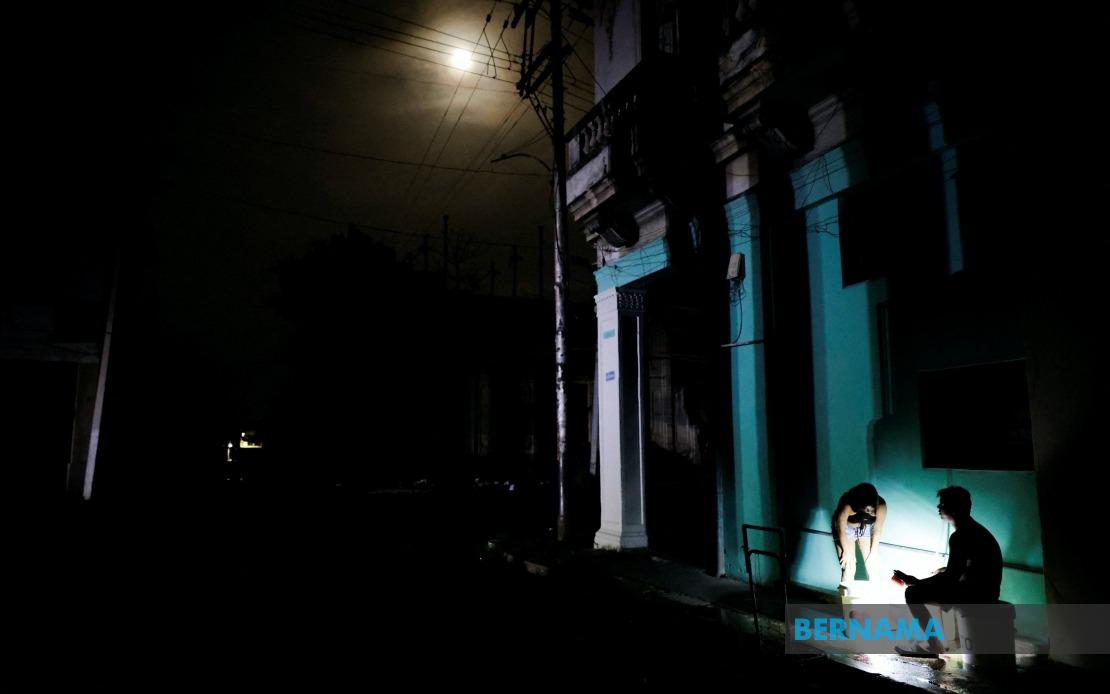
Cuba's electrical system suffered a complete breakdown, leaving the entire nation without power in what represents an escalating crisis for the Caribbean island. The state-owned electricity utility confirmed that the national energy grid had collapsed, resulting in a countrywide blackout reported on Sunday. While officials acknowledged the infrastructure failure, they released no statement regarding the underlying cause of the grid's breakdown, leaving residents and international observers to speculate about the technical or systemic issues behind the failure.
This latest outage marks the first blackout recorded during August, but it arrives as part of a troubling pattern. Three separate nationwide power failures occurred throughout July, suggesting that Cuba's energy infrastructure is approaching critical fragility. The frequency and scale of these incidents underscore the magnitude of the challenge facing Caribbean energy systems, particularly those dependent on aging infrastructure and limited fuel supplies. For a nation that already struggled with rolling blackouts throughout much of 2023, this renewed wave of complete grid failures represents a significant deterioration in service reliability.
The recurring blackouts have fundamentally altered how Cubans navigate daily existence. Households and businesses have adapted to extreme electricity uncertainty by operating intermittently, powering essential appliances only during hours when electricity becomes available. Residents time their cooking, laundry, and bathing around electricity availability rather than scheduling according to personal preference. During summer months, when air conditioning becomes a health concern in the tropical climate, families endure sweltering conditions while waiting for power restoration. Internet access and digital communication, increasingly essential for work and commerce, remain hostage to unpredictable power availability.
The government under Prime Minister Manuel Marrero Cruz has acknowledged the severity of the situation and introduced what officials describe as reform measures intended to address energy shortages. In July, Marrero announced that authorities had formally approved Cuba's first foreign investment initiative specifically designed to import and distribute fuel. This represents a notable policy shift for a nation traditionally resistant to foreign capital participation in strategic sectors. The decision signals recognition that domestic resources alone cannot satisfy the country's energy demands.
Beyond fuel import measures, the government has authorized nearly 200 private businesses to participate in wholesale fuel distribution operations. This represents an unprecedented expansion of private sector involvement in energy commerce, a dramatic departure from Cuba's socialist economic model. The authorization to permit private entities into fuel wholesale markets suggests officials believe competition and market mechanisms may alleviate supply constraints that state monopolies have struggled to address.
Economic liberalization has also extended to tourism, another sector critical to Cuba's foreign exchange earnings. Lawmakers have approved measures enabling private investment in tourism infrastructure and services, recognizing that state-controlled tourism enterprises require capital infusion and operational flexibility to compete internationally. These reforms collectively indicate that Cuban leadership views gradual opening of state-dominated sectors as necessary to address multiple economic crises simultaneously.
Yet Marrero has tempered expectations about reform timelines. When introducing these measures in July, the Prime Minister cautioned that results would materialize gradually and incrementally. He explicitly framed the current moment as the beginning of the most critical phase, and simultaneously acknowledged it would be the most difficult. This candid assessment recognizes that policy changes require years to produce measurable improvements in actual power supply and consumer welfare. Government officials have essentially warned citizens that even with reforms now underway, energy challenges will persist for an extended period.
The blackouts carry broader implications for regional energy security across the Caribbean. Cuba's crisis illustrates vulnerabilities endemic to island economies with limited fuel production capacity and constrained access to international markets. Other Caribbean nations dependent on imported petroleum and aging electrical infrastructure face similar risks, making Cuba's experience a cautionary case study. Regional energy planners increasingly recognize that renewable energy development and grid modernization require urgent investment to prevent comparable systemic failures.
For Malaysia and Southeast Asian observers, Cuba's experience offers insights into how energy infrastructure neglect can cascade into societal disruption. The Cuban case demonstrates that even politically resilient governments face legitimacy challenges when unable to provide basic services like electricity. It underscores why energy sector investment, grid modernization, and fuel supply diversification rank among fundamental government responsibilities. Malaysia's relatively stable power supply reflects decades of investment in generation capacity, transmission networks, and diversified fuel sources—advantages that cannot be taken for granted.
The fundamental challenge confronting Cuban policymakers involves reconciling immediate energy supply deficits with long-term structural reform. Foreign investment and private sector participation in fuel distribution may gradually improve supply chains, but these measures cannot instantly resolve the gap between generation capacity and national demand. The government's explicit acknowledgment that reforms require time suggests recognition that political stability depends on managing public expectations through transparent communication rather than overpromising rapid solutions.
Cuba's energy crisis ultimately reflects a state facing multiple simultaneous crises—aging infrastructure, limited capital for modernization, constrained fuel access, and economic stagnation. The blackouts that increasingly characterize daily life serve as visible manifestations of these deeper structural problems. Whether the government's partial embrace of market mechanisms and foreign investment will prove sufficient to arrest infrastructure deterioration remains uncertain, but officials clearly believe status quo policies guarantee continued degradation and broader economic collapse.

