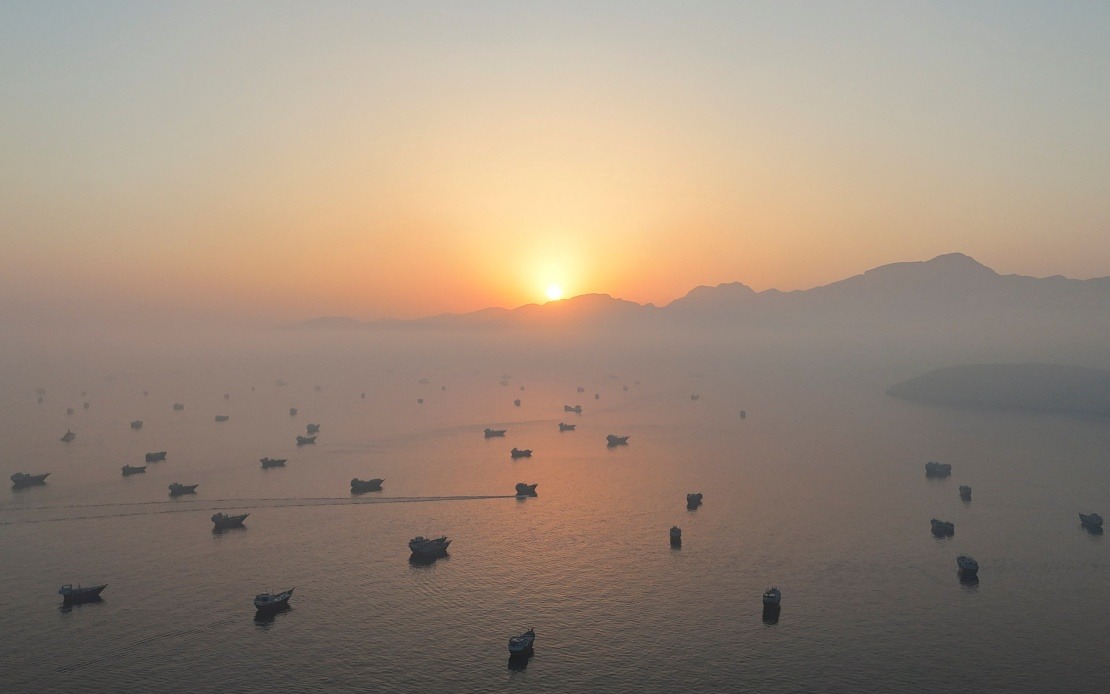
A coalition of twelve major trading nations has thrown its weight behind recent diplomatic moves between the United States and Iran, signalling broad international support for efforts to restore secure passage through one of the world's most strategically vital waterways. The Comprehensive and Progressive Agreement for Trans-Pacific Partnership issued a joint ministerial statement following a virtual meeting on Friday, in which members explicitly endorsed steps aimed at reopening the Strait of Hormuz and safeguarding unimpeded maritime commerce in a region that handles roughly one-third of the world's seaborne oil trade.
The collective endorsement carries particular significance as it reflects consensus among major Asia-Pacific economies that freedom of navigation through the Hormuz Strait is essential to global economic stability. For Malaysia and other Southeast Asian nations, which depend heavily on imported energy and export-driven manufacturing, any disruption to the roughly 21 million barrels of oil passing daily through these waters poses an immediate economic threat. The ministerial statement underscored this vulnerability by explicitly acknowledging the interconnected nature of global energy security and international commerce in an era of strained supply chains.
The twelve member nations—Australia, Brunei, Canada, Chile, Japan, Malaysia, Mexico, New Zealand, Peru, Singapore, the United Kingdom and Vietnam—emphasised their commitment to maintaining open and secure sea lanes as foundational to prosperity across their economies. Beyond simple maritime passage, the statement highlighted the need to ensure freedom of overflight and unimpeded transit through international waters in accordance with the United Nations Convention on the Law of the Sea, establishing a clear legal framework that binds their collective position to established international law.
Energy security emerged as the primary focus of ministerial discussions, with particular attention to the vulnerabilities embedded in existing supply chains for critical commodities. The statement explicitly recognised the strategic importance of trade flows in crude oil, refined petroleum products including diesel, liquified natural gas, petrochemical compounds and fertiliser—goods whose disruption would ripple across manufacturing, agriculture and transportation sectors throughout the region. For Malaysia, a net energy importer reliant on Middle Eastern crude, the reopening of secure shipping corridors directly translates to lower energy costs and greater price stability.
The bloc pointedly reaffirmed its opposition to unjustified trade restrictions and called upon other nations to refrain from imposing unilateral measures that might further fragment global commerce. This language reflects underlying tensions within the international system, where certain actors have employed energy and trade measures as geopolitical tools. By collectively asserting their commitment to rules-based trade, the CPTPP members were essentially drawing a boundary around protectionist behaviour and signalling that major trading blocs expect adherence to multilateral frameworks.
Beyond the immediate focus on Hormuz, the ministerial statement acknowledged emerging regional initiatives designed to build resilience into energy supply networks across Asia. The Partnership On Wide Energy and Resources Resilience Asia, known as POWERR Asia, represents a structured attempt to strengthen coordination between energy-producing and energy-consuming nations, creating redundancies and alternative pathways that could cushion against future shocks. For Southeast Asia, such partnerships offer pathways toward greater energy diversification and reduced dependence on any single transit route or supplier.
The statement reflected particular concern for the energy security challenges faced by small-island developing nations, particularly in the Pacific, which often operate with minimal energy reserves and limited alternatives when supply disruptions occur. This acknowledgement signals that the CPTPP sees energy security not merely as an economic issue but as a humanitarian concern affecting vulnerable populations. The commitment to enhanced trade diversification aims to create market conditions where smaller and less developed economies can access alternative suppliers and reduce the catastrophic risks associated with concentrated import dependence.
The timing of this ministerial intervention underscores the fragility of contemporary global supply chains, which remain stretched and vulnerable following pandemic-related disruptions and subsequent geopolitical tensions. By issuing a joint statement supportive of the US-Iran agreement and the reopening of Hormuz, the CPTPP members were essentially appealing for de-escalation and signalling that major trading blocs view regional conflict as economically destructive. This represents a form of soft diplomacy, where economic interests align with stability and cooperation.
For Malaysia specifically, CPTPP membership provides both opportunity and responsibility in these broader deliberations. As a nation positioned between major energy producers and major consumers, Malaysia can benefit from stable energy prices and secure transit routes. The country's participation in POWERR Asia and other resilience initiatives reflects recognition that Southeast Asia must actively shape the frameworks governing energy trade rather than remaining passive recipients of decisions made elsewhere.
Looking forward, the statement's emphasis on collective action and rules-based frameworks suggests that major trading blocs are increasingly willing to coordinate around shared vulnerabilities. The explicit reference to addressing current supply chain disruptions through cooperation and enhanced resilience mechanisms indicates that the CPTPP views this moment as an opportunity to recalibrate global commerce toward greater stability. Whether such aspirations translate into concrete policy adjustments and investment in alternative infrastructure remains uncertain, but the ministerial consensus provides political cover for governments seeking to prioritise stability over confrontation.

