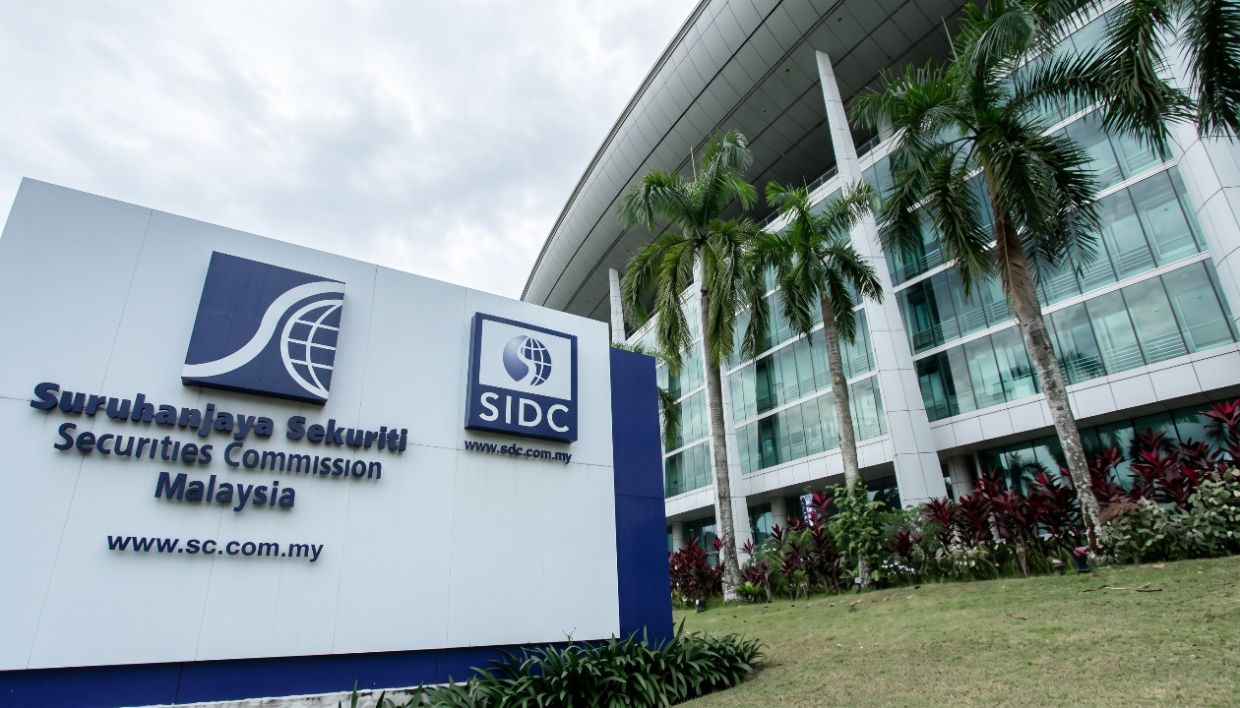
Malaysia's appellate judiciary has delivered a significant victory for financial regulators by upholding a sweeping asset freeze affecting prominent businessman Wong Shee Kai, commonly known as Ricky Wong. The Court of Appeal decision, handed down on Monday, represents a decisive moment in the Securities Commission Malaysia's lengthy pursuit of civil remedies against individuals alleged to have perpetrated securities law violations. The court rejected competing appeals filed by Wong, fellow defendant Teh Sew Wan, and their corporate entity Wong SK Holdings Sdn Bhd, all seeking to overturn or suspend an injunction that locks up assets and property portfolios valued at RM169.2mil.
The appellate bench, consisting of Justices Datuk Ravinthran N. Paramaguru, Datuk Dr Choo Kah Sing and Datuk Leonard David Shim, further refused the appellants' request to set aside an earlier interim order that had been granted ex parte by the High Court in May 2020. That preliminary injunction had effectively frozen the defendants' financial resources before they could mount a coordinated legal defence. The subsequent inter partes injunction—issued on April 28, 2022 following a hearing where both sides presented arguments—transformed this temporary restraint into a more permanent freeze pending the ultimate resolution of the SC's civil action. The appellate court's dismissal of the challenge signals judicial confidence in the lower court's reasoning and the strength of the regulator's case.
The Court of Appeal additionally imposed financial consequences on the unsuccessful appellants, ordering them to shoulder RM200,000 in costs payable to the SC. Such award serves a dual purpose within Malaysia's legal framework: it compensates the regulator for its legal expenses while simultaneously discouraging frivolous appeals that clog the appellate system. For defendants and their legal teams, cost awards of this magnitude represent tangible economic penalties attached to losing efforts, factors that weigh heavily in subsequent litigation strategy decisions.
The underlying dispute traces to allegations of securities fraud centred on contraventions of Section 179 of the Capital Markets and Services Act 2007. The SC initiated its civil suit in 2020, asserting that the defendants engaged in conduct violating Malaysia's comprehensive securities regulation framework. Rather than pursuing purely criminal proceedings, the regulator selected the civil injunction route—a regulatory tool that permits asset freezes without requiring proof beyond a reasonable doubt, instead operating under the civil standard of balance of probabilities. This approach allows the SC to immobilise potentially tainted assets while the full evidentiary record is assembled and tested through trial.
The ongoing trial proceedings underscore the complexity and deliberate pace characteristic of sophisticated financial fraud litigation. The Kuala Lumpur High Court has scheduled resumption of trial arguments for September 1, 2026, indicating that fact-finding and legal argumentation will extend considerably further into the future. Such extended timelines, while frustrating to parties seeking closure, reflect the necessity of thoroughly examining detailed documentary evidence, expert testimony regarding market mechanics, and competing narratives about the defendants' intent and knowledge. The court system's willingness to allocate sufficient hearing days to financial cases demonstrates institutional recognition that securities fraud cases demand meticulous examination.
The legal representation fielded by both sides illuminates the gravity and financial stakes involved. The SC deployed senior external counsel Datuk Lim Chee Wee, a prominent criminal and commercial advocate, alongside Kwan Will Sen from his law firm, buttressed by in-house counsel Mohd Hafiz Mohd Yusoff and Loo Kit Ming Keith. Wong engaged Tan Sri Muhammad Shafee Abdullah, one of Malaysia's most prominent and experienced defence counsel, while Teh retained the services of Tan Sri Cecil W. M. Abraham, another senior practitioner specialising in complex commercial disputes. The calibre of counsel reflects both parties' assessment of the litigation's importance and their determination to contest the matter vigorously at every procedural stage.
A particularly troubling aspect of the SC's enforcement action concerns Wong's continued absence from Malaysian jurisdiction. The regulator has publicly confirmed that Wong remains at large, having apparently evaded apprehension despite the serious nature of the allegations ranged against him. Beyond the civil securities fraud charges, Wong faces criminal exposure under dual statutes: the Anti-Money Laundering, Anti-Terrorism Financing and Proceeds of Unlawful Activities Act 2001 and the Capital Markets and Services Act 2007 itself. The convergence of civil and criminal proceedings against a fugitive defendant underscores the seriousness with which authorities view his alleged misconduct, treating it not merely as a regulatory violation but as conduct affecting financial system integrity and potentially intersecting with money laundering concerns.
The SC's public appeal for information regarding Wong's whereabouts represents an escalation of its enforcement posture beyond courtroom proceedings. By soliciting public assistance, the regulator signals that conventional investigative channels may have reached their limits and that Wong's ability to remain undetected within or outside Malaysia depends partly on his associates maintaining operational security. The appeal carries implicit recognition that many fraud defendants maintain networks of individuals sympathetic to their interests, and that incentivising information provision through public channels occasionally yields actionable intelligence.
For Malaysian investors and market participants, this appellate decision carries reassuring implications regarding regulatory commitment to asset preservation in cases involving alleged securities violations. The Court of Appeal's validation of the asset freeze mechanism demonstrates that courts will support regulators' efforts to prevent defendants from dissipating resources that might ultimately be needed to satisfy civil judgments or restitution orders. This judicial posture strengthens the SC's deterrent value within the financial services ecosystem, as market participants recognise that those who violate securities laws face not only criminal jeopardy but also civil remedies that can effectively render them judgment-proof if they attempt to spirit away assets.
The Wong case also illuminates broader patterns in Malaysian securities enforcement, where civil injunctions freezing assets have become standard regulatory tools. The mechanism allows the SC to obtain court-approved preservation orders without proving criminal guilt, protecting assets pending full trial while defendants retain theoretical opportunity to demonstrate lawful conduct. This balance between regulator and defendant interests reflects the civil law principle that provisional remedies should not prejudge ultimate liability while simultaneously preventing irreparable harm to enforcement objectives through asset dissipation. The appellate court's endorsement of this approach suggests likely continued reliance on such mechanisms in future SC enforcement actions.
Looking forward, the September 2026 trial resumption will determine whether the SC can prove its allegations to the civil standard required for judgment. The extended timeline reflects the genuine complexity of reconstructing financial transactions, establishing knowledge and intent, and distinguishing sharply between unlawful conduct and aggressive but lawful securities dealing. Meanwhile, the asset freeze remains in place, preventing the defendants from accessing the frozen resources regardless of appeal outcomes. For Wong specifically, his continued absence from Malaysia means that even if he ultimately prevails in the underlying litigation, he faces the practical obstacle of defending his interests through counsel while unable to monitor developments in person or provide real-time instructions to his legal team.

