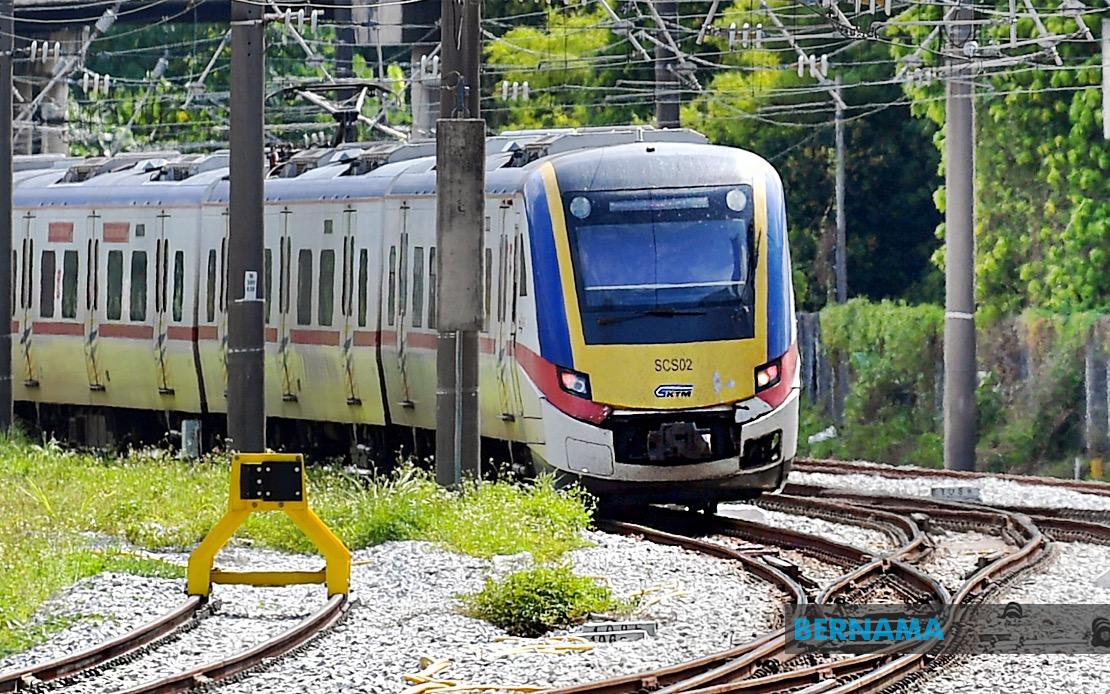
Malaysia's commuter rail network experienced significant disruption on July 23 after a wooden construction structure collapsed onto railway tracks at Batang Benar, severing the overhead power supply that feeds both KTM Komuter and Electric Train Service operations in the Klang Valley. The incident, originating from a third-party construction site, struck the overhead line system between Batang Benar and Labu stations, immediately crippling train services across a critical corridor that handles tens of thousands of daily passengers.
Keretapi Tanah Melayu Berhad (KTMB) responded swiftly by implementing service modifications across its network to minimise passenger inconvenience. KTM Komuter trains travelling from Pulau Sebang towards the city terminus were rerouted to terminate at Seremban Station, while services operating in the opposite direction—heading towards KL Sentral or Batu Caves—were truncated to originate only from Bangi Station. The suspension eliminated all direct rail connectivity between Bangi and Seremban, a 19-kilometre segment that normally carries commuters through townships including Labu, Batang Benar, and Tiroi.
To bridge the gap created by the rail suspension, KTMB deployed a coordinated shuttle bus operation designed to maintain transport continuity for affected commuters. Three dedicated shuttle buses were positioned along the disrupted corridor, servicing Seremban, Tiroi, Batang Benar, Labu, and Bangi stations with the goal of transporting stranded passengers across the disabled section. For the longer-distance ETS network, which connects major intercity routes, KTMB arranged seven additional shuttle buses stationed at KL Sentral, Bandar Tasik Selatan, Kajang, and Seremban—key interchange points where passengers could either resume their journeys or arrange alternative transport.
The operational response included passenger compensation measures reflecting KTMB's commitment to mitigating financial impact. Passengers holding ETS tickets who elected not to continue their journeys following the disruption were entitled to request full refunds at their departure stations, acknowledging that many travellers might have rescheduled plans or shifted to alternative transport modes during the service interruption.
Investigative findings by KTMB revealed systemic compliance failures on the contractor's part, pointing to broader questions about construction site safety protocols alongside railway infrastructure protection. The contractor, engaged by the Public Works Department (JKR) on a wayleave project, had neglected multiple mandatory requirements stipulated under railway safety regulations. Critically, the contractor failed to submit a comprehensive work schedule to KTMB prior to commencing operations, a foundational document that enables railway authorities to coordinate activities and implement protective measures.
Moreover, the contractor had not provided advance notification regarding the actual timing of the bridge construction works scheduled for the day of the incident, depriving KTMB of the opportunity to prepare contingency arrangements or position personnel strategically. This communication gap represents a particularly serious breach given the inherent risks associated with bridge work near active railway corridors carrying thousands of daily commuters and, in the case of ETS, high-speed intercity trains.
KTMB's Site Entry Permit Standard Operating Procedure establishes explicit requirements for monitoring third-party construction activities in railway environs. The protocol mandates the presence of three designated KTMB technical representatives from distinct departments—Regional Engineer, Signalling and Communications, and Electrification—whenever construction work proceeds within the railway corridor following formal approval. These specialists function as on-site monitors, ensuring real-time compliance with safety protocols and enabling immediate intervention if hazardous conditions develop. The contractor's failure to trigger this oversight mechanism left the crucial construction activities unsupervised by railway safety personnel.
The incident underscores the vulnerability of Malaysia's rail infrastructure to third-party construction activities, a concern particularly acute in the densely developed Klang Valley where railway corridors frequently intersect with urban development and utility projects. The overhead power system, a technological backbone supporting modern train operations, remains exposed to debris during adjacent construction despite protective design considerations. This collision exposes a persistent gap between formal safety procedures and their consistent implementation, suggesting that contractual obligations alone may prove insufficient without robust enforcement mechanisms and regular compliance audits.
KTMB's technical teams commenced restoration efforts immediately, focusing on repairing the damaged overhead line system to restore full service across the affected corridor. The railway operator acknowledged the disruption as unforeseen whilst simultaneously reaffirming its commitment to passenger safety and service continuity, emphasising that investigation findings would inform process improvements. For commuters navigating the disruption, KTMB recommended consulting official social media channels and station staff for real-time service updates as repair work progressed.
The incident carries broader implications for railway safety governance in Southeast Asia's rapidly urbanising environments. As construction intensity increases alongside infrastructure development, maintaining separation between railway operations and adjacent work sites becomes progressively complex. Malaysia's experience at Batang Benar suggests that procedural frameworks exist but require strengthened compliance mechanisms, potentially including enhanced contractor vetting, mandatory insurance for third-party damage, and periodic third-party audits of construction site safety protocols within railway corridors. Such measures could help prevent future disruptions while protecting the operational integrity of networks essential to regional economic activity and daily commuter mobility.

