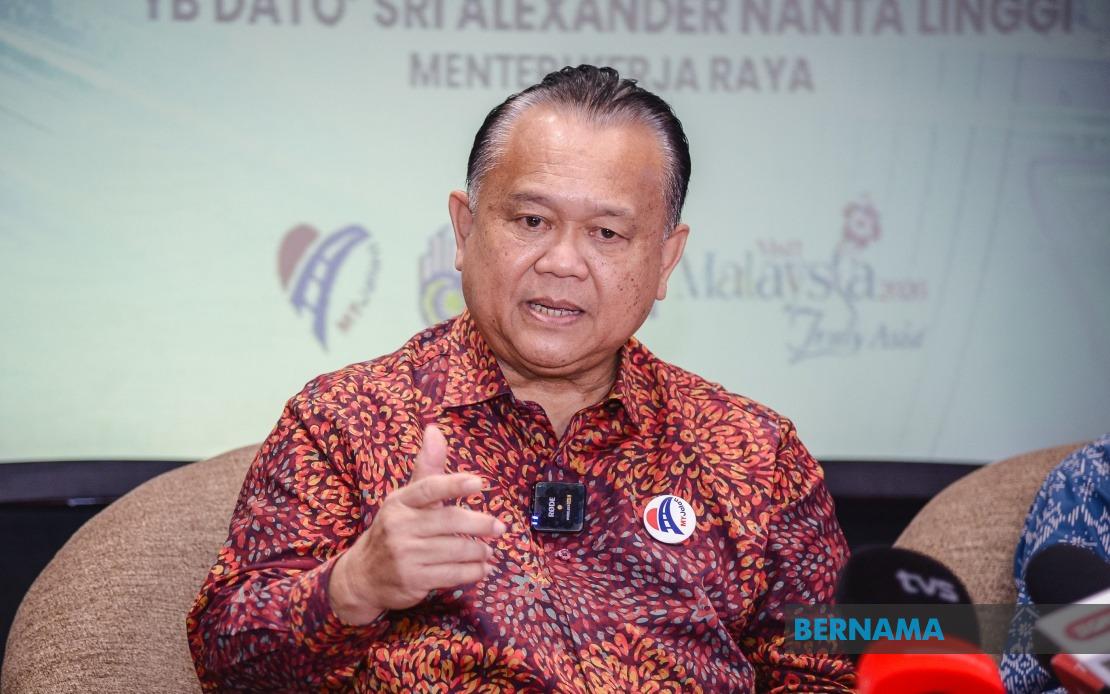
The construction industry has submitted 30 strategic proposals to Malaysia's Works Ministry (KKR) for consideration in the forthcoming Budget 2027, signalling the sector's ambitious agenda for growth and transformation. Minister Datuk Seri Alexander Nanta Linggi announced that these industry wishlists would be carefully evaluated to ensure alignment with the government's MADANI Economy framework, which prioritises generating meaningful economic impact while safeguarding the health of the construction ecosystem. This collaborative approach marks a shift in how the government and industry are preparing for fiscal planning, moving beyond traditional consultation methods to structured sectoral dialogue.
The KKR has identified five core transformation priorities that will shape its Budget 2027 approach, reflecting a comprehensive vision for infrastructure modernisation. These priorities encompass reinforcing Malaysia's road network infrastructure and executing high-impact development projects that generate tangible benefits for communities. Equally significant is the commitment to sustainable infrastructure development aligned with the nation's energy transition objectives, recognising the construction sector's pivotal role in achieving environmental targets. The ministry's agenda further emphasises technological advancement through Building Information Modelling, Internet of Things integration and artificial intelligence applications, collectively framed as Industry 4.0 adoption. Additionally, KKR aims to strengthen small and medium-sized G1 to G4 contractors to create a more distributed and resilient industry base, while the MYJalan initiative focuses on elevating road safety standards across the country.
Minister Nanta articulated a fundamental philosophical shift in how government infrastructure spending will be evaluated moving forward. Rather than gauging success by the volume of ringgit deployed, the ministry intends to measure outcomes by the tangible impact generated from each dollar invested. This metric-driven approach compels the construction sector to fundamentally reshape its competitive dynamics away from price-based competition toward value-creation and innovation-driven differentiation. The minister emphasised that Malaysian construction companies must fortify their technological capabilities through Building Information Modelling platforms, artificial intelligence deployment, green construction technologies and Industrialised Building System methodologies. This transformation is essential not merely for domestic competitiveness but for positioning Malaysian firms to compete effectively in international markets where technical sophistication and sustainability credentials increasingly determine market access.
The feedback already received from industry participants reveals multifaceted challenges confronting Malaysia's construction ecosystem. Among the 117 proposals submitted as of early August, 87 originated directly from industry stakeholders, encompassing concerns about governance frameworks and contract management procedures that often impede efficient project execution. The sector has flagged workforce development as critical, emphasising the need for both skills enhancement and inclusive employment practices that broaden participation across demographic groups. Significantly, industry players have raised concerns about escalating operating expenses, material costs and logistics challenges that compress profit margins and reduce competitiveness. These cost pressures are particularly acute given global supply chain disruptions and fluctuating commodity prices affecting construction materials sourced both domestically and internationally.
Beyond immediate operational concerns, the industry has articulated a compelling case for accelerating environmental, social and governance practice adoption throughout the construction value chain. Industry representatives have advocated for government incentives and frameworks that facilitate faster transition toward sustainability standards that increasingly influence international investor decisions and client preferences. The promotion of local material sourcing emerged as another priority, reflecting both economic nationalism concerns and the potential for supply chain resilience through domestic sourcing when feasible. These varied demands indicate that Malaysia's construction sector recognises the necessity of structural transformation to remain competitive and sustainable in a rapidly evolving global context.
A particularly important dimension of the industry feedback concerns the disparate starting positions of different industry participants, which Minister Nanta acknowledged requires targeted policy intervention. Small contractors, consulting firms, workers and other local industry players often face systemic disadvantages in cash flow management, technology access and navigating bureaucratic approval processes. The minister's observation that not all construction firms commence from equal positions reflects recognition that market-based solutions alone cannot address structural inequalities within the sector. Establishing robust foundational support through targeted interventions can enable broader participation across the industry ecosystem, allowing more companies to graduate to higher levels of sophistication and scale. This inclusive development approach aligns with broader government objectives of ensuring equitable economic opportunity while building sectoral competitiveness.
The financial allocation granted to the Works Ministry under Budget 2026 provides context for understanding government infrastructure priorities. The ministry received RM10.692 billion in total funding, representing a 3.3 percent increase from the preceding fiscal year, with RM9.607 billion directed toward development expenditure for launching new initiatives and sustaining ongoing infrastructure projects. While this represents substantive investment, the budget constraint reality necessitates strategic prioritisation and creative resource deployment rather than aspirational project proliferation. Minister Nanta directly confronted the temptation to lower development ambitions when facing budget limitations, instead arguing that financial constraints should catalyse more innovative and efficient approaches to project planning and execution. This philosophical stance challenges both government agencies and private sector participants to maximise developmental impact within realistic resource constraints.
The minister's assertion that government and industry should not use budget limitations as an excuse for diminished ambitions reflects an understanding that financial stringency often produces innovation incentives. By forcing stakeholders to make difficult prioritisation choices, fiscal constraints can paradoxically yield more impactful outcomes than abundant funding that permits less rigorous decision-making. This perspective demands sophisticated project evaluation frameworks that move beyond traditional cost-benefit analysis to incorporate broader social, environmental and economic multiplier effects. For Malaysian infrastructure planners, this implies that the next budget cycle will likely feature fewer projects with greater demonstrated impact rather than numerous initiatives of marginal utility. The construction industry's engagement with this framework through the 30 strategic proposals suggests recognition that collaborative, impact-focused approaches serve all stakeholders better than traditional advocacy models.
Budget 2027 is scheduled for parliamentary tabling on October 9, providing a compressed timeframe for government and industry to synthesise the diverse proposals into coherent policy and budgetary allocations. The Works Ministry's commitment to reviewing industry wishlists within the MADANI Economy framework indicates that not all proposals will receive equal priority or funding, requiring transparent criteria for selection and sequencing. This budget cycle will demonstrate whether the government's stated preference for impact-driven resource allocation translates into structural support for construction sector transformation. For Malaysia's broader economic positioning, the construction industry's modernisation and competitiveness enhancement carry implications extending far beyond the sector itself, influencing infrastructure quality, employment opportunities and national productivity metrics. The depth of industry engagement evident in the proposal submissions suggests significant appetite for collaborative governance approaches that leverage sectoral expertise in shaping public investment priorities.

