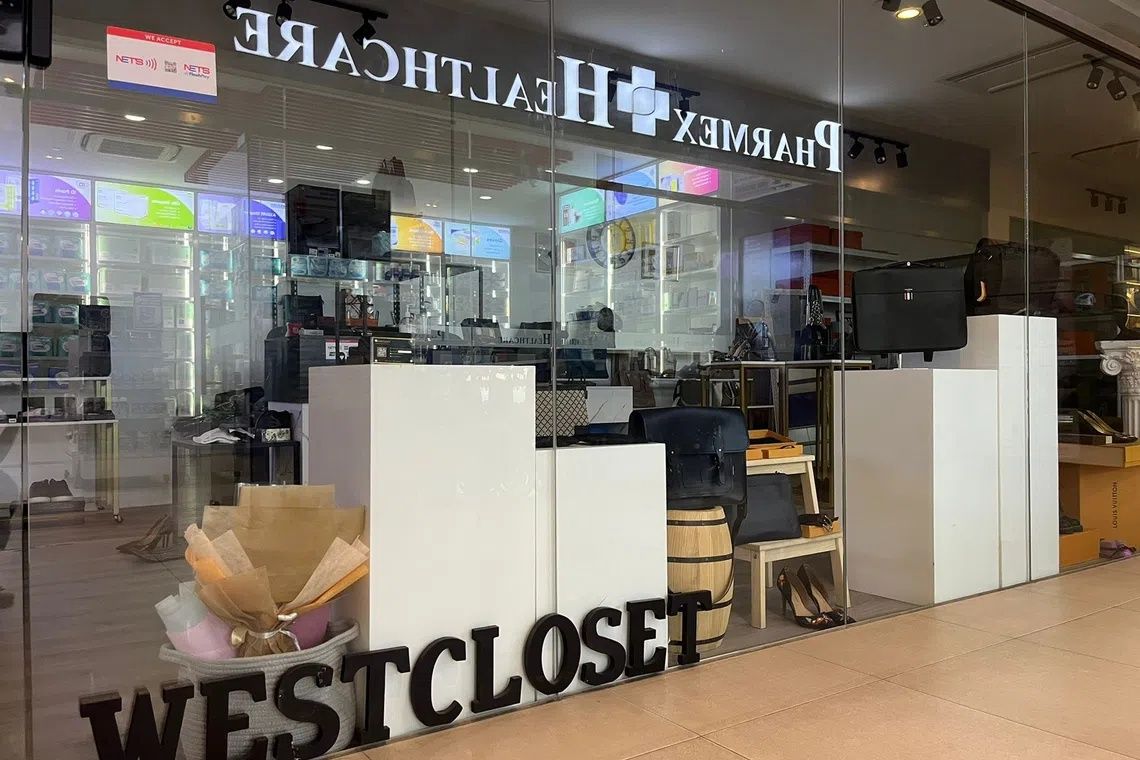
A 36-year-old Indonesian woman has been sentenced to eight months imprisonment after systematically embezzling funds from customers at her luxury goods consignment store in Singapore's Shenton Way precinct. Ringga Dwi Rizky Irianto, the sole proprietor of West Closet located within the OUE Downtown Gallery shopping mall, pleaded guilty to criminal charges involving the misappropriation of nearly S$140,000 from five separate victims. The court imposed the sentence on Thursday, August 13, marking a significant conclusion to a case that highlights vulnerabilities in the burgeoning secondhand luxury goods market across Southeast Asia.
The business model appeared straightforward enough on the surface. West Closet marketed its consignment services through Carousell and Instagram, positioning itself as a trusted intermediary for customers seeking to offload designer handbags. Clients deposited their bags at the store under a 60-day holding arrangement, with a penalty fee of S$60 applicable should items remain unsold beyond that window. The store would retain a commission ranging from S$200 to S$900 from each successful transaction, with the balance remitted to the original owner. This operational structure, now commonplace across Southeast Asia's luxury resale platforms, proved vulnerable to deliberate fraud in Irianto's hands.
The mechanics of deception were disturbingly consistent. When one victim deposited three designer bags—two Hermès and one Chanel—in July 2022, West Closet provided a written guarantee of S$51,000 upon sale, with explicit assurance that payment would reach the customer's bank account within seven days of the transaction completing. Irianto duly sold all three items and collected approximately S$51,000 in proceeds. Rather than fulfilling her contractual obligation, however, she diverted these funds toward settling another customer's purchase, effectively treating client deposits as operational cash flow. The same pattern recurred with two additional Hermès bags, from which she extracted S$33,500 and S$23,500 respectively, deploying identical sleight-of-hand accounting methods.
What distinguishes this case within the regional context is the deliberate breach of explicit financial guarantees. Irianto had not simply delayed payments or applied questionable commission calculations—she had furnished written commitments that she never intended to honour. For customers in Malaysia, Singapore, Thailand, and elsewhere in Southeast Asia who engage with consignment platforms, the case underscores the risks of depositing valuable assets with unregulated intermediaries lacking robust operational safeguards. The luxury resale market has experienced explosive growth across the region, yet the legal and compliance infrastructure remains fragmented and inconsistent.
The investigation and prosecution timeline also merits examination. Although Irianto was arrested in September 2022, formal charges did not materialise until 2024—a gap indicating either investigative complexity or resource constraints within the enforcement apparatus. Deputy Public Prosecutor Darren Sim outlined the facts methodically, with court documents revealing precisely how the misappropriation had occurred. On August 13, bail was established at S$15,000, with Irianto scheduled to commence her sentence in October. She has already voluntarily restituted S$41,000, though an additional S$91,950 remains outstanding. Should she fail to settle this amount, she faces a further 24 days of incarceration.
The sentencing reflects the severity with which Singapore courts regard breaches of fiduciary responsibility. Each count of criminal breach of trust carries potential penalties of up to seven years imprisonment, a fine, or both. Irianto pleaded guilty to three counts, with two additional charges acknowledged during sentencing proceedings. The aggregate facts demonstrated not isolated lapses in judgment but a systematic pattern of misappropriation spanning multiple victims and transactions. The court's decision to impose an eight-month custodial sentence rather than a purely financial penalty signals an intent to deter similar conduct within the growing secondhand luxury marketplace.
For Malaysian consumers and business operators, this episode carries several implications. The consignment model has expanded substantially in Malaysia's major shopping districts and online platforms, yet regulatory oversight of such operations remains limited. Unlike banking institutions or licensed financial services, consignment stores often operate with minimal transparency requirements or bonding obligations. Malaysian regulators might consider whether additional safeguards—such as mandatory segregation of client funds, licensing requirements, or standardised dispute resolution mechanisms—could prevent similar abuses in the domestic market.
The case also illuminates a broader vulnerability affecting transnational commerce within Southeast Asia. Many customers purchasing or consigning luxury goods are repeat users of multiple platforms and stores across the region. The regulatory fragmentation means that a proprietor operating simultaneously in Singapore, Malaysia, and Thailand faces divergent legal consequences for identical conduct. Irianto, as an Indonesian national operating in Singapore, benefited initially from potential geographical distance and communication barriers. Yet she was ultimately apprehended through conventional investigation methods, suggesting that determined enforcement remains possible even across borders.
The restitution component offers partial solace to affected customers, yet recovery remains incomplete. Irianto's payment of S$41,000 suggests either personal resources or potential pressure from family members to mitigate the financial consequences. The outstanding S$91,950 obligation creates uncertainty, as imprisonment does not generate income streams to satisfy civil claims. Malaysian and Singaporean consumers contemplating consignment transactions might reasonably demand enhanced protections—escrow arrangements managed by neutral third parties, insurance coverage, or direct contractual relationships that exclude the intermediary from access to transaction proceeds.
The West Closet case also highlights the role of social media and marketplace platforms in facilitating trust relationships. Irianto leveraged Instagram and Carousell's legitimacy as platforms to establish credibility with prospective customers. Yet neither platform had operational oversight mechanisms sufficient to identify the systematic fraud occurring within individual store accounts. As these digital marketplaces expand throughout Southeast Asia, platform operators face mounting pressure to implement more rigorous verification processes for high-value transaction facilitators, particularly those handling luxury goods or significant financial transfers.
Looking forward, the case serves as a cautionary narrative for the region's booming secondhand luxury sector. The market's growth reflects genuine consumer demand for sustainable consumption alternatives and access to premium brands at reduced prices. However, that growth has outpaced regulatory development and industry standardisation. Malaysian authorities, in particular, might benefit from examining Singapore's enforcement response and considering whether comparable statutory frameworks—specifically governing consignment operations, customer fund protection, and penalties for breach of trust—should be adopted or adapted domestically. The eight-month sentence imposed on Irianto represents a meaningful deterrent, yet only if other potential offenders perceive the certainty of detection and prosecution as substantial risks.
Ultimately, this case demonstrates that the informal luxury resale ecosystem, despite its convenience and appeal, remains vulnerable to sophisticated exploitation by unscrupulous operators. Customers across Malaysia and Singapore must exercise enhanced due diligence when entrusting valuable assets to consignment intermediaries. Simultaneously, regulatory bodies throughout Southeast Asia have an opportunity to strengthen protections without stifling the legitimate growth of sustainable luxury consumption. The S$140,000 misappropriated from Irianto's five victims represents not merely an individual loss but a systemic failure that, if addressed proactively, need not recur at the scale witnessed in this case.

