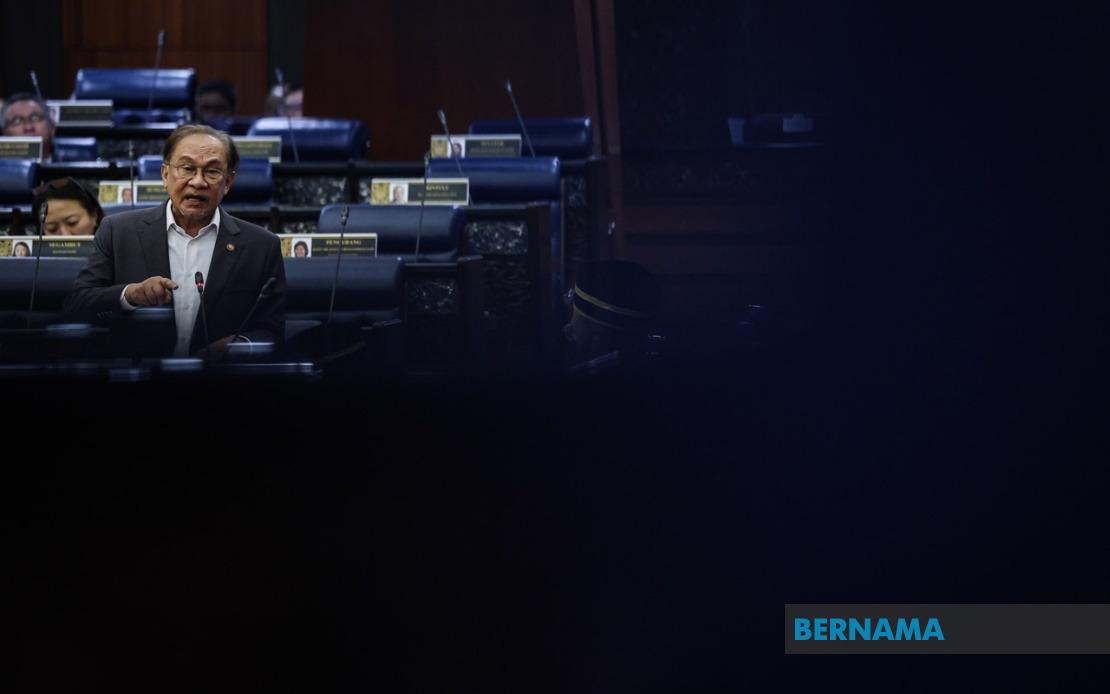
Prime Minister Datuk Seri Anwar Ibrahim has introduced a significant procedural change to how complaints against journalists are handled, requiring all grievances lodged against members of the press from established news organisations to first pass through the Malaysian Media Council for review before any investigative or enforcement measures can commence. The announcement, delivered during Minister's Question Time in Parliament on July 7, signals a deliberate effort to create a buffer between initial complaints and government action, establishing what the Prime Minister characterised as a fairer and more transparent process for addressing allegations of journalistic misconduct.
The creation of this gatekeeping mechanism addresses longstanding concerns that journalists in Malaysia have faced the prospect of swift prosecution or investigation merely by virtue of complaints being filed by government agencies or other parties, without adequate opportunity for independent scrutiny of those allegations. By inserting the Malaysian Media Council as an intermediary body, the government aims to prevent what critics have described as harassment through the legal system, where the mere existence of a complaint could trigger formal investigations regardless of merit. Anwar stressed that journalists should not face penalties simply because a grievance has been lodged, emphasising that the initial complaint stage should not automatically translate into formal action against press practitioners.
The Prime Minister's remarks came in response to a parliamentary question from Datuk Mohd Isam Mohd Isa, the BN representative for Tampin, regarding Malaysia's legal framework governing press conduct. This framework has long drawn international criticism, particularly provisions under the Sedition Act 1948 and the Official Secrets Act 1972, which permit journalists to be prosecuted for various forms of reporting. Legal analysts and press freedom advocates have argued that these laws create a chilling effect on investigative journalism and reporting on government activities, as news organisations and individual journalists must constantly consider the possibility of criminal charges arising from their work.
Anwar acknowledged that no jurisdiction in the world grants absolute freedom to the press, positioning his remarks within a framework that balances media liberty with legal accountability. He noted that both the Prime Minister and journalists are subject to the law, but contended that this legal framework should not be weaponised against the media through routine prosecutions triggered by government departments that feel criticised. This distinction—between legitimate legal accountability and arbitrary harassment—reflects an emerging consensus among democracies regarding the proper relationship between state authority and independent journalism.
The Malaysian Media Council, established to implement this new procedure, is intended to function as a neutral arbiter that will evaluate complaints based on professional journalistic standards and ethics codes rather than allowing political or administrative convenience to drive investigations. The council will assess whether alleged conduct by a news organisation or journalist actually constitutes misconduct worthy of further action, or whether the complaint reflects merely a government entity's displeasure with coverage. This role requires the council to possess both expertise in journalism and sufficient independence from political pressure to make determinations that may sometimes protect journalists from prosecution.
This reform carries particular significance for Southeast Asian press freedom dynamics, as Malaysia has historically been cited by international monitoring organisations as a jurisdiction where media independence is constrained by laws that permit government prosecution of journalists. By establishing a review procedure before investigations commence, Malaysia potentially moves toward standards adopted by more robust democracies, where journalists benefit from procedural protections against arbitrary state action. However, the actual effectiveness of this mechanism will depend substantially on the Malaysian Media Council's independence, the quality of its decision-making, and whether government agencies genuinely respect its determinations or attempt to circumvent the process.
The broader context includes Malaysia's complicated relationship with press freedom amid ongoing political transitions and competition between rival political blocs. News organisations operate under varying pressures from different government entities and political parties, each seeking favourable coverage or attempting to constrain unfavourable reporting. A mechanism that insulates journalists from automatic investigation could help level the playing field, ensuring that all complaints receive fair consideration rather than some being expedited because of which government agency filed them or which political faction is involved.
Anwar's statement also reflects recognition within the Malaysian government that overly aggressive prosecution of journalists generates reputational costs internationally and can undermine legitimate authority by appearing politically motivated. Countries that routinely prosecute journalists face criticism from press freedom organisations, diplomatic pressure from democratic nations, and potential impacts on foreign investment and talent retention. By creating a procedural buffer through the Malaysian Media Council, the government can demonstrate commitment to fair treatment of the press while retaining the ability to address genuinely unethical conduct through established legal channels.
The practical implications for Malaysian newsrooms are substantial. Journalists and editors can now reference the Malaysian Media Council review process when government agencies threaten investigation, potentially reducing the intimidatory effect of casual threats or politically motivated complaints. News organisations will need to develop relationships with the council and understand its decision-making criteria to effectively present their positions when complaints are referred. However, this also introduces uncertainty, as the council's decisions will evolve over time and will likely reflect the perspectives of whoever comprises its membership and leadership.
Implementation challenges will inevitably emerge as the new mechanism takes effect. Questions remain about the council's timeline for reviewing complaints, whether decisions are appealable, and what happens if the council determines no misconduct occurred but a government agency proceeds with prosecution anyway. The Prime Minister's statement suggests the council's findings should be determinative, but without explicit legal authority backing this procedural requirement, disputes may arise about whether agencies must comply with its judgments.
For regional observers and Malaysia's international partners, this development signals an attempt to modernise Malaysia's approach to press regulation in a more balanced direction. If implemented with genuine independence and fairness, it could become a model for other Southeast Asian democracies wrestling with how to balance legitimate regulation of media conduct against protection for investigative reporting and critical commentary. The true test will come as the system operates in practice and whether political actors respect the council's determinations even when they protect journalists or news organisations that governments would prefer to prosecute.

