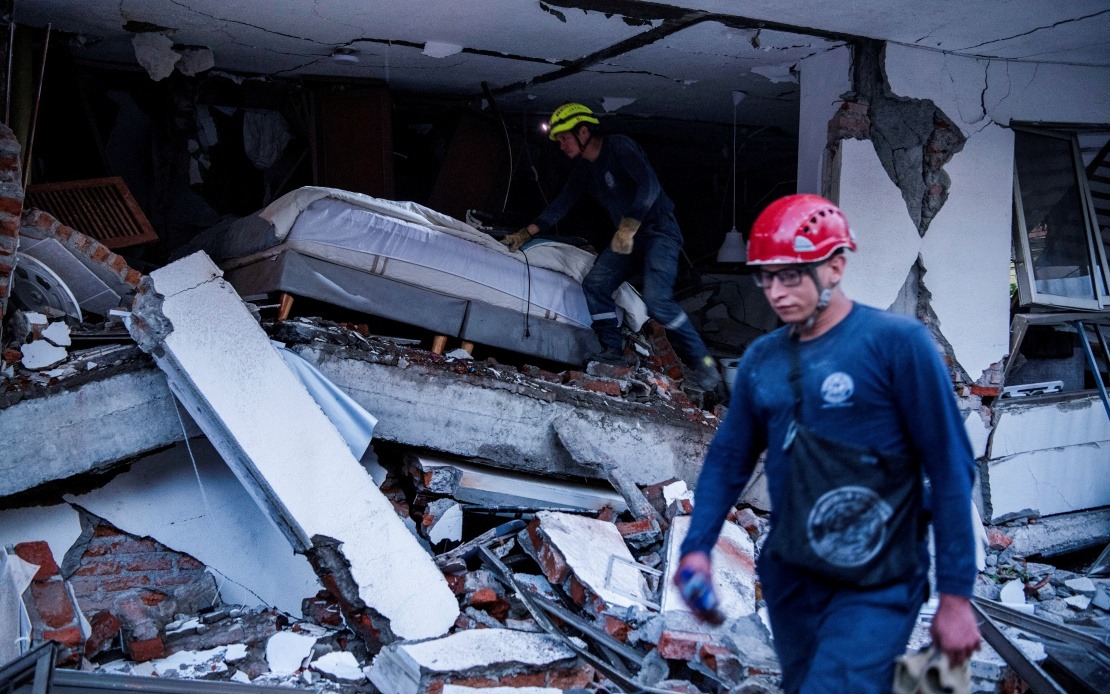
Colombia is grappling with a major humanitarian crisis following a devastating earthquake that struck its western regions on Monday. The tremor, measuring 7.4 in magnitude, has claimed 132 lives with injury figures exceeding 570 persons, according to the latest official count released by the Colombian government. The scale of destruction reflects one of the most significant seismic events to impact the South American nation in recent years, triggering an unprecedented emergency response across multiple administrative divisions.
The geographical footprint of the disaster extends across a considerable portion of the country, with preliminary assessments indicating that 32 municipalities have sustained severe damage. Among these affected areas, five departmental capitals have been designated as requiring the highest level of alert status. Pereira has emerged as the hardest-hit city, accounting for 60 of the total deaths recorded thus far. Cali has reported 15 fatalities, while Quibdo and Manizales have experienced eight and four deaths respectively. Armenia, the fifth city under red alert, continues assessments of its damage and casualty figures. The concentration of fatalities in Pereira suggests the city's proximity to or exposure to the quake's most powerful effects.
Structural damage has been widespread and severe. Official reports indicate that at least 86 buildings have completely collapsed or suffered catastrophic damage, rendering them uninhabitable and complicating rescue and recovery operations. Beyond residential and commercial properties, critical infrastructure has been compromised. Seven airports across Colombian territory have suspended operational activities due to earthquake-related damage, disrupting transportation networks and complicating the delivery of emergency supplies and medical personnel to affected zones. These infrastructure challenges compound the difficulties facing rescue teams and authorities attempting to mount coordinated relief efforts.
Recognizing the magnitude of the crisis, Colombian President Abelardo de la Espriella announced the declaration of a state of national disaster. This formal proclamation unlocks emergency powers and resources, allowing the government to mobilize military assets, expedite relief funding, and coordinate inter-agency response mechanisms without standard bureaucratic constraints. The declaration represents an acknowledgment that civilian emergency services and standard disaster protocols require supplementation with extraordinary governmental measures to address the scale of this catastrophe.
The earthquake originated near San Jose del Palmar in the department of Choco and struck at 7:34 am local time on Monday morning. Seismologists determined the epicentre lay at a considerable depth of 96 kilometres beneath the surface. This depth factor has significant implications for earthquake dynamics, as it typically results in damage patterns that differ from shallow-focus tremors, potentially affecting which structures suffer greatest damage and how seismic waves propagate through geological formations. The location near Choco, a region characterized by mountainous terrain and complex geology, added additional layers of complexity to rescue operations in areas with challenging topography and limited accessibility.
The international community has begun responding to Colombia's distress. The Chinese Embassy in Colombia immediately activated emergency protocols upon learning of the earthquake, initiating systematic checks regarding the wellbeing of Chinese nationals residing throughout the country. Initial assessments have been encouraging, with the embassy confirming that no casualties among Chinese citizens have been reported at this stage. This early coordination between diplomatic missions and local authorities demonstrates how international networks support crisis response during major natural disasters, particularly regarding vulnerable expatriate populations who may face heightened risks during infrastructure collapse and service disruptions.
For Malaysian and Southeast Asian observers, Colombia's earthquake response provides instructive parallels with regional vulnerabilities. Much of Southeast Asia lies within the Pacific Ring of Fire, exposing nations including Indonesia, Philippines, and Thailand to comparable seismic hazards. Colombia's experience underscores the critical importance of robust building codes, early warning systems, and coordinated disaster management frameworks. The rapid overwhelm of emergency services by 570 injured persons highlights how even well-resourced nations struggle with mass casualty scenarios. Regional governments would benefit from examining Colombia's response protocols, particularly regarding airport operations suspension, governmental declaration procedures, and diplomatic coordination mechanisms for protecting foreign nationals during major disasters.
The infrastructure damage and casualty figures also emphasize economic consequences beyond immediate humanitarian costs. The suspension of seven airports will disrupt commerce, tourism, and regional connectivity for weeks or months during reconstruction. Colombia's agricultural and mining sectors, major economic drivers, may experience supply chain disruptions. For Malaysia and other trading partners, any prolonged disruption to Colombian exports of coffee, minerals, or manufactured goods could create minor ripple effects through global supply networks. These secondary economic impacts typically receive less media attention than dramatic casualty figures but can impose substantial long-term consequences on affected nations' development trajectories.
Ongoing rescue and recovery operations will determine whether the death toll stabilizes at current figures or rises further as search teams access previously inaccessible areas and conduct damage assessments. The window for locating survivors in collapsed structures narrows significantly after 72 hours, creating urgency for concentrated rescue efforts over the coming days. Authorities must balance rapid rescue operations with the safety of rescue personnel operating in unstable structural environments. The involvement of international rescue teams, medical personnel, and humanitarian organizations will be crucial in the weeks ahead as Colombia transitions from emergency response to reconstruction and rebuilding of critical infrastructure and communities.

