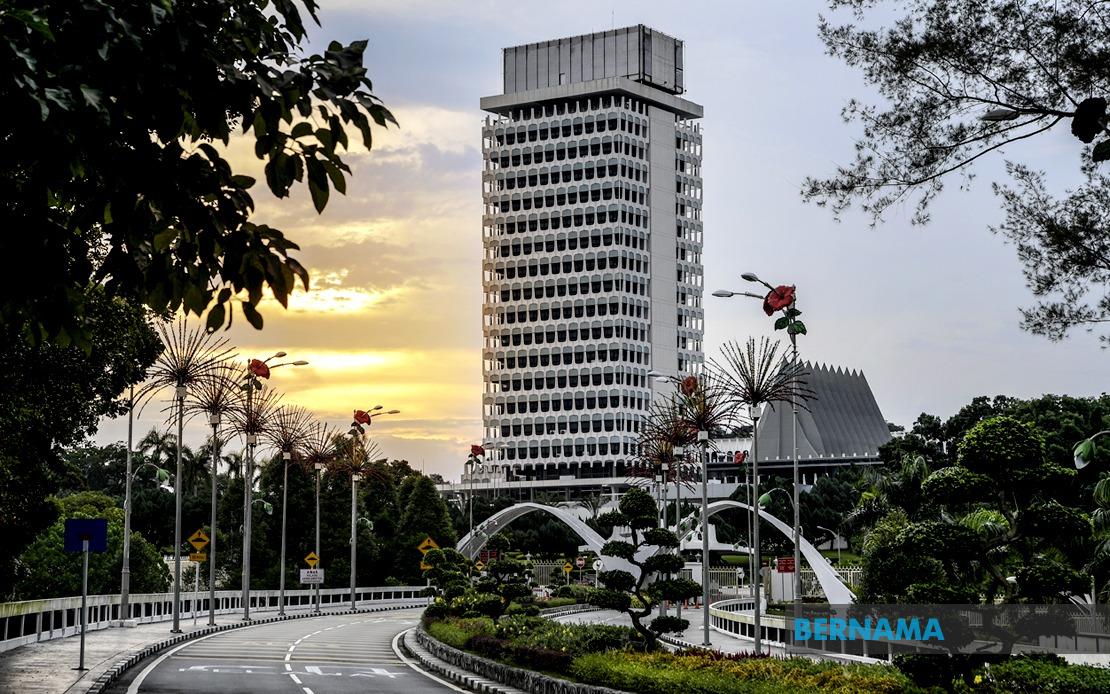
A coalition of forty-four civil society organisations and twenty-five individuals has issued a formal appeal for Malaysia's 15th Parliament to remain intact until its scheduled conclusion on December 18, 2027. The call, made in a joint statement, reflects mounting concern within reform-minded segments of Malaysian society that political instability could derail progress on longstanding governance challenges. The signatories argue that parliamentary continuity is essential to translate democratic aspirations into concrete institutional change, presenting a roadmap of specific legislative and constitutional reforms they believe the current administration should prioritise.
The joint statement emphasises that the current Parliament should maintain its term unless circumstances force a loss of confidence among Members of Parliament—a deliberate condition acknowledging the political realities of Malaysian coalition governance without compromising the case for stability. The participating organisations, including Project Stability and Accountability for Malaysia, Angkatan Belia Islam Malaysia, Coalition for Clean and Fair Elections, Centre to Combat Corruption and Cronyism, and others spanning ideological and community boundaries, demonstrate the breadth of support for a reform-focused legislative agenda. This cross-section of civil society offers political parties a shared reference point for governing priorities that transcends the usual partisan divisions.
Central to the appeal is a recommendation that Prime Minister Datuk Seri Anwar Ibrahim convene a comprehensive cross-party leaders' summit bringing together representatives from all government and opposition parliamentary factions. Such a gathering would ostensibly forge consensus on a joint reform agenda for the remainder of the parliamentary term. The proposal implicitly acknowledges that meaningful institutional change requires buy-in beyond any single ruling coalition, positioning reforms as beneficial to future administrations regardless of political composition. This framing potentially insulates proposed changes from accusations of partisan advantage, a critical consideration in Malaysian politics where opposition parties often view government-initiated reforms with suspicion.
The coalition's proposed reforms strike at fundamental structural questions within Malaysia's constitutional framework. Foremost among these is the separation of the Attorney General and Public Prosecutor roles, a move long championed by legal reformers who argue the current arrangement concentrates prosecutorial power dangerously within executive influence. Additionally, the groups propose imposing a ten-year limit on prime ministerial tenure, a measure designed to prevent entrenchment of individual leaders and reduce incentives for prolonged concentration of power. These constitutional amendments represent substantive departures from existing institutional arrangements and would require parliamentary supermajorities, making cross-party cooperation genuinely necessary rather than merely desirable.
Beyond constitutional architecture, the statement advocates for new legislation addressing transparency and accountability deficits. The proposed Ombudsman Act would establish an independent body empowered to investigate citizen complaints against government agencies, while a Freedom of Information Act would mandate public access to government records subject to defined exemptions. Such measures would represent significant shifts in how Malaysian government operates, potentially exposing previously opaque decision-making processes to public scrutiny. For Southeast Asia's largest democracy by some measures, these steps would align Malaysia more closely with information disclosure standards in comparable democracies.
The coalition identifies electoral and parliamentary processes as requiring substantial overhaul. Current proposals include amending the Election Offences Act 1954 to clarify boundaries of permitted campaigning, and expanding postal and absentee voting mechanisms for overseas Malaysians and those absent from their constituencies. These changes recognise that voter participation patterns have shifted, with increasing numbers of Malaysians working abroad or temporarily displaced from home constituencies. Additionally, the statement calls for strengthening parliamentary committee structures, streamlining budget processes, and creating formal pathways for Private Members' Bills—mechanisms that would empower individual lawmakers and backbenchers beyond executive apparatus influence.
A particularly innovative proposal addresses disparities in resource allocation to elected representatives. The coalition urges that constituency development allocations be distributed equitably among all Members of Parliament regardless of party affiliation, preventing ruling coalitions from weaponising development funds against opposition constituencies. Extension of this principle to state level, requiring all thirteen state governments to distribute assemblymen allocations fairly, would standardise equity standards across regional governance. Such measures directly address longstanding grievances wherein opposition-controlled areas received disproportionately lower development funding, a practice that undermines democratic competition by tilting local governance advantages toward incumbent parties.
Electoral system reform features prominently in the coalition's agenda. The statement proposes introducing party-list proportional representation alongside the existing first-past-the-post system at state assembly level, a change intended to amplify representation of minority viewpoints and reduce winner-take-all dynamics that marginalise non-majority communities. Simultaneously, the coalition advocates expanding parliamentary representation for women, youth, Orang Asli communities, and other historically under-represented groups. These recommendations reflect evolving international best practices regarding inclusive democratic participation while addressing Malaysia's persistent representation gaps across demographic categories.
Regarding practical governance procedures, the coalition advocates that federal and state governments announce dissolution dates in advance should they not intend serving full terms. Such advance notice would allow election authorities, law enforcement, civil servants, and voters adequate preparation time, reducing administrative chaos and enabling organised electoral processes. This procedural proposal demonstrates awareness that even routine governmental functions benefit from transparency and planning, reflecting the coalition's emphasis on institutional predictability as a foundation for democratic health.
The statement's strategic positioning as benefiting all future governments rather than any particular party represents sophisticated political messaging. By emphasising that institutional reforms would serve successor administrations regardless of political composition, the coalition attempts to reframe institutional change from self-interested partisan exercise to collective national investment. This approach acknowledges Malaysian political cynicism, wherein reform proposals are frequently dismissed as serving current power-holders' interests. The cross-party statement construction itself serves as evidence that diverse political constituencies recognise potential benefits.
For Malaysia's civil society, the joint statement represents a rare moment of unified messaging on governance fundamentals. The breadth of organisations—encompassing youth movements, religious societies, election watchdogs, anti-corruption advocates, and community halls—signals that institutional reform has transcended niche activist concerns to become mainstream discourse. This broad coalition potentially shifts political calculations around reform viability, suggesting that continued parliamentary stability paired with credible reform momentum could command popular support across demographic divides.
The timing of this appeal reflects awareness that parliamentary terms are finite windows for legislative action. With five years remaining until the current Parliament's dissolution, the coalition argues this period provides sufficient time to conceptualise, debate, and implement major institutional reforms without rushing processes. Conversely, early elections would truncate this window, necessitating subsequent parliaments to revisit these foundational questions. The appeal thus frames parliamentary stability not as perpetuation of status quo but as precondition for transformative democratic deepening that Malaysia's political trajectory increasingly demands.

