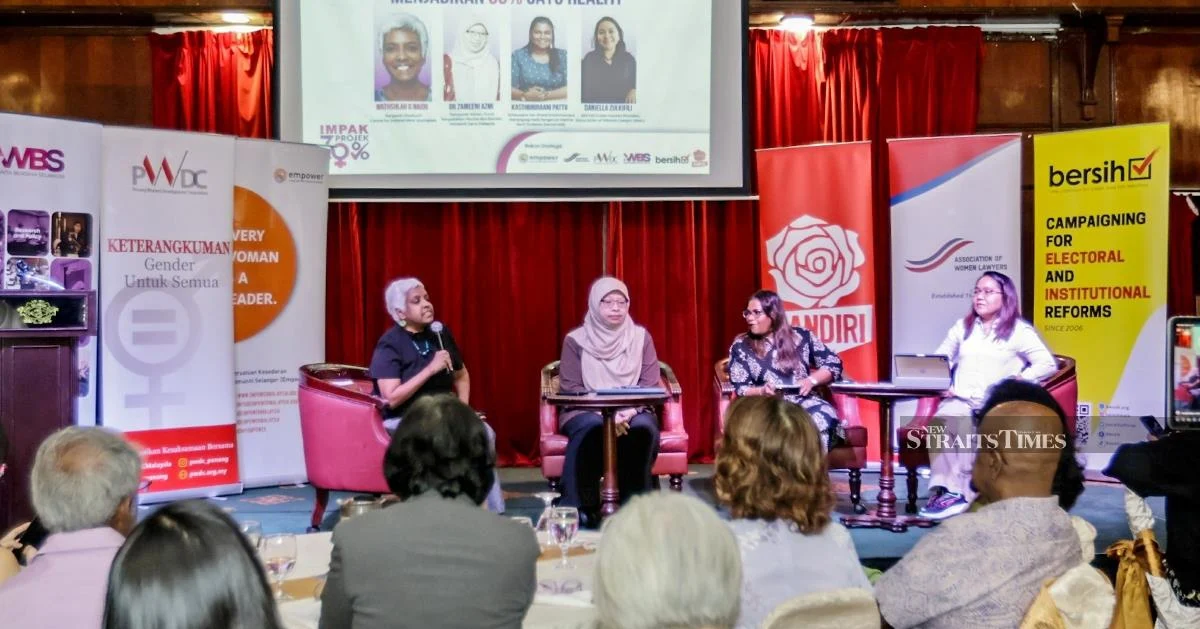
A broad coalition of civil society organisations has formally submitted proposed legislation to the government seeking to require political parties to nominate at least 30 per cent women candidates in the next general election. The submission, delivered as both a memorandum and draft legal framework, represents a coordinated push by advocacy groups to enshrine gender representation targets into Malaysia's electoral system ahead of what is expected to be GE16.
The initiative underscores persistent concerns about women's underrepresentation in Parliament and state legislatures despite Malaysia's significant female population and workforce participation. Current election outcomes have consistently fallen short of proportional representation, with women typically winning only 10 to 15 per cent of contested seats across both federal and state-level contests. This gap has prompted civil society to move beyond advocacy campaigns towards concrete legislative proposals designed to level the political playing field.
The 30 per cent threshold represents a compromise position within international best practice discussions. Several neighbouring countries and jurisdictions have adopted mandatory or voluntary targets ranging from 25 to 50 per cent, recognising that market forces alone have failed to produce equitable candidate selection. Malaysia's position as a signatory to various international gender equality commitments creates both moral and diplomatic pressure to demonstrate measurable progress on women's political participation.
The proposed legislation would likely establish compliance mechanisms requiring political parties to demonstrate adherence to the quota when registering candidates with the Election Commission. This represents a shift from purely voluntary guidelines towards enforceable standards, which some political analysts suggest could face resistance from parties accustomed to autonomy in candidate selection processes. The draft law appears designed to apply uniformly across all registered political parties, eliminating competitive disadvantages that might arise from unilateral adoption.
The coalition's timing reflects strategic calculation around the electoral cycle. With GE16 anticipated within the next two to three years, advocates recognise a narrow window for legislative passage and implementation. Previous attempts to advance gender quotas through individual party initiatives or parliamentary bills have stalled or failed, prompting this more formal governmental approach. The memorandum likely includes detailed implementation timelines, transitional provisions, and enforcement protocols addressing common objections regarding practical feasibility.
For Malaysia's political parties, the proposal presents both opportunity and challenge. Parties sympathetic to gender equity can position themselves as progressive and forward-thinking, potentially attracting younger and more diverse voters. Conversely, parties reliant on traditional patronage networks and incumbent male candidates may perceive quota systems as disruptive to established power structures and candidate advancement pathways. The legislative process will reveal which parties view women's representation as fundamental to democratic legitimacy versus an administrative burden.
The regional context matters significantly here. Indonesia, the Philippines, and Thailand have experimented with various quota mechanisms at different governance levels, producing mixed but generally positive outcomes for women's political participation. Malaysia's positioning as a regional leader in governance and development creates expectations that it address gender representation gaps through comparable legislative innovation. Success with a 30 per cent target could establish momentum for subsequent adjustments towards parity representation over subsequent electoral cycles.
Business and economic arguments strengthen the civil society case. Research cited by international development organisations demonstrates correlations between female legislative representation and policies addressing childcare, healthcare, education, and workplace equity. Malaysian policymakers increasingly recognise that women's economic participation and entrepreneurship contribute measurably to GDP growth and productivity. Political representation functions both as a symbolic recognition of women's economic contributions and as a practical mechanism for ensuring their policy priorities receive parliamentary attention.
The draft legislation's reception within government will depend significantly on whether the current administration views the proposal as aligned with its modernisation agenda or as activist overreach into internal party matters. Cabinet divisions on gender issues could emerge, with some ministers defending women's rights advancement and others invoking concerns about government interference in party politics. The matter may ultimately reach cabinet committee discussions before formal response through the parliamentary secretariat.
Implementation challenges should not be underestimated. A 30 per cent quota requires political parties to identify, cultivate, and nominate substantially more female candidates than existing selection processes currently produce. This demands investment in candidate training, mentorship programmes, and campaign resource allocation. Parties may need to reconsider internal leadership structures that have historically filtered candidate pools through male-dominated party machinery. The transition period could prove contentious within party hierarchies.
Malaysian voters themselves appear increasingly receptive to female candidate diversity. Electoral surveys suggest that candidate gender ranks lower than competence, local representation, and party affiliation in voter decision-making. This opens space for parties to nominate more women without fearing automatic electoral penalties. However, candidate quality and campaign effectiveness remain paramount, and rushed implementation without adequate preparation could produce negative outcomes damaging both female candidates and gender representation advocacy more broadly.
The success of this submission depends on sustained civil society pressure combined with sympathetic government action. Previous quota proposals have languished without ongoing public engagement and media scrutiny. The coalition must maintain momentum, document implementation barriers in pilot contexts if available, and build cross-party political consensus treating women's representation as a governance modernisation imperative rather than partisan issue. The next several months will reveal whether GE16 will finally deliver proportional gender representation in Malaysia's legislature.