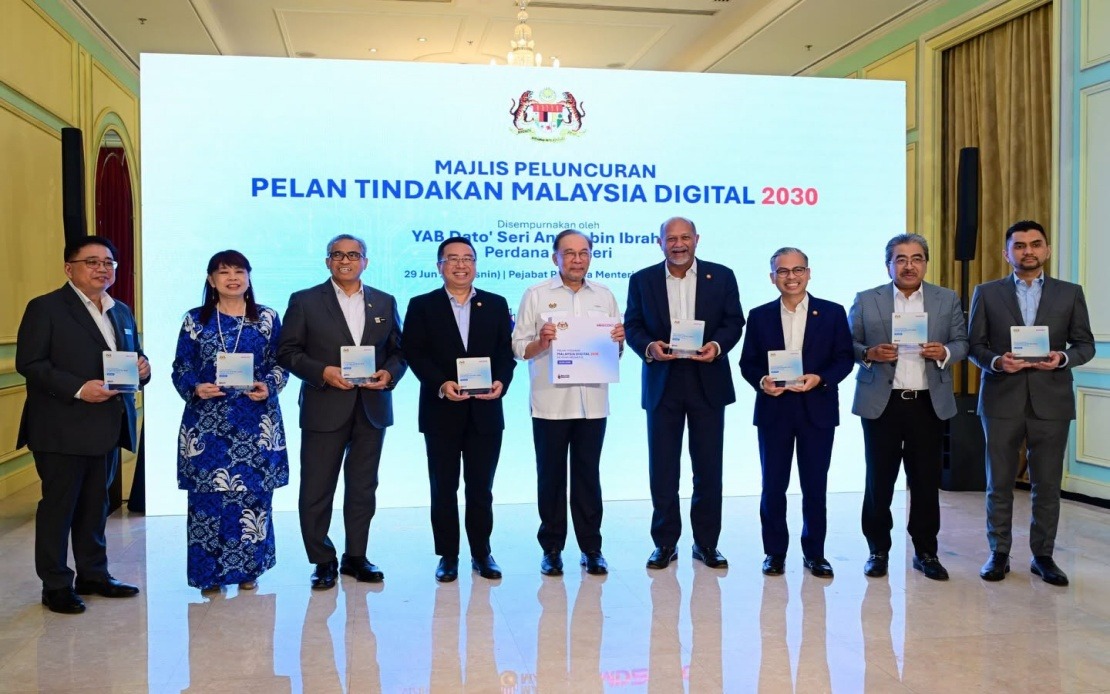
The Malaysian civil service has successfully eliminated 116,405 reams of paper and generated cost savings of RM1.99 million through its ongoing paperless initiative, marking a significant milestone in the government's push toward digital administration. Chief Secretary to the Government Tan Sri Shamsul Azri Abu Bakar announced the achievement during a Digital Economy and Fourth Industrial Revolution Council meeting chaired by Prime Minister Datuk Seri Anwar Ibrahim, underscoring the tangible financial and environmental benefits of modernising bureaucratic processes.
The paperless programme represents far more than simple cost reduction. By transitioning away from traditional paper-based workflows, Malaysia's public sector is reducing its administrative burden while simultaneously lowering its environmental footprint—a dual benefit that aligns with both fiscal prudence and sustainability commitments. The elimination of over 116,000 reams represents a substantial reduction in the consumption of natural resources and the carbon emissions associated with paper production and transport, positioning the initiative as part of a broader environmental responsibility framework within government operations.
At the June 29 meeting, senior officials discussed a wider digital transformation agenda extending beyond paperless operations. The focus shifted toward two flagship initiatives: MyDigital ID and MyGov, both central to the government's vision of seamless digital citizen interaction with state institutions. These platforms aim to consolidate multiple government services into unified digital ecosystems, reducing friction and improving accessibility for Malaysians nationwide. The expanded rollout of digital infrastructure also encompasses higher education institutions, reflecting recognition that embedding digital capabilities across all government-linked sectors strengthens the entire ecosystem.
The meeting also emphasised workforce development as a critical component of Malaysia's digital future. Officials highlighted the establishment of the MyMAHIR National AI Council for Industry, designed to cultivate comprehensive digital talent across the economy. This investment in human capital recognises that technological infrastructure alone cannot drive transformation; skilled professionals capable of developing, implementing, and managing advanced digital systems are equally essential. The council's mandate signals government commitment to positioning Malaysia as a competitive player in artificial intelligence development and deployment.
Underlying these initiatives is Malaysia Digital 2030, an overarching national strategy launched by Prime Minister Anwar Ibrahim during the meeting. This framework articulates the government's ambition to establish Malaysia as an Artificial Intelligence Nation within the next six years. The strategy encompasses multiple pillars: digital infrastructure development, skills enhancement, regulatory innovation, and public-private collaboration. By anchoring digital transformation to a specific timeframe and aspirational target, the government creates accountability mechanisms and clarifies investment priorities across agencies and sectors.
The paperless initiative itself commenced in earnest on February 9, following an announcement by Shamsul Azri in early February that the civil service would begin implementing paperless approaches for straightforward transactions. This staged rollout demonstrates pragmatic governance—rather than attempting wholesale transformation overnight, officials prioritised simpler administrative workflows to test systems, train staff, and identify implementation challenges before scaling to more complex operations. This incremental approach increases the likelihood of successful adoption and allows lessons learned in initial phases to inform subsequent expansions.
For Malaysian businesses and citizens, the implications of this administrative modernisation extend beyond government efficiency. A digitally-transformed public sector reduces transaction costs and processing times for commercial registrations, permits, licenses, and regulatory compliance. Entrepreneurs navigating government bureaucracy benefit directly when agencies operate via digital systems rather than paper files; documents move faster, are more readily retrievable, and less prone to loss or damage. Small and medium enterprises, particularly those in less developed regions with limited physical access to government offices, gain disproportionate advantages from digital service delivery.
The broader digital economy context is equally significant. Malaysia's ambition to become an AI Nation by 2030 positions the country strategically within Southeast Asia's technology hierarchy. Regional competitors including Singapore, Thailand, and Vietnam are advancing their own digital and AI capabilities. By simultaneously improving public sector efficiency and investing in digital talent pipelines, Malaysia reinforces its competitive positioning. Government operations serve as both proving grounds for emerging technologies and demonstration projects that build confidence among private sector investors.
However, the transition to paperless systems also presents implementation challenges that extend beyond cost savings. Cybersecurity becomes paramount when government data moves exclusively into digital repositories; data breaches or system failures could compromise citizen information on unprecedented scales. Training civil servants across diverse agencies to operate effectively within new digital workflows requires sustained investment in capability development and change management. Public trust in digital government systems depends heavily on perceived reliability, security, and equitable access—factors that require continuous attention and investment.
The RM1.99 million saved through paperless operations represents resources that can be redirected toward further digital infrastructure investment or service expansion. However, realising Malaysia's broader AI Nation ambition demands substantially larger financial commitments. Investment in cloud infrastructure, artificial intelligence research facilities, cybersecurity frameworks, and educational institutions offering advanced technical training far exceeds paperless savings. These foundational investments will determine whether Malaysia achieves its 2030 targets or falls behind regional competitors.
The convergence of paperless operations, MyDigital ID, MyGov, and AI capability development indicates sophisticated strategic thinking within the government. Rather than pursuing isolated digital initiatives, officials are constructing an integrated ecosystem where improved administrative efficiency creates foundation for advanced service delivery and economic innovation. This systemic approach distinguishes Malaysia's digital strategy from piecemeal technology adoption undertaken by some regional counterparts.
Looking forward, the success of paperless initiatives will likely expand beyond civil service to encompass state-owned enterprises, government-linked companies, and eventually mandated standards for private sector interaction with government agencies. Such expansion would multiply cost savings and environmental benefits while creating pressure on commercial enterprises to adopt compatible digital systems, thereby fostering ecosystem-wide digital maturation.

