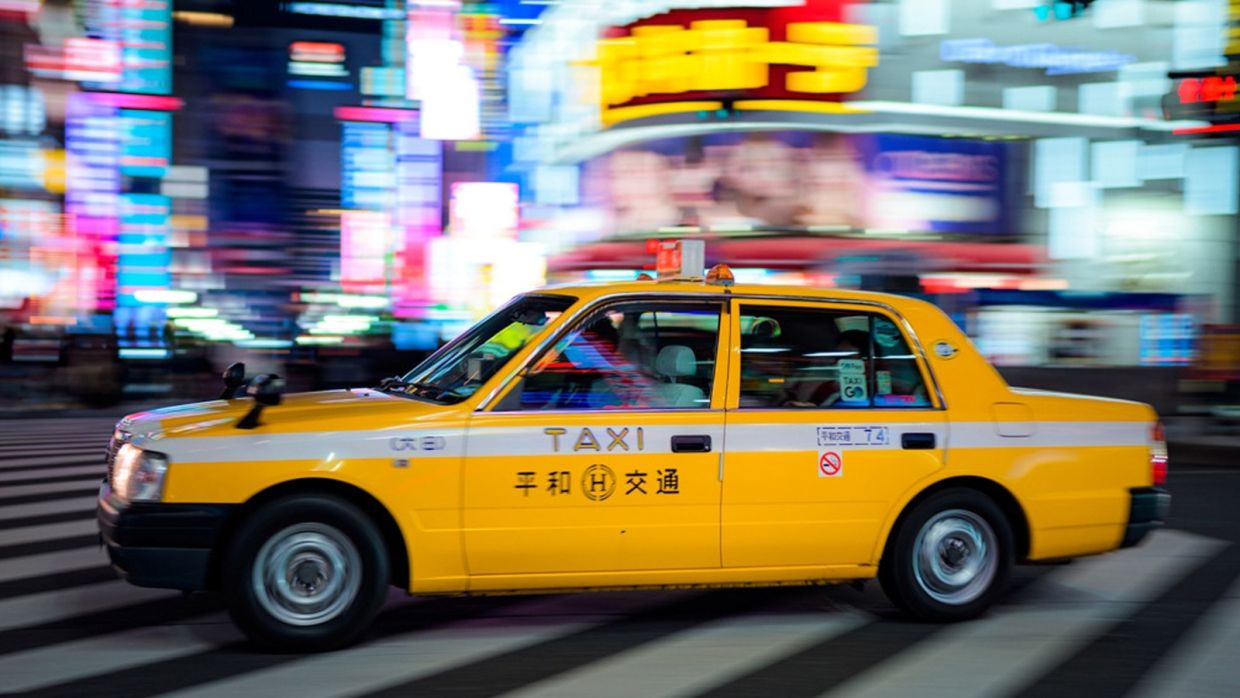
A 41-year-old Chinese national has been taken into custody by Tokyo authorities on suspicion of orchestrating an unlicensed taxi operation that exploited Japan's regulatory framework to ferry tourists across the city. Wang Xiaoyu was arrested on Sunday after investigations revealed he had systematically leased vehicles registered to Phoenix Kokusai, a chauffeur service company he effectively controlled, to individuals outside the company who then operated them as illegal taxis servicing Chinese tourists and other visitors between February and April this year.
The scheme capitalised on a loophole in Japan's transportation licensing system that has become increasingly vulnerable as visitor numbers to the country swell. Wang's operation extracted approximately 38 million yen, equivalent to around US$233,000, from eighteen drivers who paid fees in exchange for using the company's credentials and vehicle registrations. This arrangement ran from November 2024 through May 2026, creating a sophisticated network that masked unauthorised commercial transportation activities behind the veneer of legitimately registered vehicles.
The vehicles involved were registered under a category known as "urban hire," a transportation classification introduced in 2014 specifically designed to accommodate ride-sharing arrangements. Unlike conventional taxi services, urban hire requires passengers to book services in advance and commit to charter agreements lasting a minimum of two hours. This regulatory distinction was meant to distinguish between traditional on-demand taxi services and pre-arranged transportation, yet Wang's operation blurred these boundaries by using the category as cover for what amounted to illegal taxi operations.
Japan's system for identifying commercial vehicles relies on green licence plates to denote authorised operators. However, law enforcement agencies have long recognised that this visual identification system is fundamentally flawed, as the appearance of vehicles alone provides no reliable indicator of whether they are operating within legal parameters. The ease with which these plates can be exploited has emerged as a significant vulnerability, particularly as overseas operators have grown more sophisticated in circumventing regulations.
The investigation gained momentum following complaints lodged by legitimate taxi drivers who observed urban-hire vehicles aggressively soliciting passengers at Tokyo's Haneda Airport, one of Asia's busiest aviation hubs. These reports triggered closer scrutiny from the Tokyo Metropolitan Police Department, which determined that the vehicles were operating in flagrant violation of transportation regulations. Beyond Wang's arrest, police have also detained three Chinese drivers on identical charges of breaching the Road Transportation Act.
Wang has partially contested the allegations against him, suggesting that while aspects of the investigation may be accurate, his culpability may not extend to all charges. Nevertheless, the scale of the operation and the deliberate structuring of arrangements to evade detection indicate a calculated effort to profit from regulatory gaps while exposing passengers to vehicles and drivers operating without proper licensing or insurance protections.
The proliferation of such schemes reflects broader trends in Tokyo's transportation sector as Japan experiences unprecedented tourism growth. According to the Ministry of Land, Infrastructure, Transport and Tourism, the number of registered urban hire vehicles has ballooned from just 3,868 in fiscal 2013 to 8,850 by fiscal 2024. This nearly 130 percent expansion mirrors Japan's dramatic increase in international arrivals and creates an environment where distinguishing legitimate operations from illicit ones becomes progressively harder for regulators.
The case underscores vulnerabilities within the urban hire framework that were not fully anticipated when the category was established a decade ago. Policymakers conceived the system partly to provide flexibility for transportation services while maintaining some regulatory oversight, yet the ease with which non-residents can front companies or lease vehicles has created opportunities for exploitation. The involvement of multiple Chinese nationals suggests an organised approach to the scheme rather than isolated misconduct.
For Malaysian travellers and businesses operating in Japan, the case serves as a reminder of the regulatory inconsistencies that persist even in developed nations with sophisticated legal frameworks. While legitimate ride-sharing and charter services remain widely available and generally trustworthy, tourists should exercise caution when using unlicensed or unverified transportation options, particularly at major transit hubs. The incident also raises questions about how effectively Japanese authorities can monitor expanding transportation sectors characterised by rapid growth and international participation.
The broader implications extend to Southeast Asian nations grappling with similar challenges in regulating ride-sharing and transportation innovation. As countries across the region modernise their transport regulations to accommodate new service models, Japan's experience demonstrates how inadequate oversight mechanisms can invite organised circumvention. The case suggests that green-plate designations and advance-booking requirements alone prove insufficient without robust monitoring infrastructure and enforcement mechanisms targeting operators rather than merely drivers.
Regulatory authorities in Japan and elsewhere will likely scrutinise how effectively existing frameworks can adapt to transnational operations and increasingly sophisticated evasion tactics. The involvement of company fronts and systematic fee arrangements indicates that responses must target the organisational architecture enabling violations, not just individual drivers. Tokyo's police investigation, by pursuing both the operator and the drivers, has adopted a more comprehensive approach than enforcement focusing solely on individual violators.

