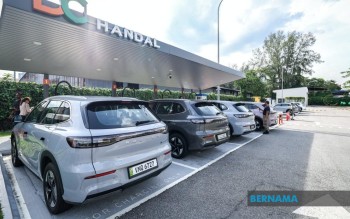
Malaysia's electric vehicle market stands on the cusp of rapid expansion over the next three to five years, drawing increasing interest from international charging infrastructure providers, particularly from China. Xi'an LINCHR New Energy Technology Co Ltd, a major player in smart charging solutions, is positioning itself as a strategic partner in building this critical infrastructure, but the company's leadership is cautioning against simply importing proven Chinese models wholesale. Instead, LINCHR chairman Yuan Qingmin argues that sustainable growth in Malaysia's EV ecosystem requires a fundamentally different approach: genuine localisation, meaningful research and development partnerships, and a deep understanding of the country's unique environmental and operational demands.
The symbiotic relationship between vehicle adoption and charging capacity has become increasingly evident as markets worldwide grapple with the transition to electrified transport. Yuan highlights that growth in one area inevitably constrains the other if infrastructure lags behind, creating a bottleneck effect that undermines consumer confidence and fleet deployment targets. This dynamic takes on particular urgency in Malaysia, where ambitious electrification goals depend not only on vehicle availability but on the parallel development of a robust, accessible, and reliable charging network. Without adequate planning and infrastructure coordination, early EV adopters could face significant inconvenience, potentially slowing broader market penetration.
China's two-decade head start in mass-market EV adoption and charging infrastructure deployment positions it as a natural reference point for emerging markets seeking to accelerate their own transitions. However, Yuan cautions that mechanical technology transfer—simply replicating specifications, designs, and operational protocols developed for Chinese conditions—will produce suboptimal outcomes in Malaysia. The distinction matters enormously for long-term reliability and cost-effectiveness. Chinese charging solutions were engineered for China's specific climate zones, electrical grid characteristics, building standards, and usage patterns. Transplanting these solutions without adjustment risks delivering products that technically function but perform poorly over their intended lifespan or fail to address local pain points.
The humid tropical climate of Malaysia presents a particularly salient example of why adaptation proves essential. LINCHR has responded by incorporating oil-immersed insulation design into the printed circuit boards of its charging stations, a modification specifically aimed at combating the accelerated corrosion that salt spray and moisture cause in Southeast Asian environments. This seemingly technical adjustment reflects a deeper principle: successful technology transfer requires understanding not just the what, but the why—the environmental stressors, usage contexts, and local constraints that shaped the original design. A charging station built for China's drier inland regions will deteriorate faster in Malaysia's coastal and equatorial zones without deliberate engineering interventions.
Beyond climate considerations, LINCHR recognises that market integration requires close collaboration with local stakeholders and regulatory bodies. The company is currently partnering with Swift Bridge Technologies Sdn Bhd, a domestically based EV charger manufacturer, to jointly develop infrastructure solutions tailored for Malaysian deployment. This partnership extends across multiple dimensions—charging infrastructure standards, product specification, technological integration, and engineering design—reflecting an understanding that effective localisation involves far more than climate adaptation. Local manufacturing partners bring insights into regulatory requirements, supply chain realities, maintenance ecosystem capabilities, and customer expectations that international companies might otherwise overlook or underestimate.
The formal tripartite cooperation agreement signed in March of the previous year between LINCHR, Swift Bridge, and the Standards and Industrial Research Institute of Malaysia (SIRIM) signals a commitment to aligning imported solutions with domestic regulatory and safety frameworks. Developing charging infrastructure testing and certification standards, as well as upgrading equipment testing laboratories, creates institutional mechanisms to ensure that technology meets Malaysian requirements rather than relying on foreign certifications that may not address local conditions. This institutional approach to localisation—establishing local standards-setting capacity rather than simply adopting international benchmarks—has broader implications for Malaysia's technological sovereignty and the sustainability of its EV ecosystem.
Yuan's assertion that LINCHR commands more than 70 per cent of China's market share in testing technology solutions provides credibility to the company's expertise, yet he is remarkably candid about the limitations of that success in justifying a simple global rollout strategy. His observation that replicating Chinese technology without local adaptation might satisfy minimum functional requirements but will not suit the Malaysian market reflects sophisticated understanding of the difference between technical compliance and practical suitability. A charging station that works in Malaysia is not the same as a charging station optimised for Malaysian conditions—the distinction carries implications for operational efficiency, maintenance costs, user satisfaction, and competitive positioning.
Looking toward the medium-term future, Yuan identifies a forthcoming evolution in EV charging that will demand even greater sophistication in technology localisation. As electric vehicles become increasingly connected and intelligent, the relationship between vehicles, charging infrastructure, and the electrical grid will shift from unidirectional (grid to vehicle) to bidirectional. Vehicle-to-grid (V2G) technology and related smart charging systems will transform EVs from simple electricity consumers into dynamic energy resources capable of storing and returning power to the grid during peak demand periods. This transition toward what Yuan terms "mobile energy" sources requires charging infrastructure designed not merely to deliver electrical current but to facilitate two-way communication and energy management.
Implementing V2G systems and related smart grid integration in Malaysia will present distinct technical and regulatory challenges compared to Chinese deployments. Malaysia's grid infrastructure, utility regulatory frameworks, tariff structures, and consumer behaviour patterns differ substantially from China's context. Successful deployment of bidirectional charging technology will require additional localised research and development to ensure compatibility with existing grid operations, alignment with utility business models, and integration with Malaysian standards. This prospective evolution underscores the ongoing relevance of Yuan's argument: technology transfer is not a one-time event but a continuous process of adaptation and co-development between international partners and local stakeholders.
The broader significance of LINCHR's approach extends beyond the company's commercial interests to frame a model for how Malaysia might approach technology adoption and integration more generally. Rather than passively accepting imported solutions, the country's relevant agencies—from SIRIM to the energy regulator—can actively shape how international technology is adapted to local circumstances. This approach preserves access to global innovation while building local capability and ensuring that solutions genuinely serve Malaysian needs. As Malaysia's EV market accelerates and international charging solution providers compete for market share, the precedent established through collaborations like LINCHR's partnership with Swift Bridge and SIRIM will likely influence how subsequent technology transfers unfold across the sector.

