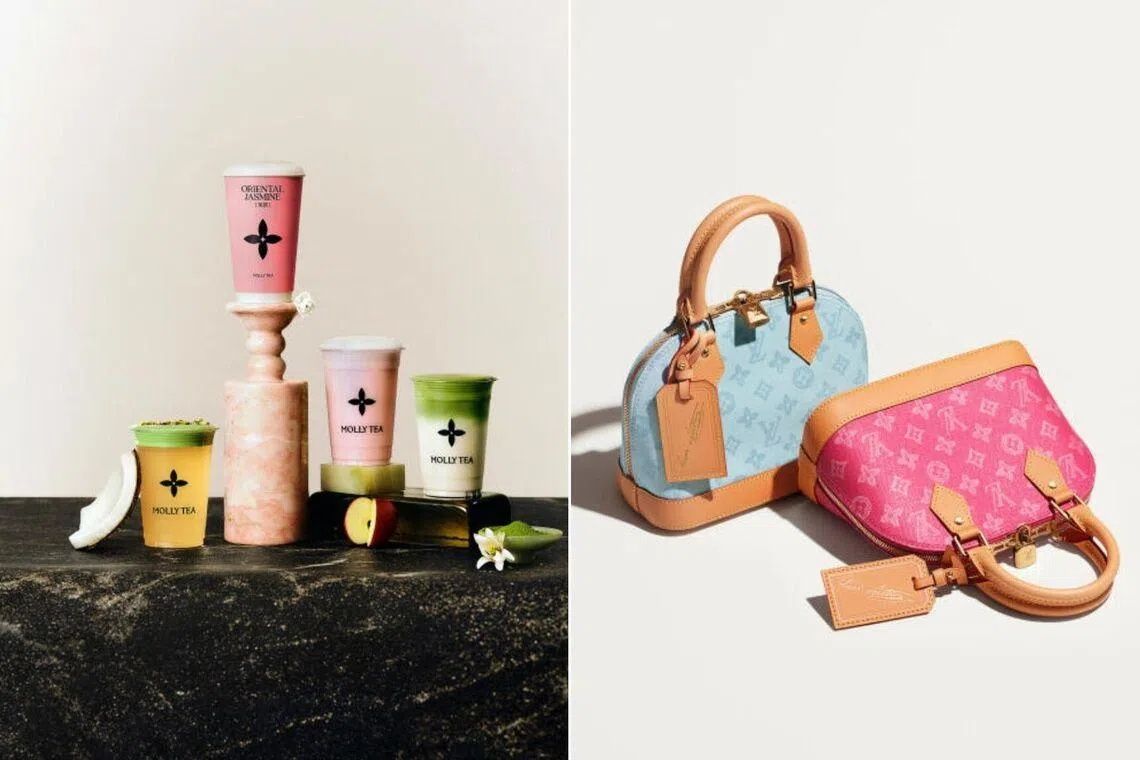
A Chinese court has dealt a significant blow to Molly Tea, a Shenzhen-based milk tea company, by ordering it to pay Louis Vuitton 10.3 million yuan—approximately US$1.5 million—for infringing upon the French luxury brand's registered trademarks. The ruling, handed down on June 29 by the Suzhou Intermediate People's Court in Jiangsu province, found that Molly Tea and one of its franchise outlets in Suzhou's Wuzhong district had copied seven of Louis Vuitton's iconic four-petal flower graphic marks. Beyond the financial penalty, the court mandated that Molly Tea cease the infringing use and issue a public apology, setting off a firestorm of debate across Chinese social media platforms about the boundaries between intellectual property protection and legitimate use of cultural elements.
The dispute centres on the visual similarity between Molly Tea's brand emblem—a four-petal flower design—and Louis Vuitton's signature monogram motifs that have become synonymous with the luxury house globally. When Louis Vuitton initiated the lawsuit in May 2025, the case appeared straightforward on its surface: a local brand had allegedly mimicked the distinctive visual identity of one of the world's most recognisable luxury corporations. Yet the ruling has exposed far deeper questions about how intellectual property law applies in a marketplace where traditional floral patterns have been part of Chinese cultural heritage for centuries. The case highlights the tension between protecting legitimate commercial investments in brand identity and preventing monopolisation of cultural symbols that predate modern trademark systems.
Molly Tea's trademark application history reveals its ambitious expansion strategy, though it ultimately encountered significant regulatory obstacles. Beginning in March 2024, the company and its affiliated entities filed multiple trademark applications featuring floral designs with the China National Intellectual Property Administration, seeking protection across restaurant services, accommodation, advertising, and convenience food categories. Most of these applications were rejected by authorities, with only the application containing the Chinese characters for "Molly Tea" succeeding in obtaining registration. This pattern of rejections suggests that intellectual property officials were already alert to potential conflicts with established marks, yet the company proceeded with its distinctive four-petal flower branding nonetheless—a decision that has now proved costly.
The case has become a phenomenon on Chinese digital platforms, generating extraordinary public engagement that extends well beyond typical intellectual property discussions. A social media hashtag tracking "Louis Vuitton sues Molly Tea for 10.3 million yuan in damages" accumulated over 360 million views, while a related topic about "Molly Tea's LV-like trademark invalidated" garnered more than 18.7 million reads. This level of attention reflects both the prominence of the milk tea industry in contemporary Chinese consumer culture and widespread public interest in questions about fairness and intellectual property enforcement. The verdict has polarised online commentators, creating competing narratives about whether Molly Tea deliberately imitated a luxury competitor or whether the company simply employed a common cultural motif that many businesses might utilise independently.
Public opinion on the dispute remains sharply divided, with commentators emphasising different aspects of the case. Supporters of the judgment argue that Molly Tea's floral emblem bears unmistakable visual similarity to Louis Vuitton's well-established trademark, and that allowing such copying would undermine the value of protected intellectual property. Conversely, critics maintain that substantial visual differences exist between the two designs and that the companies operate in fundamentally different market segments—a luxury goods manufacturer versus a casual beverage retailer—meaning confusion among consumers is unlikely. Adding another dimension to the debate, some Chinese internet users have questioned the originality of Louis Vuitton's signature pattern itself, contending that the French brand may have drawn inspiration from traditional Chinese cultural motifs without acknowledgement, raising questions about whose claim to cultural elements holds greater legitimacy.
Kang Lixia, a partner at Beijing Standzer IP Firm, has provided professional perspective on the implications for appeal and future trademark strategy. She noted that the losing party possesses the right to challenge the decision through higher-level courts, and the outcome of any appeal will depend substantially on whether the appellant can furnish convincing evidence demonstrating that its design constitutes a genuinely original and distinctive creation. Critically, Kang emphasised that floral patterns and decorative motifs embedded in traditional Chinese culture belong to the public domain and remain available for use by any commercial entity. However, this principle operates within the framework of China's trademark law, which adheres to a strict "first to file" approach, meaning that when multiple applicants pursue registration of identical or similar marks covering the same or similar products, the earliest applicant acquires exclusive trademark rights while subsequent applications face rejection.
The legal principle of cross-class protection has emerged as particularly significant in this case, expanding Louis Vuitton's defensive scope beyond what might initially appear reasonable. Kang highlighted that although Molly Tea and Louis Vuitton operate within different trademark classification categories, the French luxury brand's status as an earlier-registered mark coupled with its exceptionally high level of consumer recognition entitles it to protection extending across unrelated product categories. This mechanism, embedded within trademark law, effectively grants established brands with strong market presence defensive rights that can prevent later applicants from using similar marks regardless of whether actual market confusion seems plausible. For emerging Chinese companies like Molly Tea, this doctrine presents a significant challenge: even if a design employs traditional cultural elements rather than attempting direct imitation, the law may still restrict its use if an earlier, more famous mark already claimed similar visual territory.
Liu Bin, an intellectual property lawyer from Beijing Zhongwen Law Firm, has called for measured analysis of the dispute rather than reflexive condemnation of either party. He notes that under contemporary trademark law, protection for figurative marks does not require the challenged design to be technically identical to the registered trademark. Instead, the controlling legal question focuses on whether ordinary consumers encountering both marks would likely experience confusion about the source or sponsorship of products or services. Liu has identified the core intellectual puzzle that troubles many observers: determining how traditional Chinese cultural patterns ought to be protected and allocated fairly within a modern commercial trademark system. Since such motifs constitute public cultural heritage rather than private property, many commentators believe that no single commercial entity should possess exclusive rights to employ them.
Yet Liu has advanced a nuanced position that attempts to reconcile public interest in cultural preservation with legitimate protection for commercial investments. He emphasised that intellectual property protection ultimately applies not to traditional elements themselves, but rather to the brand recognition and consumer goodwill that companies accumulate through their commercial deployment of those elements over time. A company cannot claim ownership over floral patterns as cultural materials, but it can develop exclusive rights to a particular arrangement, colour scheme, or contextual presentation of such patterns when it has established distinctive brand identity through consistent marketplace use and advertising. This distinction proves crucial for understanding modern intellectual property doctrine: the law protects commercial expressions and associations, not the underlying cultural resources.
Liu has articulated an important principle that appears to underpin the court's decision: traditional cultural elements should remain open and available for future generations to employ and advance, yet commercial marks must function differently. Companies wishing to use traditional motifs must do so in ways that do not generate consumer confusion or effectively duplicate the commercial identity established by earlier market participants. The challenge for companies like Molly Tea involves developing distinctive brand expressions that draw upon cultural heritage without replicating or substantially approximating the identifying symbols already successfully registered by competitors, particularly when those competitors possess global brand recognition and substantial legal resources.
For Malaysian and Southeast Asian readers, this case presents important lessons about intellectual property strategy in markets where traditional cultural elements remain economically significant. The region's own beverage, food, and fashion industries frequently incorporate traditional motifs—batik patterns, floral designs, geometric symbols—into commercial branding and product presentation. The Molly Tea decision illustrates how courts may apply existing trademark law to protect earlier-registered marks even when the defendants argue they are merely utilising culturally significant elements available to all. Companies operating in Southeast Asia would be wise to conduct thorough trademark searches before launching new brands featuring traditional design elements, particularly when entering categories where international luxury brands maintain presence and registration. The case also suggests that as regional brands expand internationally or develop higher market recognition, they may themselves gain enhanced protection under cross-class trademark doctrine, potentially creating conflicts with smaller competitors attempting to employ the same cultural resources.
Molly Tea has indicated its intention to appeal the ruling to higher courts, suggesting the dispute will likely continue through additional legal proceedings. The appeal stage will probably focus on whether courts accept arguments about visual distinction between the marks or alternative interpretations of consumer confusion standards. As trademark law in China and across Asia becomes increasingly sophisticated, the underlying tension between protecting established commercial interests and preserving access to cultural heritage will persist. This case may ultimately influence how intellectual property offices throughout the region evaluate applications featuring traditional motifs, potentially requiring companies to demonstrate not merely that a design draws from cultural elements, but that their particular expression clearly distinguishes itself from any previously registered similar marks.

