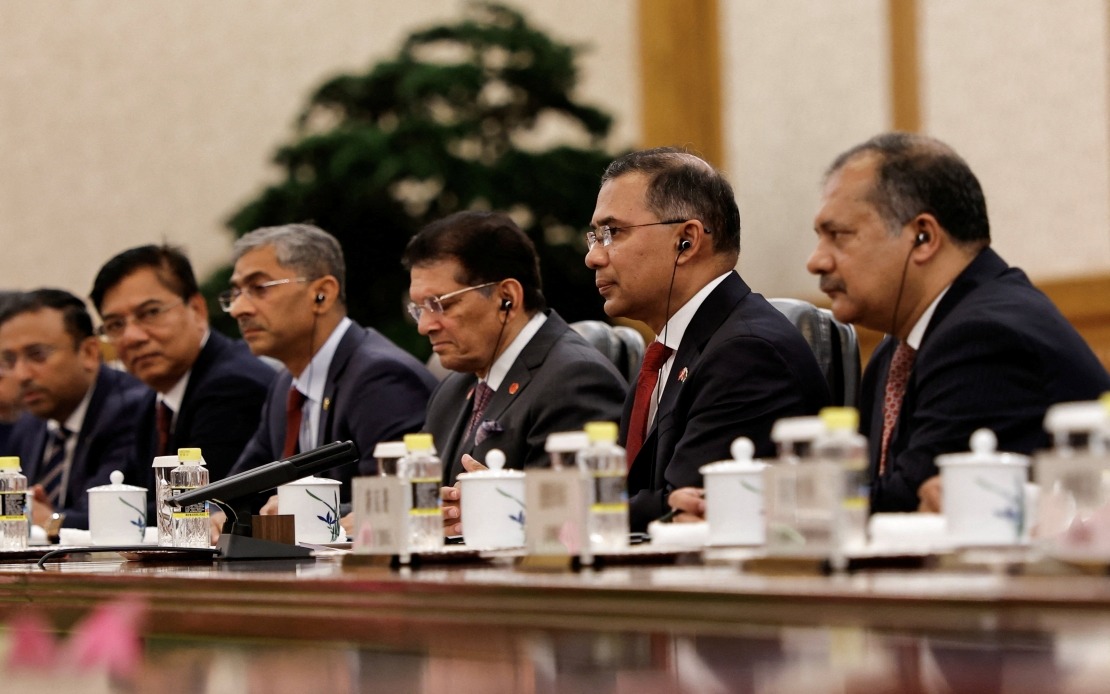
A significant wave of Chinese investment is heading toward Bangladesh, with twelve companies announcing plans to deploy US$9.2 billion across multiple sectors following Prime Minister Tarique Rahman's six-day diplomatic visit to China from June 22 to 26. The proposed investments represent a substantial commitment to developing Bangladesh's economic infrastructure and manufacturing base, with particular emphasis on modernising ports, upgrading highways, and establishing new industrial zones. The scale of these commitments underscores China's strategic interest in deepening economic ties with Bangladesh, a nation situated at a critical juncture in South Asian trade and logistics networks.
The Bangladesh government has explicitly identified energy production, infrastructure development, logistics expansion, port modernisation, and educational advancement as priority areas for Chinese capital. Officials expect these investments to generate tens of thousands of employment opportunities across the country, addressing a persistent need for job creation in both urban and rural areas. This targeted approach reflects a conscious strategy to direct foreign investment toward sectors that will generate broader economic multiplier effects rather than isolated projects.
Central to Bangladesh-China cooperation is the modernisation and expansion of Mongla Port, positioned on the Bay of Bengal approximately 230 kilometres from Dhaka. The China Civil Engineering Construction Corporation has committed US$650 million specifically toward developing an Economic Zone around the port, encompassing warehousing facilities, logistics infrastructure, and related services. This investment speaks to broader efforts to enhance Bangladesh's capacity as a regional shipping hub, particularly relevant as Southeast Asian maritime trade continues to expand. The port development carries implications for neighbouring countries including Malaysia, as enhanced Bangladeshi port capacity could reshape regional cargo flows and shipping patterns.
The largest individual investment comes from Sichuan Road and Bridge Group, which has pledged US$4.5 billion for a comprehensive upgrade of the critical Dhaka-Chattogram highway corridor. This project, structured as a public-private partnership, addresses one of Bangladesh's most significant infrastructure bottlenecks. The Dhaka-Chattogram route handles substantial volumes of domestic and transit traffic, and modernisation would enhance both passenger movement and freight efficiency. Such improvements have regional significance, as improved Bangladesh infrastructure facilitates smoother movement of goods throughout South Asia.
Environmental and energy-focused projects constitute a notable portion of the investment portfolio. Shanghai SUS Environment Company plans to deploy US$890 million in developing waste-to-energy facilities, addressing both waste management challenges and power generation needs simultaneously. Zhongxin Environmental Protection Group has proposed a substantial US$1.65 billion e-waste recycling project in the Payra Port Industrial Zone, reflecting growing international focus on circular economy principles and electronic waste management. These ventures demonstrate how infrastructure investment increasingly incorporates environmental considerations, aligning with global sustainability trends.
Manufacturing and energy generation projects diversify the investment landscape further. Huaxin Textile Industry Company Limited intends to establish a 200 megawatt captive solar power plant while simultaneously expanding recycled cotton and yarn production and manufacturing cylindrical lithium batteries, committing US$190 million to this multifaceted operation. China Future Energy Group Holding Limited has allocated US$250 million toward gas field exploration and development, tapping Bangladesh's hydrocarbon resources. Collectively, these ventures position Bangladesh to strengthen its manufacturing competitiveness while diversifying its energy portfolio beyond traditional thermal generation.
China and Bangladesh have additionally agreed to establish a Chinese industrial park in Chattogram, Bangladesh's largest port city and industrial centre. This dedicated industrial zone would concentrate Chinese manufacturing operations and supply chain activities within a single geographic location, facilitating knowledge transfer, supply chain integration, and coordinated development. Such industrial parks have proven effective throughout Asia in clustering foreign direct investment and generating technological spillovers to local enterprises.
Supporting logistics and commerce infrastructure represents another investment dimension. SF Express, the major Chinese logistics provider, has committed US$180 million toward developing cold-chain logistics and warehouse facilities at Mongla, addressing critical gaps in temperature-controlled storage and distribution. Shenzhen Kaifa Technology plans to invest US$250 million in manufacturing electric smart metres, contributing to Bangladesh's emerging smart grid infrastructure. These projects illustrate how Chinese investment increasingly targets enabling infrastructure that supports broader economic transformation.
Bangladesh Commerce Minister Khandakar Abdul Muktadir has signalled that these Chinese investments will help address the country's persistent trade deficit with China. Bangladesh currently imports substantially more from China than it exports, creating a structural trade imbalance that constrains foreign exchange reserves. By attracting Chinese manufacturing investment that produces goods for both domestic consumption and export, Bangladesh aims to gradually rebalance this relationship while simultaneously developing industrial capacity and technological expertise.
For Malaysia and other Southeast Asian nations, this investment wave carries several implications. Enhanced Bangladesh port and logistics capacity could alter regional cargo routing patterns, potentially affecting Malaysian shipping and transshipment sectors. The manufacturing and industrial park developments in Bangladesh could make it a more competitive destination for relocating supply chains, particularly in textiles and electronics manufacturing. Meanwhile, Bangladesh's improved infrastructure connectivity might facilitate more efficient regional trade flows that benefit multiple nations, though potentially at the expense of existing regional hubs.

