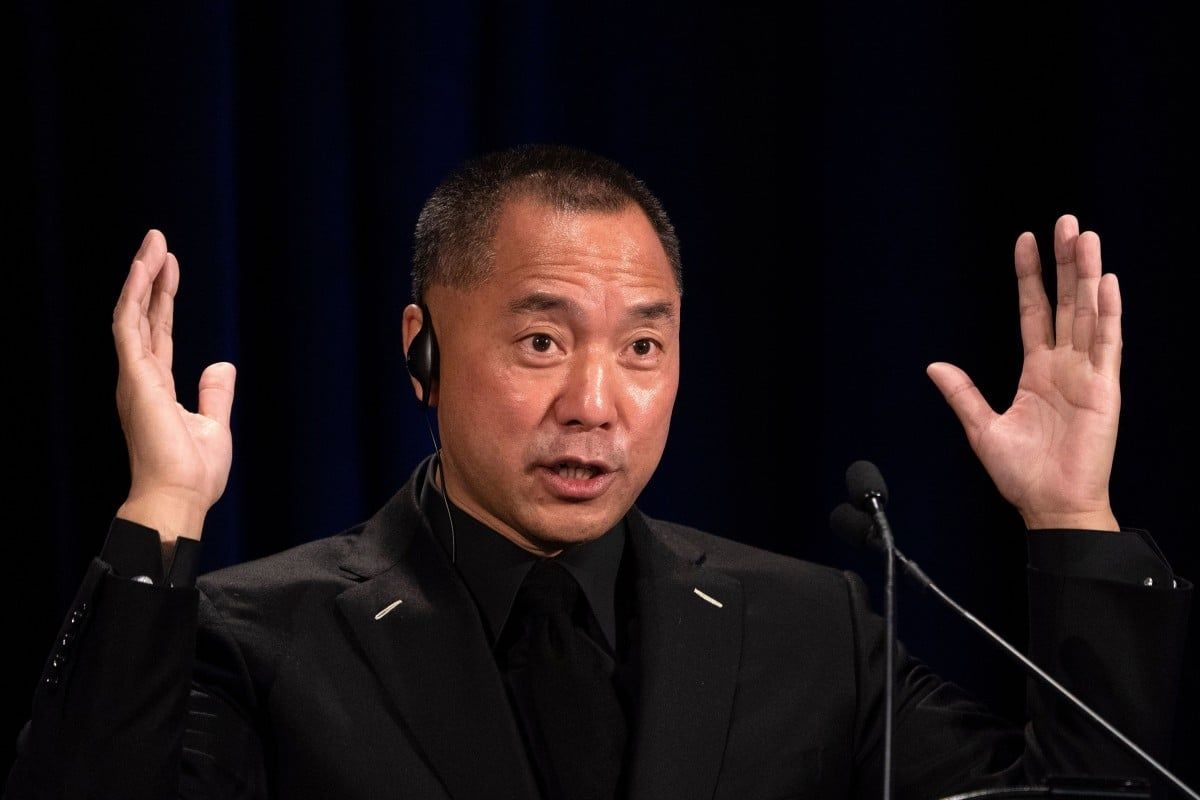
Guo Wengui, once considered among China's wealthiest entrepreneurs, received a 30-year prison sentence in Manhattan on Monday after being convicted of operating one of the most elaborate financial frauds targeting diaspora communities. Judge Analisa Torres handed down the punishment in a courtroom filled with Guo's supporters, emphasizing that his scheme specifically exploited individuals seeking to support democratic movements against China's government. The sentence represents a significant moment in exposing how dissidents and political critics can become perpetrators of major crimes whilst maintaining their public personas as freedom fighters.
The businessman fled China a decade ago and reinvented himself as a vocal opponent of the Communist Party, eventually establishing connections with prominent conservative figures in the United States. His rise included partnerships with political strategist Steve Bannon, who collaborated with him on a 2020 initiative claiming to work towards China's political transformation. Guo's wealth and apparent legitimacy allowed him to gain access to exclusive circles, including membership at President Donald Trump's Mar-a-Lago golf club in Florida, whilst living in a luxury Central Park-overlooking apartment that anchored his image as a successful entrepreneur operating freely in America.
The fraud operation itself ran from 2018 to 2023, during which Guo convinced hundreds of thousands of investors to channel more than US$1 billion into various entities under his control. These schemes included his media company GTV Media Group Inc., entities branded as the Himalaya Farm Alliance, and the Himalaya Exchange. Prosecutors documented how Guo deliberately misrepresented these ventures to potential investors, promising returns on investments whilst diverting funds to support his extravagant lifestyle. The scale of the deception was staggering—thousands of people lost their life savings, whilst Guo accumulated yachts, luxury apartments, designer collections, and race cars.
What distinguishes this case from typical financial fraud is the deliberate targeting of victims who shared Guo's stated political opposition to Beijing. Judge Torres explicitly noted that he "preyed on those seeking to bring Democracy to China," exploiting their ideological alignment and trust in what appeared to be a fellow dissident. Victims' letters read during sentencing revealed the psychological devastation beyond mere financial loss. Families fractured over poor investment decisions, individuals experienced severe anxiety and shame, and some lost not only their savings but also their sense of community among fellow activists. One victim, Wei Chen, testified that Guo's fraud "destroyed my life" and that of her entire family.
Guo's response to the sentencing demonstrated a complete absence of remorse. He briefly addressed the court by reiterating his stated purpose for coming to America—to "destroy the CCP"—rather than addressing the criminal charges. He disputed the prosecution's characterisation of his health complaints, claiming genuine illness rather than malingering. His supporters applauded him as he left the courtroom, suggesting that despite his conviction, a core group continues to view him as a political martyr rather than a common fraudster. This dynamic raises important questions about how political rhetoric can shield individuals from accountability in the eyes of their supporters.
The judge ordered Guo to forfeit US$889 million in restitution, though prosecutors acknowledged the likelihood of collecting such sums from someone whose assets may be dispersed or difficult to locate. Torres further noted that Guo "takes no responsibility for his actions and instead insists incredibly his conduct caused no loss and harmed no one." She documented evidence that Guo had instructed his supporters to "harass and intimidate those who dare to speak out against him," demonstrating a pattern of silencing victims and critics beyond the financial fraud itself.
Guo's legal defence attempted to frame him as a victim of the Chinese Communist Party's persecution, claiming he suffered torture resulting in lasting physical injuries between 1993 and 2022. The defence argued that Beijing had recruited elites in American business, entertainment, and politics to conspire against him, and suggested that his lengthy prison sentence would validate China's alleged "smear campaign" against him. They pointed out that comparable defendants in similar cases received sentences of two to four years, arguing the 30-year term was disproportionate. However, prosecutors countered that Guo's crimes were characterised by exceptional deception and scale, affecting far more victims than typical fraud cases.
China's government has not remained silent on the matter. The Ministry of Foreign Affairs issued a statement noting the sentencing and reiterating that Guo remains wanted by Chinese authorities for rape, kidnapping, bribery, and other alleged crimes. An Interpol Red Notice has been issued against him, which serves as a formal request to law enforcement agencies worldwide to locate and arrest individuals pending extradition. Guo has consistently denied these Chinese allegations, claiming they represent political persecution rather than legitimate criminal charges.
For Malaysian and Southeast Asian observers, this case illustrates several crucial dynamics. The story reveals how diaspora communities and political exiles remain vulnerable to exploitation even when they have consciously positioned themselves as opposing authoritarian regimes. It demonstrates that geographical distance from one's government of origin does not automatically confer legitimacy or prevent criminal behaviour. The case also highlights the complexities facing liberal democracies that have provided asylum to political critics—how can they balance protection of genuine dissidents with oversight preventing exploitation under the guise of political opposition? The scale of Guo's fraud and his apparent ability to operate undetected for years suggests regulatory gaps in how investment schemes targeting specific communities are monitored.
The sentencing also raises questions about the relationship between political rhetoric and criminal accountability. Guo's association with American conservative figures and his vocal criticism of Beijing created a political aura that may have insulated him from scrutiny earlier than it should have. For Southeast Asian readers accustomed to governments that sometimes conflate criticism with criminality, the American legal system's willingness to convict a vocal dissident of serious crimes whilst still maintaining due process may offer a contrasting model. However, the case also demonstrates that genuine criminality can hide beneath political messaging, and that being against an authoritarian government does not make one virtuous.
As Guo begins his 30-year sentence, the broader implications for diaspora politics in democratic countries remain significant. The case will likely influence how future political entrepreneurs and activists from authoritarian regimes are evaluated by both investors and authorities. For communities in Southeast Asia with large diaspora populations and significant Chinese diaspora investment, understanding how fraud schemes exploit political narratives becomes increasingly important. The trust that exiled communities place in fellow dissidents and political figures requires both credibility and demonstrable integrity—attributes that Guo's fraud definitively undermined for both himself and potentially for other legitimate critics of China's government.

