China's ambitious push to harness artificial intelligence for scientific advancement faces a critical bottleneck: the country's substantial dependence on imported precision instruments to generate the high-quality experimental data that AI systems require. Prominent academics and researchers have begun sounding alarm bells about this structural weakness, warning that without access to domestically manufactured sophisticated equipment, China's AI-for-science capabilities will remain fundamentally constrained, regardless of advances in computational power or algorithmic sophistication.
The severity of this equipment import dependency became stark during remarks at the "AI for Science" conference held in Shanghai last week. Weinan E, a mathematician at Peking University's school of mathematical sciences and member of the Chinese Academy of Sciences, articulated the core problem using a memorable metaphor: without domestic precision instruments to gather first-hand experimental data, deploying AI in science becomes "like cooking without rice." His observation captured a paradox that China's scientific establishment increasingly grapples with—possessing cutting-edge artificial intelligence but lacking the foundational physical infrastructure to fully exploit it.
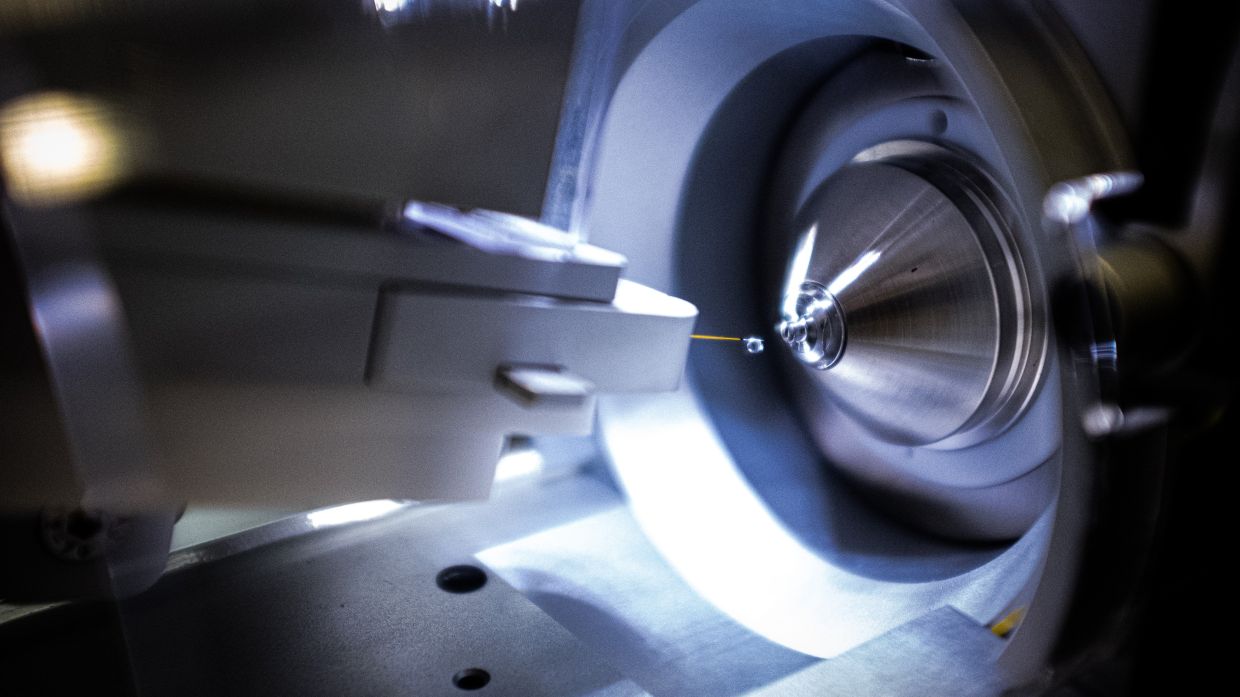
The numbers underscore the magnitude of this dependency. In 2024 alone, China imported approximately US$17 billion worth of scientific equipment, with foreign suppliers providing more than three-quarters of the major research instruments deployed throughout the country, according to analysis from Beijing-based Puhua Policy. The reliance becomes even more pronounced in specific critical areas: LeadLeo, a consultancy tracking China's tech landscape, documented that the country depends on imports for 83 per cent of its mass spectrometers and chromatographs—instruments absolutely essential for molecular analysis—and 75 per cent of spectrometers. In optical instruments and biological tissue analysis equipment, Chinese dependence approaches near-total reliance on overseas sources.
This technological vulnerability carries profound practical consequences for Chinese researchers. Mass spectrometers form the analytical backbone for identifying molecular structures; chromatographs provide the separation capabilities required for chemical analysis; spectrometers deploy light-based methods to characterise material properties. These instruments generate the granular, high-fidelity experimental datasets upon which effective AI training depends. The dependency has manifested in tangible problems: elevated equipment costs that strain research budgets, extended maintenance cycles that interrupt experiments, and sluggish after-sales support that compounds operational inefficiency. Collectively, these friction points threaten to erode China's competitive position in frontier research domains where speed and precision increasingly determine scientific leadership.
The situation has been exacerbated by deliberate US policy measures designed to restrict Beijing's access to advanced scientific equipment. During Donald Trump's first administration, which concluded in January 2021, American authorities added more than 42 per cent of 4,510 China-related entries to export control lists, systematically targeting technologies deemed dual-use or military-capable. These restrictions have persisted and intensified under Trump's second term, now informed by Washington's conviction that advanced scientific equipment could facilitate Chinese military modernisation and accelerate development of AI-assisted weapons systems. In January 2025, the US Department of Commerce announced fresh export controls specifically targeting high-parameter flow cytometers and selected mass spectrometry systems, explicitly citing concerns that these technologies generate biological data suitable for "developing AI and biological design tools."
Beyond equipment constraints, E identified a second critical vulnerability in China's AI trajectory: substantial deficiencies in foundational AI models compared to international counterparts. He characterised this gap as the paramount risk facing China's AI-for-science ambitions, a reality demanding immediate confrontation rather than wishful thinking. The fundamental challenge, according to E, stems from a misconception that has gained traction in some quarters: the notion that grafting scientific capabilities onto existing open-source foundation models represents a viable pathway forward. In practice, he argued, this assumption has proven false. Solving genuinely complex scientific problems requires fundamentally more robust underlying models, not merely additional post-training refinement layered atop inadequate foundations.
The divergence in strategic approaches between the United States and China illuminates why this gap persists. The American approach concentrates on progressively enhancing general-purpose foundation models while integrating them with automated laboratory and research infrastructure, creating synergistic ecosystems where AI capabilities compound. China, conversely, has pursued a more application-centric strategy, constructing integrated scientific AI ecosystems that bundle data, software, computing resources and automated equipment, then targeting these systems toward specific research challenges. While this application-focused methodology offers certain advantages, it has sacrificed the foundational model sophistication that underpins transformative breakthroughs.
Responding to these interconnected challenges, E articulated a sweeping restructuring vision for China's research system tailored to the AI era. He identified three critical "breaks" requiring institutional transformation. First, the scientific community must dissolve disciplinary boundaries that fragment research, enabling seamless cross-field collaboration where insights from diverse domains fertilise each other. Second, researchers must bridge the persistent divide separating theoretical work from experimental investigation, recognising their profound interdependence. Third, barriers between academia and industry must crumble, permitting knowledge and innovation to circulate freely across institutional categories.
EquallyAmbitiously, E proposed a fundamental overhaul of China's traditional research evaluation frameworks, which currently privilege peer-reviewed publications above all other scholarly contributions. Under reimagined evaluation systems, contributions that fall beyond publication—development of datasets, creation of software tools, construction of research infrastructure—would receive recognition commensurate with their scientific value. Such structural reforms, he suggested, would realign incentive systems with the collaborative, technology-intensive requirements of AI-driven science.
For Southeast Asian research institutions and policymakers, China's struggles with equipment dependency and foundational model limitations carry instructive implications. The region's own scientific communities depend substantially on imported precision instruments, creating parallel vulnerabilities to supply disruption and geopolitical pressures. As global technology competition intensifies and great-power tensions reshape trade patterns, Southeast Asian governments would be prudent to evaluate their institutional capacity for indigenous instrument development and assess whether regional cooperation on fundamental AI research could reduce collective dependence on external actors.
The broader narrative emerging from Shanghai's conference suggests that technological leadership in the AI era requires mastery across multiple dimensions simultaneously—not merely algorithmic sophistication, but access to data-gathering instruments, foundational model capabilities, and institutional structures adapted to collaborative scientific practice. China's current trajectory reveals how advances in one domain can be substantially constrained by deficiencies in others, a lesson with relevance extending far beyond Beijing's laboratories.

