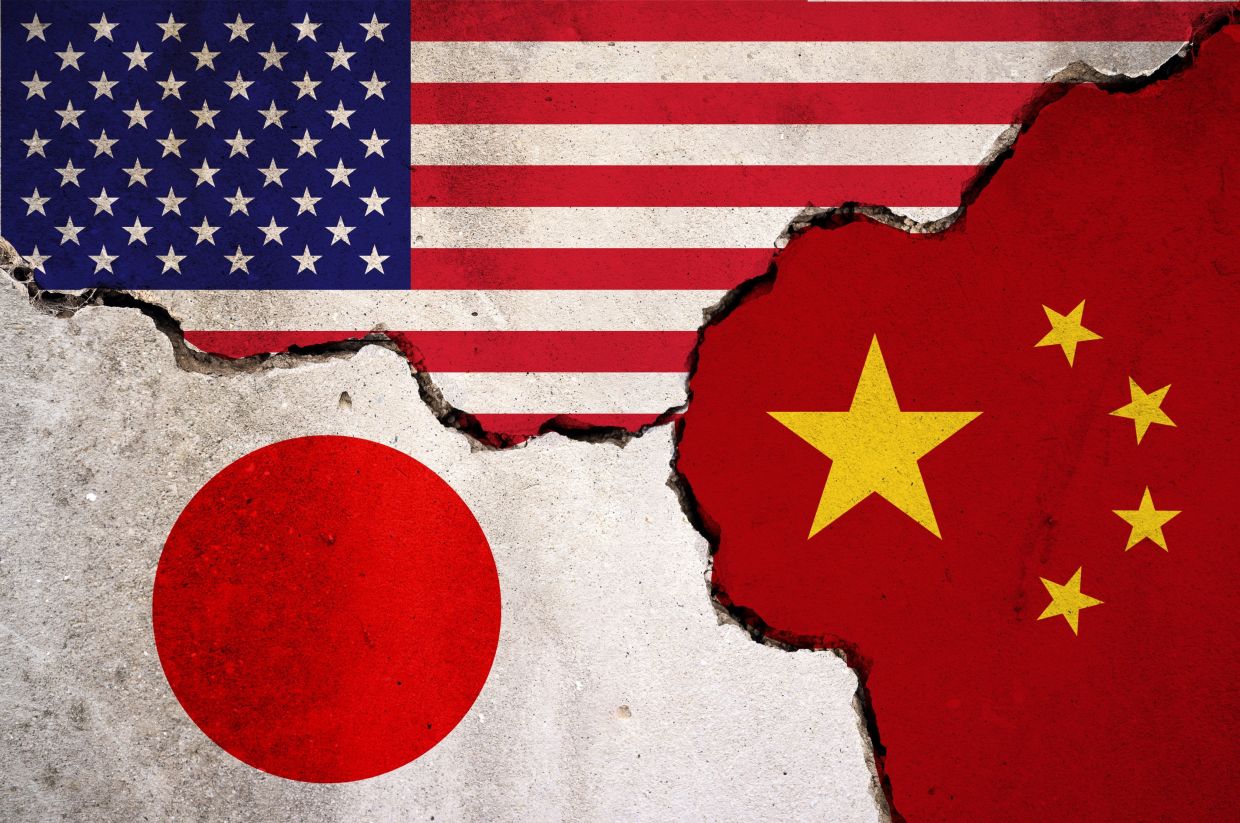
The escalating strain between Washington and Tokyo over Beijing's economic coercion of Japan represents a critical test of American commitment to its post-war Asian alliance structure. Over the past seven months, China has subjected Japan to repeated punitive measures, leaving Tokyo feeling abandoned by its supposed security guarantor. Meanwhile, the Trump administration has struggled to balance regional pressures, with analysts and former officials now questioning whether Washington's response reflects genuine strategic calculation or something more troubling: a president willing to sacrifice alliance credibility for transactional leverage with Beijing.
The crisis originated in November when Prime Minister Sanae Takaichi made explicit what had long remained unstated in Japanese strategic thinking. During parliamentary deliberations, she declared that a Chinese attack on Taiwan would constitute an existential threat to Japan, stating that deployment of warships and military action would create "a survival-threatening situation." Takaichi, a hardline conservative politician, refused to soften her position despite predictable outrage from Beijing, which views such statements as violations of its core interests and challenges to the strategic ambiguity that has underpinned regional stability for half a century.
Beijing's response proved swift and multifaceted. Among several retaliatory measures introduced in January, China imposed restrictions on rare earth exports to Japan, a particularly damaging sanction given Tokyo's dependence on these materials for advanced manufacturing and defence systems. Yet what surprised many observers was not Beijing's reaction but rather Washington's muted response. The Trump administration offered little vocal support for its treaty ally, creating a yawning credibility gap between America's security commitments and its diplomatic actions. This gap has opened profound questions about whether the US security umbrella over Japan remains as reliable as Tokyo has long assumed.
Japanese officials have responded to American indifference with growing frustration, though their protests remain largely private to avoid appearing weak internationally. Sources familiar with Tokyo's deliberations reveal that Japanese entreaties to Washington have intensified dramatically, escalating from initial one-time requests to frequent discussions at cabinet and legislative levels. Tokyo's central plea focuses on persuading Washington to pressure Beijing to lift the rare earth restrictions and ease broader economic coercion. However, White House officials have treated the matter as a decidedly low priority, with one source describing the dismissive approach in blunt terms: "It's been a case of 'Japan wants this ... Next subject.'" This cavalier handling has bred "simmering dissatisfaction" among Japanese officials who expected greater urgency from an administration that claims to prioritize Indo-Pacific security.
The Trump administration has not entirely ignored the issue. Officials did raise China's rare earth restrictions with President Xi Jinping, though reports suggest the matter received minimal emphasis in broader discussions. Trump himself broached the topic during interactions with Xi, yet Japanese observers detected little substantive follow-up or commitment to resolving the dispute. The contrast between Washington's casual engagement on Japan's behalf and its more solicitous approach to Beijing has become painfully apparent to Tokyo's leadership. One source captured the Japanese sentiment bluntly: "Trump pays lip service to the Japanese leader and then softballs with Xi." This perception reflects deeper anxieties about whether Trump's transactional worldview places alliance solidarity beneath potential bilateral deals with China.
Analysts point to multiple factors explaining Trump's reticence to vigorously defend Japan. His administration's preoccupation with the Middle East, particularly the conflict Trump initiated with Israeli Prime Minister Benjamin Netanyahu against Iran, has diverted attention and resources from East Asia. The US has reallocated forces and anti-missile systems from the Pacific region to the Persian Gulf, signalling a strategic reorientation that marginalizes Japanese concerns. Washington's shifting focus undermines the architecture of collective security that has underpinned regional stability and American power projection across Asia for decades.
Beyond geographic distraction, Trump's transactional presidency may view silence on Japan as a negotiating tool. With his domestic political standing deteriorating amid war-related economic pressures heading into midterm elections, the president may calculate that appearing conciliatory toward Beijing offers strategic advantage. Jeffrey Moon, former National Security Council member and head of China Moon Strategies, articulates this interpretation candidly: Trump "somehow thinks that regional security is a card that he can play, his remarks about Taiwan and perhaps the silence about Japan, that somehow he can use this to his benefit." Whether through a potential Washington summit with Xi or ongoing trade negotiations, the Trump administration may believe that sacrificing visible support for Japan purchases goodwill with Beijing.
Trump's long-standing skepticism toward alliance commitments compounds the problem. His persistent characterization of allies as "freeloaders" represents a fundamental departure from decades of American strategic doctrine holding that collective security arrangements benefit all participants. This ideological suspicion gains particular irony given Japan's extensive efforts to address Trump's complaints. Tokyo has exceeded American demands for increased defence spending and invested heavily in new military capabilities designed to deter China and strengthen the bilateral alliance. Yet these efforts have earned Tokyo little diplomatic currency with an administration that views alliance dynamics through a narrow lens of immediate American advantage.
Japan's disappointment intensifies when considering the broader context of American requests to allies. Tokyo, NATO members, and other allied nations have received explicit appeals to contribute more to regional security and support American military operations. When these allies respond positively, as Japan consistently has, Washington's failure to reciprocate creates legitimate grievances. The frustration deepened when Trump publicly expressed displeasure that Japan, NATO, and European allies failed to deploy ships and provide other assistance in the Persian Gulf. During a March White House meeting with Takaichi, when asked why allies were not consulted beforehand about military plans, Trump dismissively responded that "it's appropriate that people step up," denying he needed assistance from any ally. This posture reveals a profound misunderstanding of how alliance relationships function and the mutual obligations they entail.
Some analysts suggest Japan's Prime Minister may have overextended by explicitly articulating the strategic reality underlying Japanese security policy. Takaichi's November comments punctured the deliberate ambiguity that has maintained an uneasy equilibrium across the Taiwan Strait for fifty years. Yet others argue her statements merely reflected what geography and the massive American military presence in Japan had always implied. The real question emerging from this dispute concerns whether Japan can rely on American backing when it candidly acknowledges strategic necessities. This fundamental credibility issue extends far beyond Tokyo to affect every US ally reconsidering its security posture in light of American conduct.
Trump's apparent prioritization of personal concerns over geopolitical interests adds another troubling dimension. Sources and analysts note that in his second term, the president has devoted increasing attention to family property ventures, cryptocurrency deals, and settling personal grievances. This inward focus displaces the broader strategic vision necessary for coherent alliance management. Jeffrey Moon observes that "it's increasingly about him personally, not about the party, not about the international community," and consequently "this is not a priority." The implications for regional stability are profound. When American alliance commitments become contingent on a president's personal interests rather than institutional strategy, the entire post-war security architecture in Asia becomes unstable.
The implications for Southeast Asia extend beyond bilateral US-Japan relations. The region depends upon American security guarantees and the international rules-based order that Washington has underwritten. If Trump's administration abandons Japan over Beijing's pressure, it sends unmistakable signals to other American allies in the region regarding the reliability of American commitments. Vietnam, the Philippines, South Korea, and other nations watching how Washington responds to Chinese coercion of Japan face difficult calculations about their own security strategies. If the US proves unwilling to support even its most strategically important ally against economic intimidation, smaller and more vulnerable nations can hardly expect robust American backing.
The crisis also reveals troubling asymmetries in how the Trump administration treats different allies and adversaries. Beijing receives patient, accommodating diplomacy while Tokyo encounters dismissive indifference despite its reliability, resources, and strategic location. This inversion of rational alliance management reflects either strategic confusion or, more troublingly, a president willing to abandon alliance partners for perceived personal advantage. As the region watches these dynamics unfold, the foundational assumptions undergirding seventy years of American strategic presence in Asia face their most serious challenge since the Cold War's conclusion. The question before Tokyo, Seoul, Taipei, Manila, and other capitals is whether they can depend on American security guarantees in a critical moment, or whether they must contemplate alternative security arrangements in a region where China's military and economic power continues expanding unchecked.

