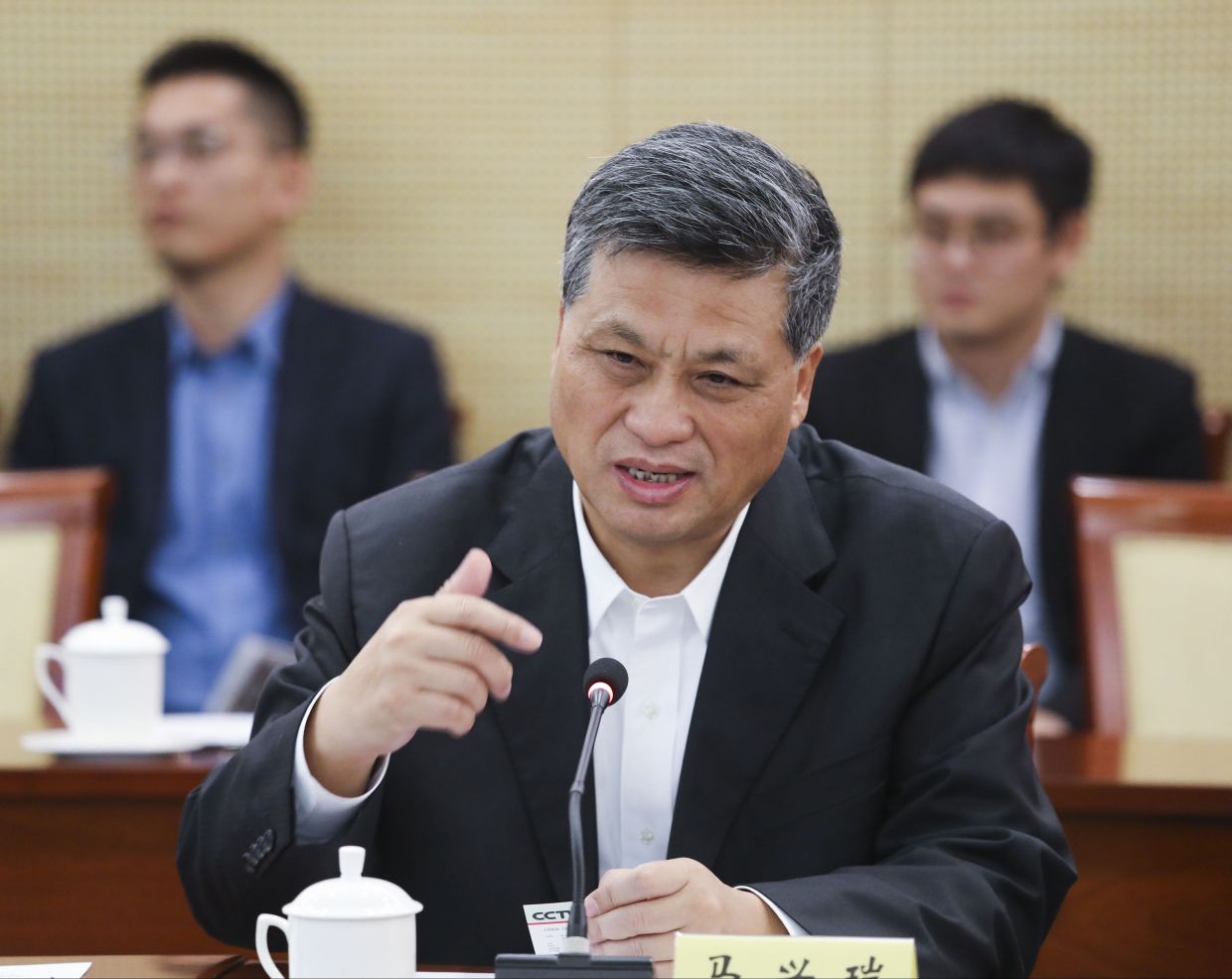
The Chinese Communist Party has formally moved against Ma Xingrui, a 67-year-old former Politburo member, on charges of systematic corruption spanning his tenure across multiple senior positions. The Central Commission for Discipline Inspection disclosed its findings after the Politburo itself reviewed and approved the report in late June, signalling the gravity with which party leadership views the case. The decision to make public such detailed accusations against an elite official underscores President Xi Jinping's continued emphasis on rooting out high-level misconduct, even as it raises questions about factional dynamics within China's power structure.
Ma's political trajectory took him through several of China's most strategically important sectors and regions. As a trained aerospace engineer, he spent years at the China Aerospace Science and Technology Corporation, eventually becoming its general manager between 2007 and 2013. During that period, he held dual responsibility as deputy commander-in-chief of the manned space programme and chief architect of China's new-generation carrier rocket initiative—roles that placed him at the heart of the country's technological advancement strategy. This technical expertise later transitioned into provincial governance when he joined Guangdong's leadership as deputy party secretary in 2013, before climbing through increasingly powerful positions as party secretary of Shenzhen, vice-governor, and finally provincial governor.
His elevation to Xinjiang party secretary in 2021, succeeding Chen Quanguo, cemented his status as a Politburo member the following year at the party's 20th congress. Xinjiang, China's vast northwestern autonomous region housing substantial Uyghur and other minority populations, represents one of the most politically sensitive posts in the country. The appointment signalled confidence in Ma's ability to navigate the region's complex governance challenges. However, the investigation announced in April and now formally detailed reveals a sharply different picture of his stewardship.
The disciplinary commission's charges paint a portrait of systematic abuse of office for personal enrichment. Ma allegedly accepted improper gifts and money, leveraged his influence to secure discounted property purchases for family members, and engaged in what the party describes as "power-for-sex and money-for-sex transactions." More broadly, he stands accused of deliberately fostering what officials term "rampant corruption across his family," effectively transforming state authority into a mechanism for private gain. The allegations extend beyond direct personal conduct to encompass how he weaponised his position to benefit associates in business operations, project contracting, and career advancement.
Particularly damaging is the accusation that Ma failed to supervise his subordinates adequately, allowing staff members to commit serious disciplinary violations and suspected crimes that resulted in severe consequences. The commission also found that he interfered improperly in cadre appointments and personnel decisions, using both direct authority and family intermediaries to arrange positions for favoured individuals. This suggests a broader institutional failure in which the machinery of government became subordinate to personal and familial interests rather than remaining accountable to party discipline and public duty.
The timing and nature of Ma's case carry significant implications for understanding power struggles within China's leadership. His removal represents the third Politburo-level investigation initiated during Xi Jinping's current term, which commenced in 2022—a frequency unprecedented in recent decades. In October, He Weidong, former vice-chairman of the Central Military Commission, was expelled from both the party and military following his own investigation. Additionally, Chen Weijun, former executive vice-chairman of the Xinjiang Production and Construction Commission, faced investigation after his case became public in December, followed by Li Xu, deputy commander of the Xinjiang Production and Construction Corps, whose probe was disclosed in January. This concentration of investigations within Xinjiang's administrative and military apparatus suggests either a systematic pattern of misconduct within the region's governance structure or a broader political recalibration within Xi's inner circles.
Ma's conduct reportedly continued unabated even after the 18th party congress, when Xi announced his landmark anti-corruption campaign and introduced stricter official conduct regulations. His alleged refusal to provide truthful confessions during initial questioning compounds the charges, indicating a posture of resistance to disciplinary processes. The commission has characterised his behaviour as "extremely serious in nature" with an "extremely bad influence," justifying the seizure of illicitly acquired wealth and his referral to civilian courts for prosecution.
For regional observers in Southeast Asia, Ma's case illuminates the precarious position of technocratic administrators within China's political hierarchy. Despite genuine expertise and demonstrated competence in complex domains ranging from aerospace engineering to provincial development, Ma's inability to navigate the informal networks and political expectations of China's elite proved catastrophic. The case demonstrates that technical credentials alone offer insufficient protection when factional alignments shift or when subordinates become liabilities.
The investigation also underscores persistent vulnerabilities in institutional accountability mechanisms within China's single-party governance model. While the anti-corruption apparatus under Xi has achieved notable successes in constraining lower-level malfeasance, the concentration of power in elite networks creates environments where abuse can flourish across extended periods. Ma's relatives operated with apparent impunity for years, profiting from his influence through property transactions, business deals, and employment arrangements—suggesting either inadequate oversight systems or complicit silence from adjacent authority structures.
Moreover, the aerospace sector's apparent permeability to corruption has proved troubling for China's technological leadership. Several of Ma's former subordinates from his time at the aerospace corporation have subsequently been ensnared in anti-corruption investigations, indicating possible systematic abuse within that critical sector. This pattern raises questions about institutional culture and recruitment practices in domains essential to national competitiveness.
The Politburo's current complement has contracted to 21 members following Ma's removal alongside the two military leaders, representing a significant reduction in elite representation. This structural change may reflect deliberate consolidation of power around Xi's core supporters or simply the natural consequence of enforcement actions. Either interpretation carries implications for succession planning and the stability of China's collective leadership structures beyond Xi's eventual departure from active governance.
For Malaysia and broader ASEAN, Ma's downfall reinforces perceptions of China's political volatility and the risks inherent in depending excessively on individual relationships with specific officials. Regional businesses and governments must recognise that administrative arrangements reliant on personal networks with figures like Ma can dissolve rapidly when investigations commence. The case also demonstrates Beijing's determination to project an image of rule-based governance and institutional probity, however selectively applied, which shapes international assessments of China's reliability as a partner.

