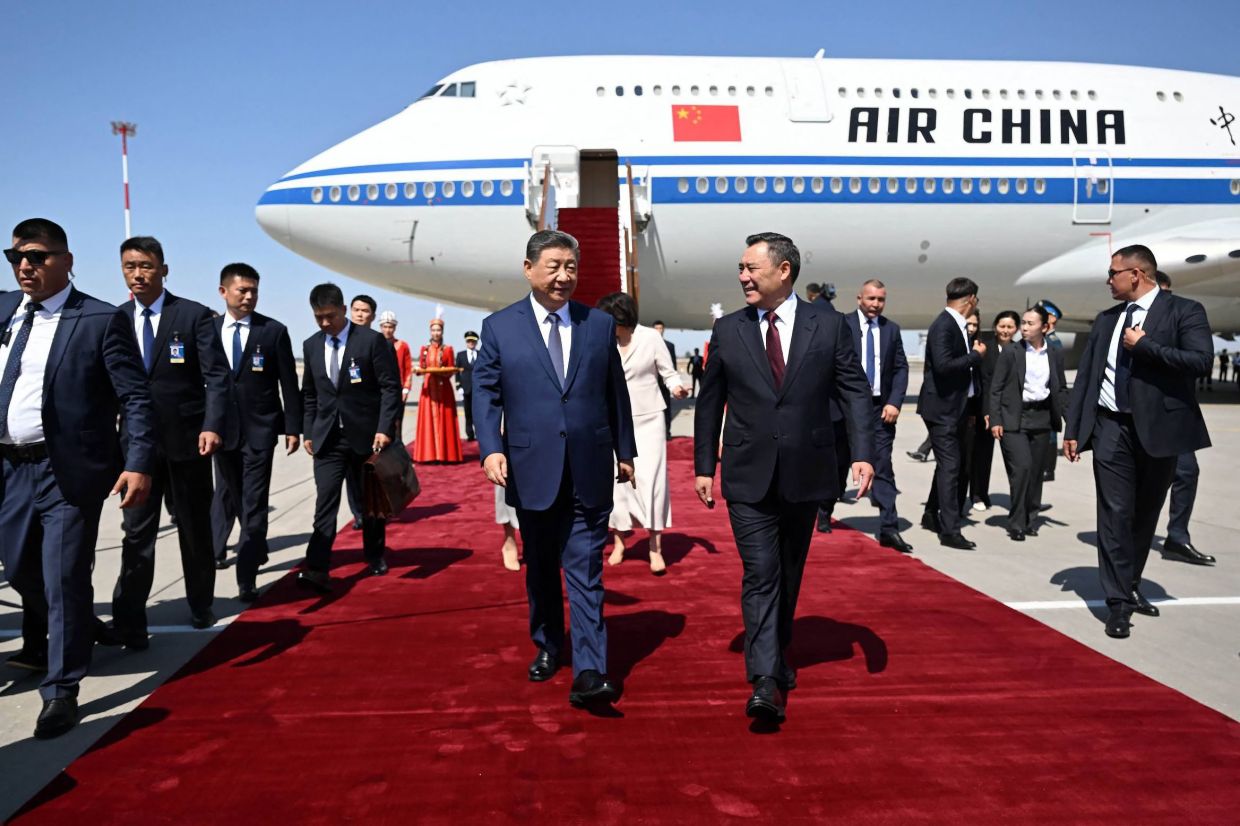
The Shanghai Cooperation Organisation convened this week in Bishkek, Kyrgyzstan, drawing together a notable assembly of global leaders determined to demonstrate that meaningful strategic partnerships flourish outside the Western-aligned international system. Chinese President Xi Jinping, Russian President Vladimir Putin and Indian Prime Minister Narendra Modi headline the gathering, which organisers characterise as a counterbalance to American hegemony and Western-dominated multilateral institutions such as the G7.
Originally established in 2001 as a modest security forum anchored by China and Russia alongside four Central Asian republics, the SCO has evolved into a sprawling coalition that now encompasses ten full members including Iran, Pakistan, Belarus and the Central Asian states. This expansion reflects a deliberate strategy by Beijing and Moscow to construct a parallel architecture for international cooperation that challenges the legitimacy and reach of traditional Western institutions. The organisations stated goals remain deliberately capacious, allowing member states considerable flexibility in determining their level of engagement and commitment.
The timing of this summit carries particular weight given the geopolitical upheaval characterising major member states. Russia, now deep into its military campaign in Ukraine after more than four years of full-scale invasion, views the SCO platform as essential for maintaining diplomatic traction among non-Western nations and securing economic partnerships as Western sanctions persist. Similarly, Iran faces intensifying conflict with United States and Israeli interests, making the summit a crucial opportunity to consolidate relationships with sympathetic regional actors and demonstrate that it retains viable international channels beyond Western isolation.
The schedule of bilateral discussions reveals the summit's true operational significance. Putin and Xi are slated for individual talks on Monday, with the Russian leader also meeting Iranian President Masoud Pezeshkian on Tuesday, the date of formal SCO proceedings. These sideline engagements often prove more consequential than plenary sessions, enabling leaders to address pressing bilateral concerns and coordinate positions on contested international issues without public scrutiny or the constraints of consensus-based multilateral formats.
China's diplomatic messaging around the summit emphasises the organisations purported success in pioneering innovative approaches to regional cooperation, language that masks ambitious efforts to reshape how nations interact beyond Western frameworks. Beijing has consistently framed the SCO as part of a broader vision for an alternative world order, one characterised by multipolarity and collective decision-making rather than unipolar American leadership. This rhetorical positioning resonates particularly among nations experiencing friction with Washington, though it obscures significant internal disagreements within the organisations own membership.
For India, participation in the SCO presents a complex balancing act rooted in New Delhi's broader strategic ambiguity. As a nation simultaneously cultivating closer ties with the United States whilst maintaining historic partnerships with Russia and seeking to manage an uneasy relationship with China, the summit offers India opportunities to maintain presence in a crucial regional forum without surrendering its policy independence. Analysts at Carnegie India observe that whilst the organisation may not fundamentally shape India's agenda, it provides invaluable intelligence gathering capacity and allows New Delhi to project itself as a constructive stakeholder capable of managing great power competition in its own strategic neighbourhood.
The SCO's internal dynamics, however, reveal fault lines that complicate any narrative of unified anti-Western resistance. Pakistan and India both hold full membership despite their persistent bilateral tensions, whilst China and Russia maintain fundamentally distinct interests across numerous policy domains. The forum lacks the institutional cohesion and enforcement mechanisms characteristic of tighter military or political alliances, functioning instead as a venue where competing regional powers occasionally align on selected issues whilst pursuing divergent national strategies.
Turkey represents another instructive case study in how nations employ the SCO framework. Despite holding only dialogue partner status rather than full membership, Ankara views the organisation as integral to maintaining what it characterises as a balanced foreign policy. President Recep Tayyip Erdogan has repeatedly lobbied for Turkey's elevation to permanent membership, a pursuit that reflects Ankara's efforts to strengthen its Eurasian profile whilst nominally preserving its NATO affiliation and traditional Western partnerships. This dual positioning mirrors broader Turkish strategy, though Turkey's stalled EU membership bid spanning more than two decades suggests limits to how effectively NATO membership can coexist with deepening SCO engagement.
The summit ultimately illustrates how contemporary geopolitical competition manifests not through direct confrontation but through parallel institution-building and strategic positioning. The SCO provides member states with tangible diplomatic benefits—forums for dialogue, platforms for projecting power, mechanisms for coordination on shared concerns—without demanding the ideological consistency or institutional discipline that tighter alliances require. For China and Russia, the SCO legitimises their vision of a multipolar world and their challenge to American global primacy. For regional powers like India and Turkey, membership offers hedging opportunities, allowing them to maintain multiple partnerships and preserve strategic autonomy in an era of accelerating great power competition.
What remains ambiguous is whether the SCO can evolve beyond a venue for strategic signalling into an organisation capable of coordinating substantive collective action on major international challenges. The vagueness that characterises its institutional architecture—deliberately maintained to accommodate diverse member interests—simultaneously undermines its capacity to function as a coherent geopolitical bloc. As Washington and its allies reassess their strategies for managing rising powers and shifting regional alignments, the SCO's trajectory will merit close observation, particularly regarding whether it can transition from symbolic alternative to Western order into a genuinely influential mechanism for reshaping international relations.

