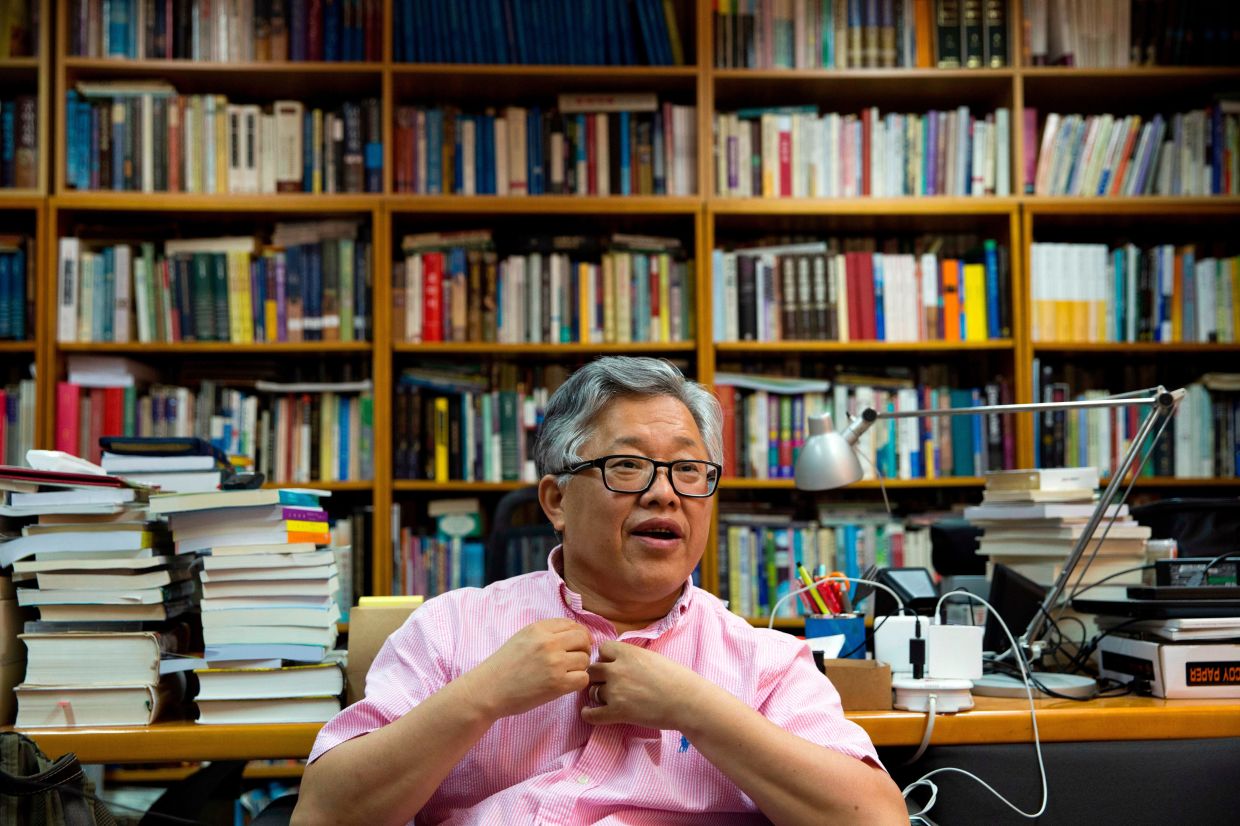
China has released Ezra Jin, the founder of Zion Church, an underground congregation that has operated outside the country's state-controlled religious framework for nearly two decades. Jin's detention since October and subsequent release marks a rare diplomatic victory for religious freedom advocates, though it underscores the precarious position faced by China's unregistered faith communities. His liberation came after the United States President Donald Trump personally raised his case during high-level discussions with Chinese leader Xi Jinping in May, signalling that religious liberty concerns remain part of broader bilateral negotiations between Washington and Beijing.
Zion Church represents a significant segment of China's Christian landscape—believers who deliberately choose unregistered congregations over state-approved venues to exercise what they view as authentic worship without government interference. The church, established in 2007 in Beijing, had grown substantially to accommodate approximately 1,500 members before Chinese authorities compelled it to shutter operations in 2018. Despite this closure, the congregation did not dissolve; instead, it adapted by establishing an increasingly robust online presence that flourished particularly during pandemic lockdowns, eventually reaching followers across forty cities nationwide. This digital transformation highlighted the difficulty authorities face in suppressing faith communities that have embraced modern communication technologies.
Jin's arrest in October occurred alongside multiple other church members on charges related to alleged illegal use of information networks—a vaguely worded accusation frequently employed against online religious activities that circumvent state oversight. The detention appeared part of a broader pattern. In June, authorities raided the Early Rain Covenant Church in Sichuan province and arrested two leaders, while simultaneously removing crosses and scaffolding religious structures in Zhejiang. These coordinated actions reflected an intensified governmental crackdown on unregistered religious assemblies that has accelerated throughout Xi Jinping's tenure. Eight members of Zion Church remain incarcerated despite Jin's release, indicating that his freedom represents an exception rather than a policy shift.
Trump's diplomatic intervention proved decisive. According to the rights organisation ChinaAid, Jin was informed by Chinese officials that his release constituted a goodwill gesture directly attributable to discussions between the two presidents, deliberately timed to coincide with American Independence Day celebrations. This framing suggests that Beijing calculated releasing one prominent pastor would generate positive diplomatic messaging while managing international pressure on human rights issues. For Washington, securing Jin's freedom demonstrated tangible results from engagement with Beijing on religious liberty—a consistent concern within American foreign policy circles and among evangelical constituencies.
The implications for Jin's family extend beyond his personal freedom. His daughter Grace, speaking on behalf of the family, expressed profound gratitude and cautious optimism, noting that Jin had been separated from his two young sons and most of his extended family for more than seven years. After 2018, when authorities pressured the church to cease operations, Jin's family relocated overseas seeking safety and opportunity. However, Jin chose to remain in China to maintain pastoral contact with his congregation, a decision that resulted in a travel ban preventing reunion with his dependents. His release enables family repatriation and represents a poignant resolution to years of enforced separation.
China's approach to unregistered religion reflects the Communist Party's longstanding ideological tension with organised faith communities operating outside state apparatus. The government maintains oversight through officially sanctioned religious organisations where clergy and doctrine undergo state vetting and approval. Underground churches, by definition, represent autonomous spaces beyond this regulatory framework. Under Xi's leadership, this suspicion has intensified markedly. The government has invested substantial resources into surveillance and suppression operations targeting house churches and unregistered congregations, viewing them as potential challenges to Party authority and social stability.
The crackdowns demonstrate a pattern of escalation rather than relaxation. Beyond individual arrests, authorities have pursued structural destruction—literally removing religious symbols and preventing gatherings. The scaffolding of Yayang church in Zhejiang, witnessed by international journalists, exemplifies how physical infrastructure becomes a target. These methods signal to believers that authorities will not tolerate independent worship spaces. Simultaneously, the Party has worked to integrate religion into state-controlled frameworks, offering official channels for faith expression provided believers remain subordinate to Party oversight and political priorities.
For Malaysia and Southeast Asia, Jin's case illuminates broader questions about religious freedom and state-religion relations across the region. While Malaysia maintains established frameworks for Islamic regulation alongside minority religion protection, and Southeast Asian democracies offer constitutional safeguards for worship, China's model represents an alternative governance approach increasingly visible throughout Asia. Jin's detention and release occurred within a geopolitical context where religious liberty has become a tool in great-power competition. The Trump administration's advocacy for Jin's freedom reflects American strategic interests in humanitarian issues as leverage in US-China relations.
The release also signals potential flexibility in Chinese diplomacy regarding high-profile religious cases, particularly when such cases attract international attention and diplomatic pressure. Jin's prominence as a pastor with significant following and overseas family connections made his case diplomatically manageable for Beijing. However, this does not suggest fundamental policy shifts regarding unregistered churches. The eight remaining Zion Church members still detained underscore that Jin's release represents tactical concession rather than strategic reorientation. China's religious policy continues operating on foundational assumptions that faith communities must submit to Party authority or face suppression.
Looking forward, Jin's freedom raises questions about whether his release signals American-Chinese negotiation patterns regarding religious cases, potentially creating avenues for advocacy on behalf of other detained believers. However, Beijing has demonstrated capacity to manage international pressure selectively, responding when political benefits appear advantageous while maintaining broader suppression campaigns. For Jin personally, repatriation from Los Angeles to China or elsewhere represents a new chapter after years of separation and detention. For Zion Church and countless other unregistered congregations, his case illustrates both the possibilities and limitations of international diplomatic intervention in securing religious freedom within authoritarian systems.

