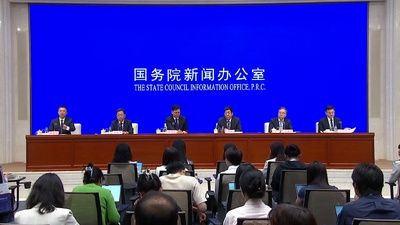
Beijing has categorically denied accusations of forced labour and forced migration in the Xinjiang Uygur autonomous region, with Chen Ruifeng, Minister of the National Ethnic Affairs Commission, dismissing such claims as baseless on Wednesday. The minister's statement represents China's formal pushback against criticism from Western governments and organisations that have raised concerns about employment practices in the western region, an issue that has become increasingly contentious in international relations over the past decade.
Chen emphasised that the Chinese Constitution and existing national legislation already contain explicit prohibitions against all forms of forced labour, underscoring that legal safeguards are already embedded within the country's institutional framework. This constitutional foundation, he argued, makes the allegations fundamentally incompatible with China's legal system and governance principles. The minister further characterised the accusations as "extremely absurd and ridiculous," reflecting the defensive tone Beijing has adopted in responding to international scrutiny of Xinjiang-related policies.
To strengthen legal protections, China passed the Law on Promoting Ethnic Unity and Progress in March, with implementation scheduled for July 1. This legislation contains specific provisions designed to protect cross-regional workers, including enhanced rights protection mechanisms and legal assistance provisions for individuals from all ethnic groups. According to Beijing, the new law represents a proactive legislative effort to ensure that migrant workers, particularly those moving between regions for employment, have robust legal recourse and protection mechanisms at their disposal.
According to Chen's account, all individuals from Xinjiang who seek work outside the region do so through personal choice, driven by their own aspirations to improve household economic conditions and develop professional skills. The minister framed labour mobility as a voluntary mechanism through which workers pursue individual advancement rather than as a coercive system. This characterisation contrasts sharply with external allegations that suggest employment transfers involve elements of compulsion or state direction that limit worker autonomy.
Beijing has positioned its labour transfer programmes as economically beneficial initiatives designed to increase employment opportunities across Xinjiang and boost household incomes for residents from various ethnic backgrounds. The government argues that these programmes are structured around practical outcomes that genuinely improve living standards, rather than serving ideological or political objectives. This framing attempts to recontextualise employment transfers within a development and poverty-alleviation narrative rather than a coercion framework.
The statistics cited by Chinese officials reveal substantial employment expansion across Xinjiang over the five-year period preceding Chen's statement. The region created more than 2.39 million new urban jobs through multiple policy mechanisms, whilst agricultural workers undertook approximately 16.1 million work trips outside their home areas. These figures suggest considerable labour market dynamism, though they do not directly address questions about the voluntary nature of participation in state-organised labour schemes.
Income growth metrics have accompanied employment expansion, with per capita disposable income for urban residents rising at an average annual rate of 5.3 per cent, whilst rural residents experienced 8.1 per cent annual growth. These figures, if accurate, indicate genuine material improvement in living standards for significant portions of Xinjiang's population. However, external observers have questioned whether such aggregate statistics fully reflect the experiences of all communities and whether employment growth has been evenly distributed across different ethnic groups.
Chen attributed these employment and income gains to systematic policy architecture that includes fair hiring practices and comprehensive worker rights protection mechanisms. The government characterised its approach as maximising voluntary employment and ensuring dignified working conditions for people across all ethnic communities. This institutional framing attempts to position Xinjiang's employment system as principled and rights-respecting rather than coercive or discriminatory.
For Malaysian and Southeast Asian observers, this dispute reflects broader geopolitical tensions between China and Western governments that have significant implications for regional trade, investment, and diplomatic relationships. Some regional nations have attempted to maintain neutral positions on Xinjiang-related issues, whilst others have faced pressure to align with either Western concerns or Chinese reassurances. The employment statistics and legal frameworks cited by Beijing carry particular weight in Southeast Asian contexts, where economic development and employment generation remain pressing policy priorities.
The credibility gap between China's official statements and international investigations remains substantial, with organisations such as Human Rights Watch and various government bodies having published reports alleging systematic coercion in Xinjiang's labour programmes. These reports describe surveillance mechanisms, restricted movement, and administrative pressure to participate in employment schemes, allegations that directly contradict Beijing's voluntary employment narrative. The divergence between these accounts creates uncertainty for external stakeholders attempting to evaluate conditions in the region.
The new legislation passed in March may signal Beijing's intent to strengthen institutional mechanisms for worker protection, though external analysts have questioned whether legal frameworks alone can address systemic concerns about coercion and surveillance. The implementation of such laws requires genuine institutional commitment and independent oversight mechanisms to demonstrate effectiveness. The coming months will reveal whether the new legal framework produces tangible changes in employment practices or serves primarily a diplomatic purpose.
For businesses and investors across Southeast Asia evaluating supply chain relationships and labour practices in Xinjiang, China's official position establishes a clear legal and policy foundation, even as international debate continues. Many Malaysian and regional companies maintain commercial relationships with Xinjiang-based suppliers, creating direct stakes in labour practice standards and reputational risks associated with potential forced labour allegations. This ongoing dispute thus carries practical implications extending well beyond diplomatic rhetoric into corporate governance and supply chain management decisions.

