China's Ministry of Foreign Affairs has expressed appreciation for Prime Minister Datuk Seri Anwar Ibrahim's recent declaration that Taiwan forms an integral part of China, signalling Beijing's satisfaction with Malaysia's alignment on one of the most sensitive geopolitical issues in the region. The endorsement came after Anwar articulated his stance in an Al Jazeera interview, stating unequivocally that Taiwan is part of China and that this position enjoys widespread international acceptance.
The Chinese government's response, disseminated through its official social media channels on Wednesday, underscored Beijing's determination to advance its reunification agenda. A spokesperson for the Ministry of Foreign Affairs conveyed that nothing will impede China's path toward reunification, framing the matter not merely as a political objective but as an inevitable conclusion to historical circumstances. This language reflects China's portrayal of the issue as transcending conventional diplomatic negotiation, instead positioning it as an inexorable process driven by historical forces.
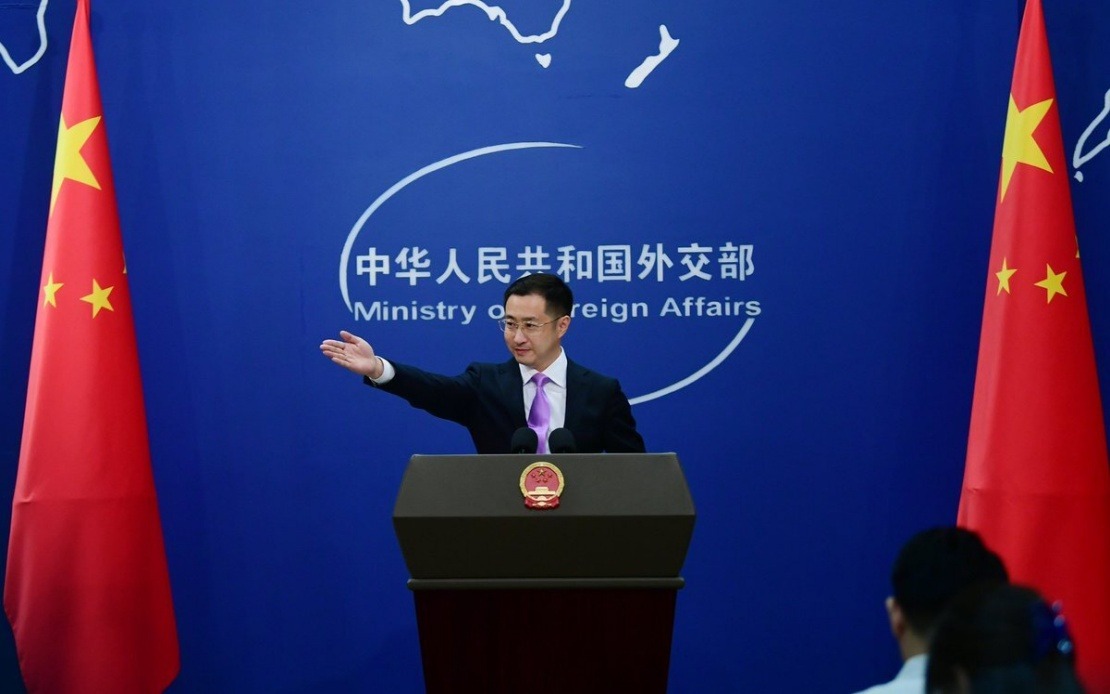
At a regular briefing in Beijing, Chinese foreign ministry spokesman Lin Jian elaborated on the government's perspective, asserting that the one-China principle reflects deeply held sentiments among the Chinese population and represents the morally defensible position in international affairs. Lin reiterated the official Chinese position that Taiwan constitutes an inalienable component of Chinese territory, reinforcing Beijing's claim over the self-governing island. The repetition of this formulation across multiple official channels demonstrates the coordinated messaging Beijing employs when addressing Taiwan-related statements from foreign leaders.
Anwar's public alignment with China's position carries particular weight given Malaysia's geopolitical significance within Southeast Asia and the broader Asia-Pacific region. As a prominent Muslim-majority nation and a key player in regional organisations, Malaysia's statements on contentious international matters influence perceptions of consensus on global issues. By explicitly endorsing the one-China framework without equivocation, Anwar has positioned Malaysia clearly within Beijing's diplomatic sphere on this matter, potentially influencing regional discourse and constraining space for alternative perspectives.
The timing of this exchange reflects the broader context of Malaysia-China relations, which have historically oscillated between economic interdependence and diplomatic complexity. China remains one of Malaysia's largest trading partners, while also being a significant investor in Malaysian infrastructure and development projects. Anwar's remarks and Beijing's enthusiastic reception suggest continued efforts to maintain robust bilateral ties through demonstrated ideological alignment on matters prioritised by the Chinese government.
For Malaysia, endorsing the one-China principle aligns with the longstanding position held by most Association of Southeast Asian Nations members, many of which maintain diplomatic relations with Beijing while managing delicate balances with other major powers including the United States. This consensus among ASEAN nations has historically served to insulate the region from becoming a direct proxy battleground over Taiwan's status, though recent developments have tested this equilibrium.
The framing of reunification as an "unstoppable historical trend" rather than merely a future aspiration reflects China's confidence in its strategic position and its desire to present the matter as inevitable rather than contested. This rhetorical approach serves multiple purposes: it appeals to nationalist sentiment domestically, signals resolve to international audiences, and subtly pressures countries maintaining diplomatic relations with Taiwan by suggesting that recognising alternative arrangements is futile and contrary to historical momentum.
Anwar's remarks carry additional significance given Malaysia's delicate position as a country with diverse interests and stakeholders. While China represents crucial economic and strategic interests, Malaysia also maintains relationships with democratic nations and values regional stability. By emphasising the widespread acceptance of the one-China principle, Anwar appeared to present the position as non-controversial consensus rather than contested geopolitical terrain, potentially glossing over the substantial international disagreement surrounding Taiwan's political status and future.
China's public commendation of Anwar's statements serves as a form of diplomatic reinforcement, rewarding alignment and potentially encouraging other regional leaders to adopt similar positions. This positive feedback mechanism creates incentives for countries to move further toward Beijing's preferred narrative on disputed issues, gradually shifting regional consensus through accumulated statements from individual leaders rather than through formal multilateral agreements.
The episode illustrates how statements by Malaysian leadership on international matters reverberate beyond bilateral relations, shaping regional perceptions and affecting broader geopolitical dynamics in an increasingly multipolar Asia. Anwar's choice to address Taiwan specifically in an international interview, rather than limiting remarks to domestic or bilateral contexts, suggests a deliberate decision to publicly position Malaysia on this question, amplifying the signal value of his remarks for both Beijing and other regional observers.
Moving forward, Malaysia's explicit positioning on the one-China principle may influence how other regional actors navigate similar pressures and opportunities for alignment with major powers. The episode also underscores the continuing importance of Taiwan as a focal point for great power competition and regional diplomatic alignment, with statements from mid-sized powers like Malaysia carrying weight disproportionate to their direct military or economic power, reflecting the symbolic and strategic significance attached to international consensus on this issue.

