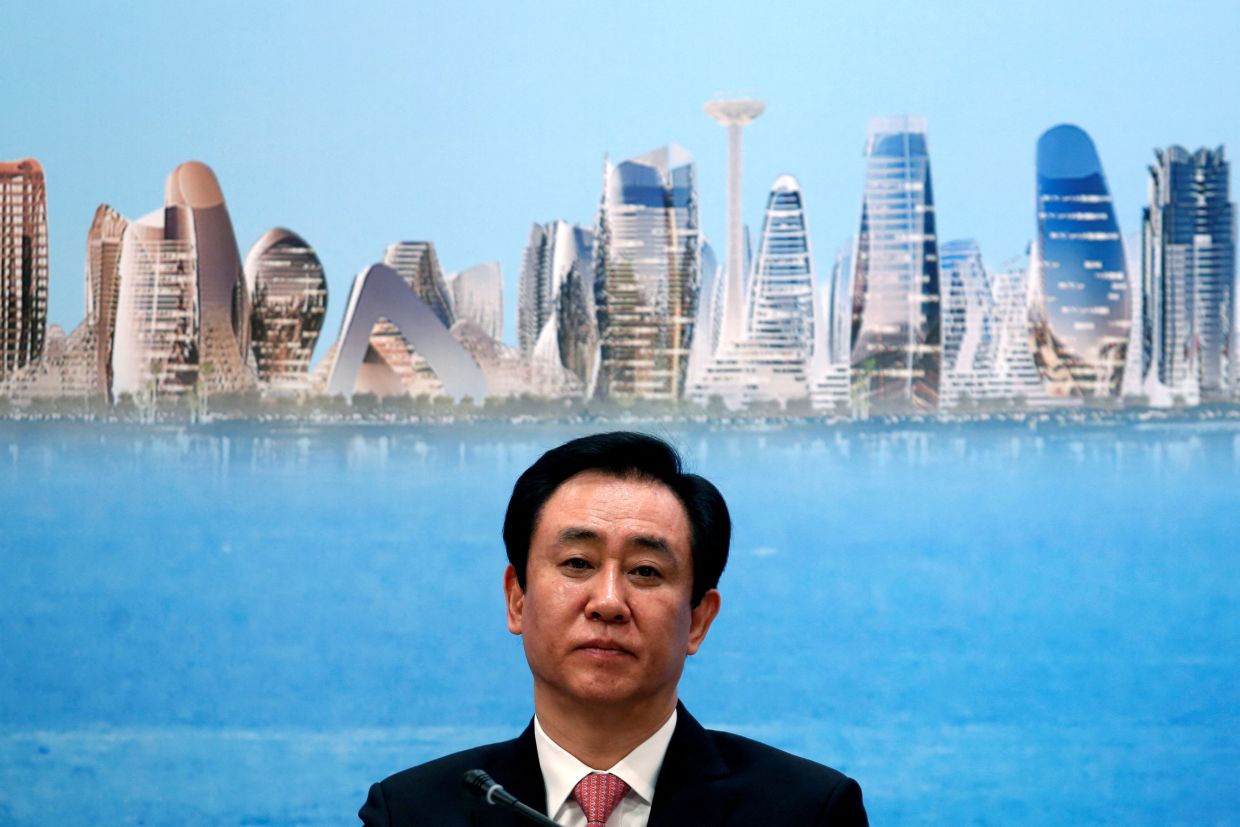
A Shenzhen court has handed down a life sentence to Hui Ka Yan, the founder of China Evergrande Group, bringing formal legal closure to one of the world's most spectacular corporate collapses. The 67-year-old, who once topped Asia's billionaire rankings with a net worth exceeding $45 billion, faced prosecution on eight serious charges spanning misuse of corporate funds, fraudulent fundraising, illegal deposit-taking, unauthorised lending practices, securities fraud and bribery. The sentence also included total confiscation of Hui's personal assets, a measure that underscores the severity of judicial response to his actions.
Hui's conviction in April preceded Thursday's sentencing in the southern technology hub where Evergrande maintained its headquarters. The guilty pleas eliminated any prospect of acquittal, though they did not shield him from the maximum penalty available under Chinese law. Court documents released alongside the verdict characterised the defendant's conduct in particularly harsh terms, describing the criminal actions of Evergrande, its subsidiary Hengda Real Estate, and Hui personally as involving "particularly huge amounts" with "egregious circumstances." Authorities emphasised that the wrongdoing caused "particularly significant economic losses and particularly serious social harm," justifying the severe punishment.
Evergrande's financial unravelling represents a pivotal moment in China's recent economic history and carries significant implications for emerging market stability across Asia. Once positioned as China's leading property developer by contracted sales volume, the company had aggressively pursued expansion through leveraged acquisition strategies throughout the 1990s and 2000s. At its zenith in 2017, Hui's personal wealth reached approximately $45.3 billion according to Forbes calculations, crowning him Asia's wealthiest individual. Yet within years, the conglomerate accumulated liabilities exceeding $300 billion, becoming the world's most indebted property concern. The firm has since defaulted on the vast majority of these obligations, leaving creditors from multiple jurisdictions pursuing recovery through an extended liquidation process.
The broader context of Evergrande's collapse extends beyond individual criminal culpability and speaks to systemic vulnerabilities within China's property sector. For more than a decade, the real estate industry has functioned as a critical economic driver, absorbing investment capital and employment while generating substantial government revenues through land sales. However, structural imbalances—particularly overleveraged developers, speculative purchasing patterns among retail investors, and rapid urban expansion—created fragility that manifested spectacularly through Evergrande's crisis. The company's default triggered cascading effects throughout financial markets and revealed the depth of ordinary citizens' exposure to property-linked wealth-management products.
One particularly damaging element of Evergrande's operations involved the issuance of high-yield wealth-management products marketed to retail investors, many of whom possessed limited investment experience and modest savings. When the company proved unable to honour redemptions on these products, ordinary households discovered their accumulated wealth had evaporated. Social media commentary from affected Evergrande investors captured the raw frustration of this experience, with some expressing cynicism that imprisonment effectively protected Hui from the consequences he might face outside custody, others questioning whether legal punishment addressed the core question of financial restitution. The scale of investor losses across mainland China transformed what might otherwise have remained a corporate accounting matter into a volatile social stability issue.
Beyond Hui's individual sentence, the court imposed substantial corporate penalties including fines totalling 8.82 billion yuan (approximately $1.31 billion) against Evergrande and 7 billion yuan against Hengda Real Estate. Five additional senior executives received prison sentences ranging from six to eighteen years, complemented by various financial penalties. According to state broadcaster CCTV, the judicial proceedings on Thursday resulted in custodial or financial sentences for fifty-six individuals associated with Evergrande beyond Hui himself, indicating the investigation's breadth and the scope of systemic wrongdoing identified by prosecutors.
Hui's personal trajectory from provincial obscurity to billionaire status and subsequent incarceration represents a cautionary narrative with particular resonance for Malaysian and regional audiences. The son of rural villagers, raised by his grandmother in Henan province, Hui founded Evergrande in 1996 during China's early post-reform economic expansion. His aggressive business methods and willingness to assume substantial debt allowed rapid scaling and market dominance through the 2000s and 2010s. However, the strategic model ultimately depended upon perpetual growth, rising property valuations, and continued access to capital markets—assumptions that proved unsustainable once demographic trends shifted and regulatory authorities tightened lending standards.
The liquidation process initiated following Evergrande's default has proceeded far more slowly than either creditors or regulators anticipated. A Hong Kong court ordered formal liquidation in 2024, with the Hong Kong Stock Exchange subsequently delisting the company, but recovery efforts have yielded disappointing results. As of August of last year, liquidators had managed to dispose of only approximately $255 million in assets despite creditor claims totalling around $45 billion. This recovery rate of roughly 0.6 percent illustrates the magnitude of losses and the complexity of unwinding a conglomerate with sprawling domestic and international operations. Liquidators continue pursuing offshore asset freezing procedures against Hui and his former spouse, seeking to recover approximately $6 billion in dividends and compensation paid to executives during the crisis period.
For Malaysia and other Southeast Asian economies, Evergrande's collapse carries lessons regarding financial system supervision, property market dynamics, and the risks inherent in retail investor participation in complex financial products. Several Malaysian banks and financial institutions maintain exposure to Chinese property developers and related financial instruments, creating transmission channels through which Chinese property sector distress could affect regional stability. The case also illustrates regulatory gaps that permitted ordinary investors to accumulate such substantial exposure to single companies without adequate risk disclosures or protective mechanisms.
The securities regulator in mainland China supplemented the criminal proceedings with administrative penalties, imposing a $6.6 million fine on Hui and implementing a lifetime ban from securities market participation after determining that Evergrande's flagship unit had materially inflated reported earnings and engaged in fraudulent securities practices. This combination of criminal and administrative enforcement reflects the multi-layered accountability mechanisms mobilised by Chinese authorities to address corporate malfeasance.
However, the life sentence and asset confiscation, while representing decisive legal action, offer limited tangible solace to the millions of Chinese households whose financial security depended upon Evergrande investments. The fundamental economic losses remain, and criminal punishment does not restore wealth. This disconnect between legal accountability and victim restitution continues to generate public frustration, particularly among lower-income households whose life savings disappeared entirely. For regional policymakers observing this episode, the critical takeaway involves the necessity of robust preventive regulation and transparency mechanisms that can limit retail investor exposure to concentrated risks before crises materialise rather than pursuing accountability only after catastrophic losses have materialised.

