China's National Natural Science Foundation is significantly deepening its scientific partnership with Iran by sending researchers to collaborate on rare earth exploration and processing activities, a development that underscores growing technological cooperation between the two nations at a time of heightened global competition for strategic minerals. The initiative represents an expansion of existing bilateral research frameworks into a field with profound implications for military technology, weapons manufacturing, and global supply chain security.
Under the expanded cooperation framework, the Chinese foundation will allocate 30,000 yuan, equivalent to approximately US$4,200, per workshop to cover essential operating costs including seminar expenses, participant accommodation, and domestic travel arrangements. The Iranian National Science Foundation will assume responsibility for funding international travel for Iranian participants and providing lodging for Chinese researchers conducting fieldwork within Iran. This cost-sharing arrangement reflects a formalised commitment to sustained collaboration rather than a one-off scientific exchange.
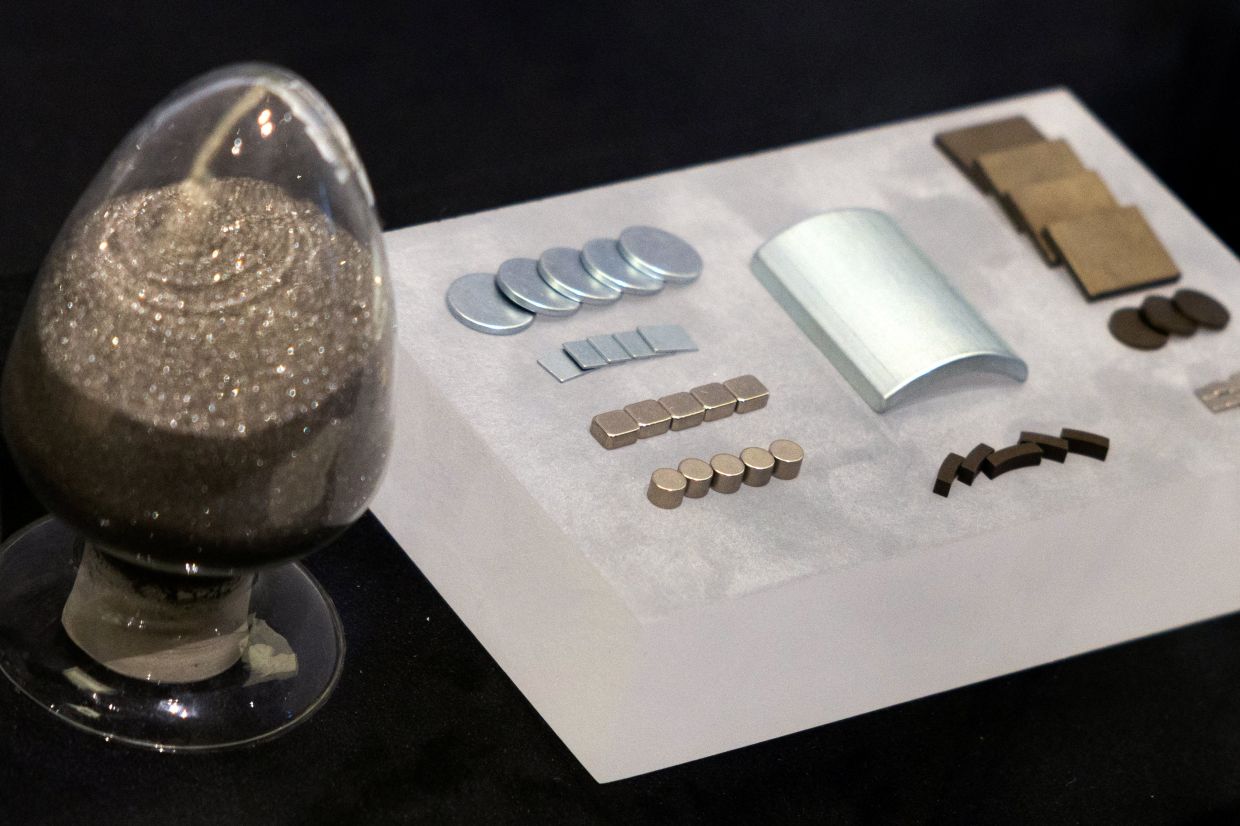
The timing of this expansion carries significant geopolitical weight. Rare earths—a collection of 17 metallic elements possessing distinctive magnetic and electronic characteristics—form the technological backbone of advanced military systems. Fighter aircraft, missile guidance systems, radar installations, and sophisticated electronic warfare equipment all depend critically on rare earth materials. Control over rare earth supplies therefore translates directly into military capability and technological superiority, making this field inherently strategic rather than purely scientific.
The urgency surrounding rare earth security has intensified in recent months. The United States recently deployed rare earth materials from its Strategic Petroleum Reserve to address domestic manufacturing shortages, a measure that crystallised Washington's vulnerability to supply disruptions. Responding to these vulnerabilities, the Trump administration announced US$3 billion in targeted investments specifically designed to fund critical mineral and battery production projects. These initiatives aim simultaneously to rebuild American weapons stockpiles depleted by ongoing military commitments and to reduce the nation's dangerous dependence on Chinese supply chain dominance.
China's commanding position in global rare earth markets remains unmatched. The country possesses the world's largest confirmed rare earth reserves and controls the vast majority of global extraction and processing capacity. Beyond this existing dominance, Beijing has progressively tightened restrictions on technology transfer related to rare earth refining and value-added processing, effectively maintaining Chinese control over the most profitable segments of the rare earth industry. When President Donald Trump initiated trade tensions with China, Beijing responded by imposing rare earth export controls that reverberated through American and allied manufacturing sectors, demonstrating the leverage such control provides.
Iran's rare earth endowment remains substantially less developed than China's but presents genuine potential for future extraction. Geological surveys and exploration campaigns have identified rare earth anomalies scattered across approximately 7,000 square kilometres of central Iranian territory. The underlying geology features iron ore and phosphate formations that geologists recognise as potentially favourable environments for rare earth deposit formation. A February assessment by the Hague Research Institute concluded that Iran possesses meaningful but currently underdeveloped rare earth resources.
Crucially, Iran currently lacks the industrial infrastructure to extract and process rare earth materials at commercial scale. The country's technological capabilities in this domain remain nascent and substantially lag behind both Chinese and Western standards. Chinese assistance in building extraction and processing expertise could accelerate Iran's development trajectory considerably, potentially creating an alternative supply source beyond Western sphere of influence while simultaneously benefiting Chinese strategic interests through expanded diplomatic influence and future supply diversification.
The scientific cooperation framework linking China and Iran extends far beyond rare earths. The two nations' science foundations formalised their partnership through a memorandum of understanding signed in Beijing during 2017, initiating what the Chinese foundation describes as a contribution to the Belt and Road Initiative. The NSFC has characterised Iran as an important node within this framework, suggesting that scientific cooperation serves broader geopolitical objectives beyond pure research advancement.
Since the 2017 agreement, the bilateral research portfolio has expanded substantially across multiple scientific domains. Joint projects currently encompass mathematics, biological sciences, medical research, renewable energy technologies, advanced materials science, climate change studies, and artificial intelligence development. This breadth indicates that the partnership operates as a comprehensive scientific engagement rather than narrowly focused collaboration, with implications extending across multiple technological frontiers relevant to both civilian and military applications.
The joint workshop programme, formally launched in 2024, initially allocated 150,000 yuan per workshop to support collaborative research in climate change, artificial intelligence, advanced materials development, and manufacturing technologies. This year's expanded call for proposals maintains the existing thematic areas while adding new priorities including nanomaterials for disease detection, environmental pollution monitoring systems, earthquake-resistant construction methodologies, and cleaner manufacturing processes. The inclusion of rare earth exploration alongside these seemingly civilian-oriented research areas suggests that the programme intentionally balances research domains to present scientific cooperation as broadly beneficial while quietly advancing strategic capabilities.
For Southeast Asian nations, this Sino-Iranian partnership carries important implications. Regional economies depend significantly on stable global supplies of critical minerals and manufactured electronics. Chinese dominance over rare earth processing gives Beijing substantial leverage over regional manufacturing sectors and defence procurement. Should Iran develop meaningful rare earth extraction capabilities with Chinese assistance, the resulting geographic diversification of supply sources might theoretically reduce Chinese monopoly power, yet simultaneously would likely strengthen Beijing's regional influence by positioning it as the technological partner essential to other nations' rare earth development aspirations. The outcome could consolidate rather than dilute Chinese control over critical mineral technology globally.
The cooperation also reflects broader patterns of technological diffusion and knowledge transfer that characterise contemporary great power competition. Western nations, particularly the United States, have historically sought to restrict technology transfers to rivals, while China increasingly leverages partnerships with nations outside Western alliance structures to circumvent such restrictions. Iran, operating under comprehensive Western sanctions and international isolation, represents an ideal partner for Chinese technology transfer initiatives precisely because alternative partnerships remain limited. This dynamic suggests that as Western restrictions tighten, Chinese partnerships with sanctioned or non-aligned nations will intensify, reshaping global technological and supply chain architectures in ways that disadvantage Western-led alliance systems.

