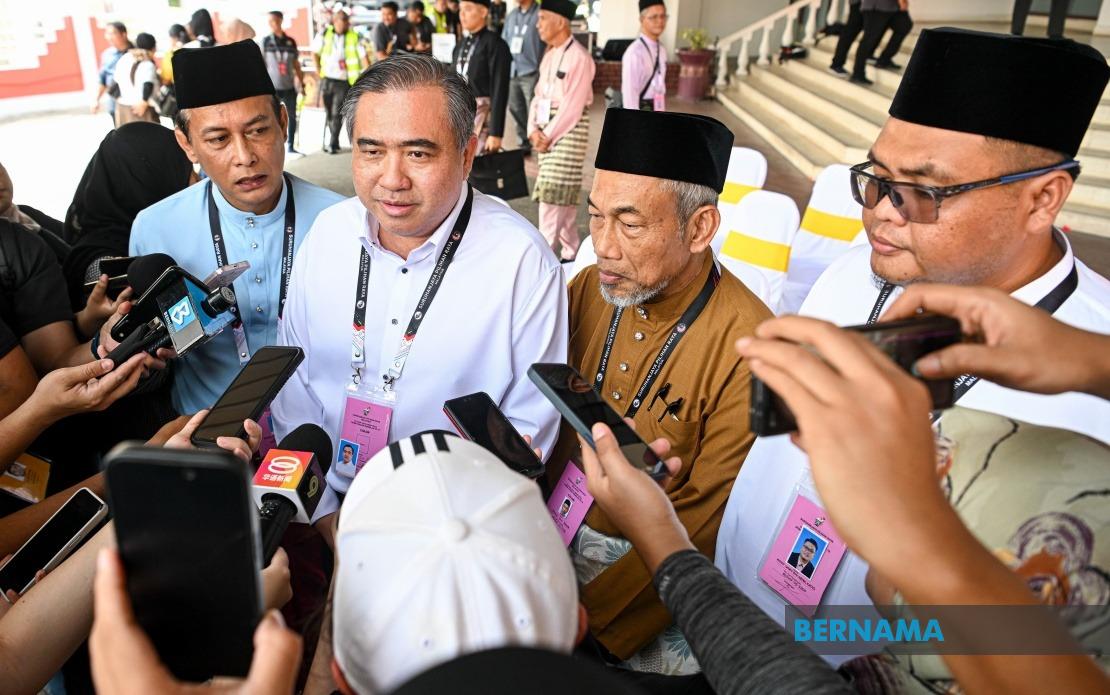
The Chennah state seat has emerged as a pivotal battleground in the broader struggle for control of Negeri Sembilan, with Transport Minister Anthony Loke emphasising its strategic importance to Pakatan Harapan's electoral ambitions. Speaking after nomination proceedings in Kuala Klawang, the incumbent lawmaker stressed that Chennah ranks among the four most significant seats within the Jelebu parliamentary constituency that will determine whether the opposition coalition can extend its governance of the state beyond two consecutive terms.
Loke's confidence in retaining the seat rests partly on the electoral dynamics that favour a direct contest. The Returning Officer for Jelebu Parliamentary, Abdul Rahim A Aziz, confirmed that the Chennah state seat will pit Loke against Barisan Nasional candidate Siow Kong Choon in a straight fight, removing the complication of three-way competition and clarifying voter choice. This binary confrontation potentially benefits the incumbent, who brings ministerial status and parliamentary representation to the contest.
The emphasis placed on Chennah reflects lessons drawn from the 2018 state election, when the political fortunes of Negeri Sembilan pivoted on relatively few constituencies. Loke pointed to the historical precedent of Chennah and Kelawang, both within Jelebu, serving as decisive factors in enabling Pakatan Harapan to form the state government seven years ago. The repetition of this calculation suggests that demographic and voting patterns in these areas have remained sufficiently stable that they continue to represent swing zones capable of determining the overall outcome.
Pakatan Harapan's governing record across two complete terms provides the foundation for Loke's electoral pitch. The coalition has governed Negeri Sembilan continuously since 2018, accumulating a track record of policy implementation and development projects that officials frame as evidence of competent administration. Transport infrastructure, state investment, and civil service management represent areas where the incumbent administration claims measurable accomplishment, tangible benefits that Loke intends to mobilise during campaigning to demonstrate why continuity serves voter interests better than change.
The strategic positioning of Jelebu constituencies within the broader state election landscape underscores the reality that modern Malaysian electoral contests rarely turn on uniform swings across all constituencies. Instead, particular seats function as bellwethers and pivotal zones where elections are effectively decided. By identifying Chennah alongside three other critical seats in the parliamentary constituency, Loke implicitly acknowledges that Pakatan Harapan's state government survival depends on defending a relatively small number of geographically concentrated strongholds rather than maintaining uniform support across all constituencies.
Barisan Nasional's candidate selection of Siow Kong Choon signals that the opposition coalition views Chennah as recoverable territory worthy of serious challenge. The straight-fight configuration removes incentives for vote-splitting that might benefit either major competitor, requiring direct comparison between the incumbent and the challenger on grounds of merit, track record, and local appeal. For BN, regaining this seat would constitute significant progress toward restoring state-level dominance in Negeri Sembilan, a state it governed for decades before 2018.
The nomination process itself, conducted formally under electoral rules in Kuala Klawang, marks the transition from pre-campaign positioning to the actual competitive phase. Both candidates now enter a defined election period during which campaign finance rules, public broadcast access, and nomination provisions structure their ability to reach voters. The formality of the process, overseen by returning officers and documented through official announcements, establishes the rules within which the contest will unfold.
For Malaysian observers monitoring state-level politics, the Negeri Sembilan contest carries significance beyond that state's borders. State governments serve as laboratories for policy innovation and as secondary power centres within Malaysia's federal structure. Whether Pakatan Harapan can consolidate and extend its state-level governance in Negeri Sembilan holds implications for the coalition's broader political standing and for Barisan Nasional's capacity to rebuild state-level majorities in post-2018 Malaysia. The 2023 federal election demonstrated fluid voter preferences; state elections provide opportunities to test whether these patterns persist.
Loke's dual role as Transport Minister and Jelebu constituency MP concentrates significant political authority and national visibility in the candidacy itself. A minister seeking re-election carries the weight of federal policies and their local consequences into the state campaign. Voters assess not merely local service delivery but also the alignment between state and federal administrations under Pakatan Harapan, evaluating whether unified governance across these levels generates superior outcomes compared to divided government or opposition control.
The confidence expressed by Loke regarding Pakatan Harapan's prospects reflects belief that the coalition's developmental narrative and service record will persuade voters to maintain their 2018 decision. However, electoral outcomes remain contingent on turnout, campaign effectiveness, and unforeseen events occurring during the campaign period. The identification of Chennah and three other constituencies as critical zones implicitly concedes that Pakatan Harapan cannot take any significant seat for granted, requiring targeted effort to secure victory even in areas previously won.
The road to retaining Negeri Sembilan thus narrows to battlegrounds like Chennah, where direct competition between experienced politicians will be decided by voters weighing governmental performance against opposition promises and alternative leadership. The outcome in such pivotal seats will determine whether Malaysia's state governments continue reflecting the electoral fragmentation evident since 2018 or whether one coalition moves toward reconsolidating control.

