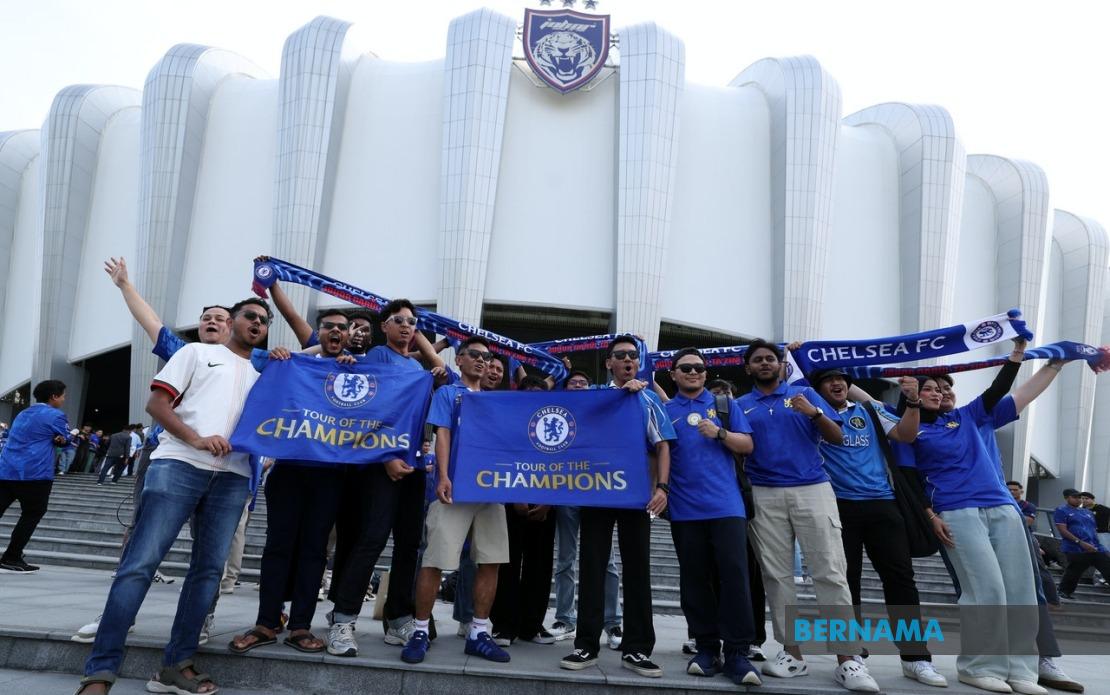
The Sultan Ibrahim Stadium in Iskandar Puteri transformed into a vibrant tapestry of red and blue on August 9 as supporters converged from across Malaysia and beyond for a historic friendly between Johor Darul Ta'zim and Chelsea FC. Beginning from mid-afternoon, waves of enthusiastic fans wearing the colours of their respective clubs created an electric atmosphere at one of the nation's premier sporting venues, signalling both the global appeal of English Premier League football and the rising stature of Malaysia's domestic clubs on the international stage.
The gathering transcended typical match-day attendance, drawing visitors spanning multiple generations and geographic origins. Families brought their children to witness elite European football on Malaysian soil, while youth groups seized the rare opportunity to experience a Premier League club's visit without costly international travel. This demographic breadth underscored the unifying power of football across age groups and social backgrounds, with supporters of all ages equally keen to participate in the momentous occasion.
Photography became a central activity, with fans positioning themselves before the stadium's distinctive architectural features to capture memories of the occasion. The visual spectacle of tens of thousands dressed in team colours created an environment that transcended ordinary sporting entertainment, becoming a cultural event that allowed participants to express their football allegiances while documenting their presence at a significant moment in Malaysian sports history.
The commercial dimensions of the event proved equally substantial. Official merchandise stalls experienced sustained demand throughout the afternoon and evening, with extended queues forming as supporters sought limited-edition items bearing the insignia of either club. The availability of exclusive merchandise created an additional incentive for attendance, allowing fans to acquire tangible mementos of Chelsea's visit to Malaysia, further enriching the commercial value of the fixture.
The geographical reach of attendance extended notably beyond Johor's boundaries. Supporters from distant regions including Kuala Lumpur travelled significant distances to participate in the event, while international visitors from neighbouring Singapore crossed the causeway specifically for the match. This wider catchment area reflected the magnitude of having a top-tier English club compete in Malaysia, an occurrence sufficiently exceptional to justify travel commitments from across the broader region.
Transport infrastructure around the stadium operated under strain but remained functional. By early evening, traffic along principal approaches to Sultan Ibrahim Stadium experienced congestion typical of large-scale events, though authorities maintained orderly conditions. The Royal Malaysia Police implemented comprehensive security protocols to manage crowd movement and vehicle flow, successfully maintaining accessibility for arriving supporters whilst preparing for the 8 pm commencement.
Ahmad Danial Muhammad, a 28-year-old Chelsea devotee from Bangsar in Kuala Lumpur, represented the category of dedicated supporters for whom Chelsea's Malaysian visit held exceptional significance. His sustained fandom since the Didier Drogba era underscored the deep roots of Premier League support amongst Malaysian enthusiasts. The prospect of witnessing Premier League-calibre football without undertaking expensive travel to London represented a transformative opportunity for supporters whose geographic distance from English football's heartland had previously limited direct exposure to the sport's highest echelons.
Cross-border enthusiasm added an international dimension to the attendance. Tan Wei Sheng, a 34-year-old Singapore resident, coordinated his family's journey to time arrival at the Johor Causeway outside peak congestion periods, departing at midday to secure convenient stadium access. His assessment that Sultan Ibrahim Stadium met world-class facility standards reflected broader regional recognition that Malaysian sporting infrastructure had attained competitive international standing, capable of hosting marquee fixtures that demanded premium venue standards.
The fixture carried particular significance for JDT supporters, who perceived Chelsea's selection of Sultan Ibrahim Stadium as external validation of their club's elevating international profile. Mohd Khairul Anuar Ismail, a 41-year-old JDT loyalist from Bukit Piatu in Melaka, interpreted the arrangement as demonstrating that Malaysian clubs were gradually earning respect within international football's competitive hierarchy. This interpretation extended beyond sporting consideration into broader national pride, suggesting that domestic football's trajectory commanded increasing global recognition.
The symbolic weight of Chelsea's presence resonated particularly amongst supporters who connected the event to governance frameworks within Malaysian football. Safiyah Rosli, a 32-year-old JDT supporter from Batu Pahat, attributed the fixture's realisation to leadership within Johor's football administration, specifically crediting Tunku Mahkota Ismail's strategic stewardship in elevating the state's football programme to international prominence. This interpretation linked sporting achievement to individual administrative leadership, reflecting how football competitions frequently become intertwined with perceptions of political competence and vision.
The convergence of JDT and Chelsea supporters created a unique cultural moment within Malaysian football. The friendly fixture transcended conventional sporting competition to become a statement about Malaysian football's capacity to attract global attention and compete on international stages. The sheer volume of attendance, spanning multiple geographic and demographic constituencies, demonstrated sustained public appetite for elite football experiences, suggesting potential expansion of premium international fixtures within Malaysia's sporting calendar.
The evening's success presented implications extending beyond immediate match-day experiences. International club visits generate economic activity through hospitality spending, merchandise sales, and travel expenditures, while simultaneously generating global media exposure that elevates Malaysia's international sporting profile. For JDT specifically, competing against European opposition before substantial home crowds provided developmental benefits for players seeking exposure to championship-calibre competition, whilst reinforcing the club's positioning as Malaysia's leading football institution.
As darkness fell and kick-off approached, the assembled crowd represented more than spectators gathering for entertainment. They embodied Malaysian football's evolving international positioning, demonstrating that the nation possessed infrastructure, supporters, and administrative capacity to host world-class football occasions. The sea of red and blue converging on Sultan Ibrahim Stadium symbolised both the globalisation of football fandom and the expanding aspirations of Malaysian football itself.

