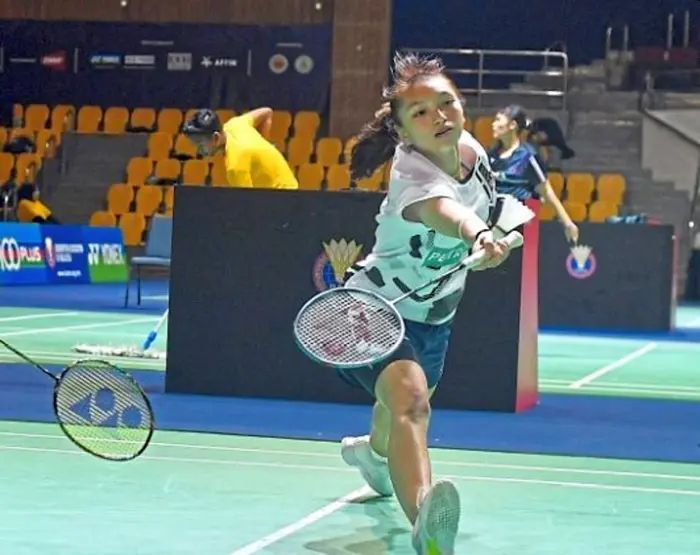
Nineteen-year-old shuttler Noraqilah Maisarah Ramdan possesses the raw talent to become a force in international badminton, but her mixed doubles coach Nova Widianto cautions that technical prowess alone will not propel her to sustained success at the highest levels of competition. Rather, the coaching staff believes that cultivating mental fortitude and maintaining emotional equilibrium will prove just as vital as the refinement of her strokeplay and court positioning.
Noraqilah has demonstrated impressive adaptability across multiple disciplines, competing proficiently in both women's doubles and mixed doubles formats. Despite this dual focus, Nova and his coaching team are deliberately resisting the temptation to accelerate her progression through the ranks, a measured approach that reflects the international best practice of allowing young talents adequate time to mature physically and mentally before subjecting them to the relentless pressures of elite competition.
Having observed Noraqilah since her formative years in the sport, Nova holds no reservations regarding her fundamental abilities. The distinguishing factor, he emphasises, lies not in mechanics or tactical awareness but rather in the psychological dimension of her development. When early success arrives and accolades begin accumulating from peers, coaches, and supporters, young athletes frequently encounter unexpected psychological turbulence that can derail their trajectory if left unmanaged.
This concern extends beyond mere superstition or coaching folklore. The history of badminton across Southeast Asia reveals numerous instances of prodigious young players whose promising debuts failed to translate into sustained excellence, often due to difficulties navigating the attention and expectations that accompany initial success. Nova's emphasis on character building reflects this reality—that Malaysia's competitive advantage lies not simply in identifying talent but in systematically developing the resilience and mental discipline necessary to convert potential into performance over a career spanning multiple Olympic cycles.
The coaching philosophy Nova articulates also acknowledges a broader challenge within Malaysian badminton development. The nation has cultivated a pipeline of talented individuals whose technical abilities rival those of international counterparts, yet the consistency of championship performance remains uneven. By prioritising the psychological infrastructure alongside technical training, the coaching team aims to address this persistent gap between individual brilliance and team competitiveness.
Noraqilah's recent competitive achievements underscore both her versatility and current trajectory. She and scratch partner Ong Xin Yee captured the women's doubles crown at the second leg of the Under-21 National Championship held in Kuantan, demonstrating her capacity to perform effectively with unfamiliar partners under competitive pressure. Simultaneously, her regular partnership with Low Zi Yu reached the quarter-final stage of the Australian Open, elevating their combined ranking to a career-best world No. 70, a significant milestone for a pairing still establishing itself on the international circuit.
Her mixed doubles endeavours show similar promise and volatility. The partnership between Noraqilah and Loo Bing Kun progressed to the second round in Sydney, positioning them at world No. 115—respectable for a relatively newly formed combination, yet indicative of the competitive density in modern mixed doubles, where establishing a consistent partnership capable of sustained ranking growth requires both technical synchronisation and tactical alignment.
Nova acknowledges that Noraqilah's current approach of competing across both women's doubles and mixed doubles disciplines provides tangible benefits during this developmental phase. The exposure to varied partners, differing tactical demands, and multiple competitive environments accelerates learning and builds adaptive capacity. However, this flexibility cannot remain indefinite. The mathematical reality of elite sport demands increasing specialisation as athletes progress toward championship contention, and Nova anticipates that Noraqilah will eventually face a critical juncture requiring disciplined focus on a single event.
The coach posits that achieving the pinnacle of professional badminton—and particularly qualifying for and performing successfully at Olympic Games—will ultimately necessitate abandoning the dual-discipline approach. This is not a suggestion of weakness on Noraqilah's part, but rather a reflection of the intensity and specificity demanded by world-class competition. The physical toll, technical refinement requirements, and mental preparation needed to compete at the absolute highest level in even one discipline leaves minimal capacity for maintaining excellence across multiple formats.
For Malaysian badminton stakeholders observing Noraqilah's development, the conversation Nova initiates carries broader significance. It highlights the coaching staff's commitment to cultivating athletes who not only win tournaments but who sustain performance trajectories over extended periods. This perspective directly addresses Malaysia's strategic objective of producing consistent medal contributors at major international competitions rather than relying on occasional flashes of brilliance from individual players.
The pathway Nova outlines for Noraqilah reflects accumulated wisdom from Malaysian badminton's more successful periods, when systematic development coupled with psychological mentoring produced players capable of maintaining top rankings across multiple seasons. By grounding his young charge in realistic expectations about the long journey ahead while simultaneously nurturing the mental resilience required for sustained excellence, Nova positions Noraqilah not simply as a talented prospect but as a potential cornerstone of Malaysia's badminton ambitions in the coming decade.

