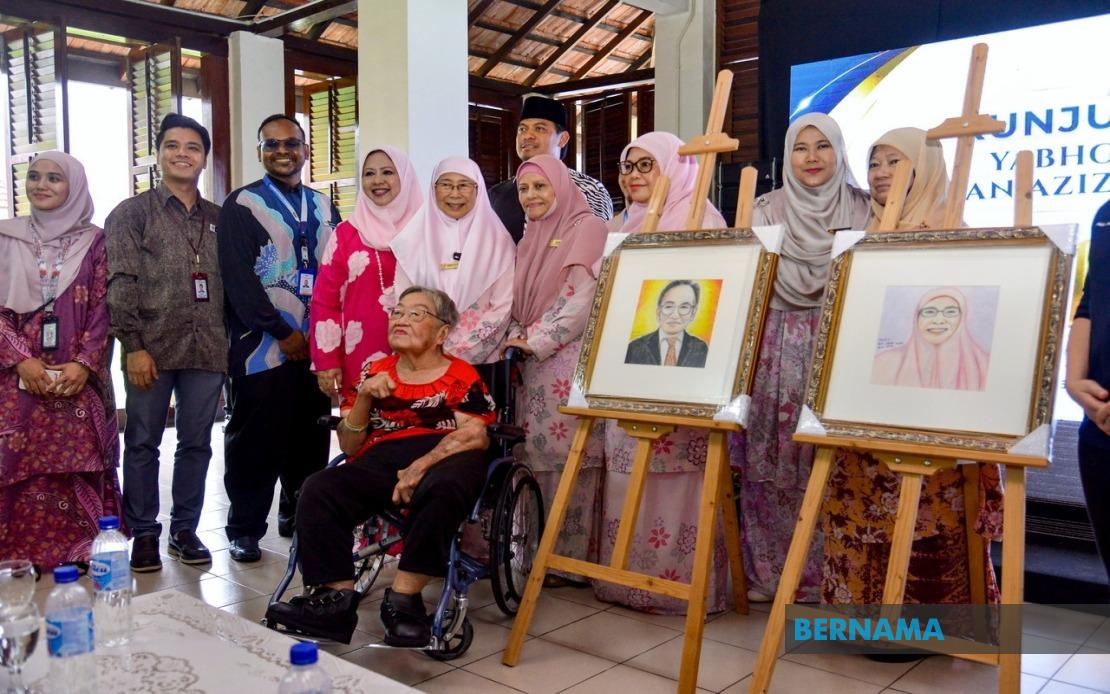
The National Leprosy Control Centre in Sungai Buloh, which is commemorating its 100th year of operation, warrants continued protection and recognition as a crucial monument to Malaysia's public health achievements, according to Datuk Seri Dr Wan Azizah Wan Ismail, the Prime Minister's wife. Speaking during a recent visit to the facility, she emphasised that despite the dramatic decline in leprosy cases, the centre's legacy and physical infrastructure hold immense value for the nation's medical and historical narrative.
Established in 1926, the PKKN has witnessed transformative moments in Malaysia's healthcare landscape and played an instrumental role in controlling what was once a debilitating and deeply stigmatised disease. Dr Wan Azizah noted that the facility encapsulates crucial chapters in how the country managed and eventually contained leprosy, offering contemporary insights into both the disease's epidemiology and the evolution of public health responses in Malaysia. The centre's journey from a major isolation facility to a modern healthcare institution reflects broader shifts in medical understanding and social attitudes toward infectious diseases.
During her visit, Dr Wan Azizah toured the PKKN facilities and engaged with both staff and residents, gaining firsthand understanding of the centre's ongoing operations and the lives of those receiving care there. The interaction included receiving a portrait painted by a resident, a gesture that underscored the human dimension of the centre's mission beyond clinical functions. Such visits carry symbolic weight, demonstrating official acknowledgment of the centre's continued relevance and the dignity of those it serves.
While Malaysia has made remarkable strides in controlling leprosy, achieving elimination status in 1994, Dr Wan Azizah emphasised that preservation need not mean stagnation. She advocated for a dual approach: safeguarding the centre's historical and architectural significance while simultaneously pursuing service improvements and healthcare upgrades. This balanced perspective recognises that heritage preservation and modern healthcare delivery are not mutually exclusive but can be complementary objectives.
The PKKN's historical significance is underscored by its former status as the world's second-largest leprosy isolation centre. At its peak, the facility represented the cutting edge of leprosy management and isolation protocols. The current prevalence rate of 0.15 cases per 10,000 population demonstrates Malaysia's exceptional performance in disease control, far surpassing the benchmarks established by the World Health Organisation. This achievement represents decades of coordinated public health efforts and investment in infrastructure and medical expertise.
Public perception of leprosy has undergone a profound transformation in recent decades, driven by improved medical understanding and education. Dr Wan Azizah highlighted that as knowledge about the disease's actual transmission mechanisms has spread, outdated social stigma has gradually diminished. Leprosy is now recognised as a treatable bacterial infection with low transmissibility rather than the hereditary curse of popular imagination. This shift in understanding has important implications for patients and communities, reducing psychological burden and social exclusion.
The PKKN's flexibility in adapting to contemporary health emergencies was demonstrated when it repurposed facilities to accommodate COVID-19 patients in 2020. This versatility illustrates how heritage institutions can remain operationally relevant while maintaining their historical character. The centre's capacity to respond to urgent public health needs while preserving its foundational mission exemplifies the potential for medical institutions to serve evolving societal requirements without abandoning their core identity.
Dr Wan Azizah, who also chairs KASIH Malaysia, a charitable organisation focused on welfare initiatives, brought her broader philanthropic perspective to the discussion. Her involvement underscores how heritage preservation connects to contemporary social responsibility, particularly regarding the welfare of vulnerable populations who may face social marginalisation. The organisation's focus on compassionate engagement aligns with efforts to destigmatise leprosy and ensure that affected individuals receive not only medical care but also social integration and support.
The case for preserving the National Leprosy Control Centre extends beyond nostalgia or architectural conservation. The facility serves as a tangible reminder of Malaysia's public health journey and the importance of sustained commitment to disease prevention and control. For regional healthcare professionals and policymakers, the centre offers valuable lessons in long-term infectious disease management, institutional resilience, and the social dimensions of medical care. As Southeast Asian nations continue developing healthcare infrastructure and disease surveillance systems, Malaysia's experience with leprosy control provides instructive precedents.
Preservation of the PKKN also carries implications for medical education and training. Medical students and public health professionals benefit from understanding historical approaches to disease control and the evolution of treatment protocols. The centre can serve as a teaching institution that bridges historical knowledge with contemporary practice, fostering appreciation for scientific progress while acknowledging past challenges. Such institutional memory proves invaluable for training the next generation of healthcare leaders in the region.
The conversation around the National Leprosy Control Centre's future reflects broader questions about how nations should relate to their medical heritage. Effective preservation requires investment, strategic planning, and coordination among multiple stakeholders including government agencies, medical professionals, heritage organisations, and community groups. The centre's centennial provides an opportune moment for formalising protection mechanisms and developing comprehensive conservation strategies that balance historical integrity with functional modernisation.
Moving forward, the PKKN can serve as a model for heritage-conscious healthcare delivery in Malaysia and throughout Southeast Asia. By demonstrating that respect for medical history and commitment to contemporary healthcare excellence need not be in tension, the centre contributes to developing a more sophisticated approach to institutional preservation. This integrated model—maintaining heritage while advancing care—positions the facility as both a museum of medical achievement and an active contributor to current public health objectives, ensuring its relevance for future generations of Malaysians and medical professionals across the region.

