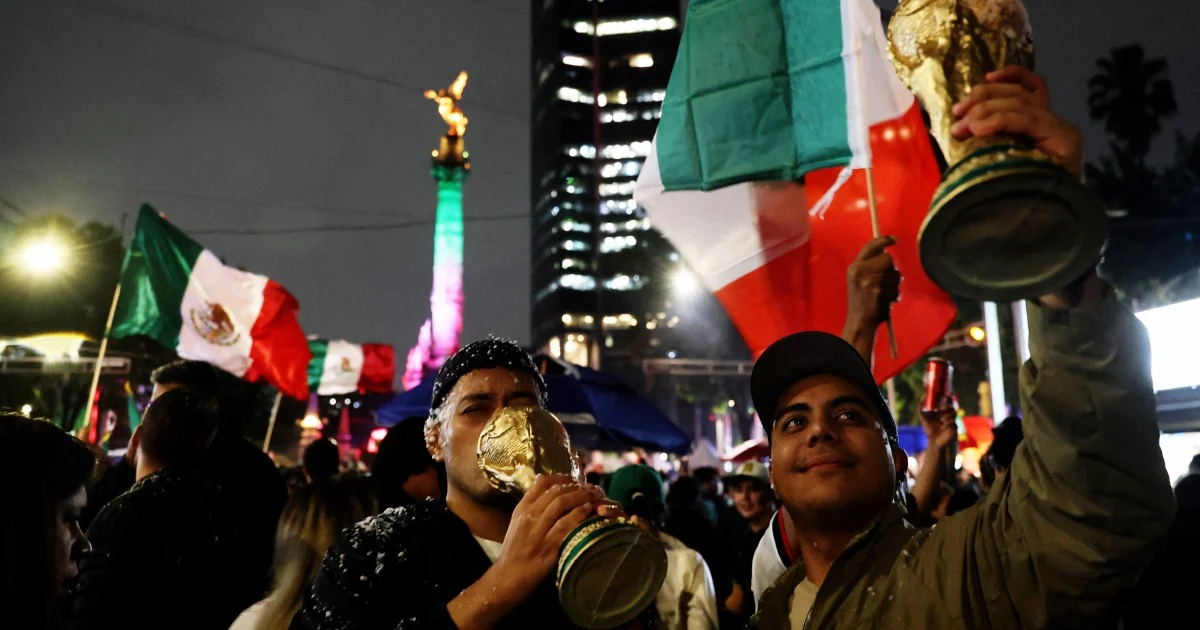
Celebrations commemorating Mexico's World Cup success descended into chaos on Wednesday evening in Cabo San Lucas when a black vehicle suddenly accelerated into a gathering of jubilant supporters in the popular seaside destination. The incident, which left 17 people requiring emergency medical attention, marked an alarming disruption to what had been a festive occasion in one of Mexico's most visited tourist hotspots. Local authorities in Los Cabos, the municipality encompassing the resort town, confirmed the severity of the incident through an official statement released following the incident.
Social media footage corroborated by Reuters news agency captured the moment preceding the collision, showing the vehicle stationary amidst a throng of supporters adorned in Mexico's national football team colours. Without warning, the car surged forward with considerable force, propelling multiple spectators skyward before coming to rest against protective bollards positioned along the street. The sudden acceleration appeared deliberate rather than accidental, raising serious questions about the driver's intent and mental state at the time of the incident.
Following the collision, disturbing imagery emerged from the scene depicting bystanders wrenching open the vehicle's doors and extracting the driver, who subsequently faced assault from the enraged crowd. Simultaneous footage showed numerous injured individuals lying motionless on the pavement, their conditions ranging from apparent minor to serious injuries, though specific medical details remained unclear in the immediate aftermath. The chaotic response underscored the shock and anger that gripped the crowd as the festive atmosphere evaporated instantly.
Authorities moved swiftly to secure the scene and apprehend the vehicle's operator, who was placed under arrest pending investigation. The detained individual was among those transported for medical evaluation, though whether injuries sustained were from the impact itself or from the subsequent confrontation with spectators remained unspecified in official reports. Investigators would need to determine whether mechanical failure, impairment, or intentional action precipitated the collision.
Cabo San Lucas, situated at the southern tip of the Baja California Peninsula where the Pacific Ocean meets the Sea of Cortez, attracts hundreds of thousands of international visitors annually and serves as a major economic engine for the region. The resort town's reputation for vibrant nightlife and entertainment venues makes it a natural gathering point for Mexicans celebrating significant sporting achievements. The World Cup victory that triggered Wednesday's celebrations represented a point of national pride, making the subsequent violence particularly jarring for revellers who had assembled to share in collective joy.
The incident raises broader concerns about crowd safety protocols in Mexico's tourist destinations, particularly during high-emotion sporting events when large, spontaneous assemblies form in public spaces. While vehicle-into-crowd incidents have become an international security concern in recent years, Wednesday's event in Cabo San Lucas highlighted vulnerabilities in street-level crowd management even in heavily trafficked tourist zones. The presence of protective bollards at the crash site suggests some defensive infrastructure existed, yet proved insufficient to prevent the vehicle from reaching the crowd.
Mexico's national football team holds profound cultural significance throughout the country, with major tournament matches generating spontaneous celebrations in plazas, streets, and public gathering points nationwide. When victories occur, particularly in competitions of World Cup magnitude, the celebratory impulse often overwhelms formal event management structures as citizens pour into streets to express their collective enthusiasm. While such demonstrations typically remain peaceful, Wednesday's incident demonstrated the unpredictability inherent when large crowds congregate in urban environments with vehicle access.
Investigators will need to establish whether the driver acted with premeditation, whether substance impairment played a role, or whether medical emergencies such as seizures or cardiac events precipitated the loss of vehicle control. Toxicology reports and witness testimonies will prove crucial in determining the incident's classification, whether as a deliberate attack, reckless endangerment, or tragic accident. The detained individual's background and any prior incidents would also inform authorities' understanding of motive and culpability.
The incident underscores vulnerabilities affecting major tourist destinations across Mexico and Latin America more broadly, where spontaneous public celebrations can coalesce rapidly without formal security infrastructure. As Mexican authorities investigate the Cabo San Lucas collision, municipal governments throughout the region may reassess protocols for managing unexpected crowd formations during sporting events and celebrations. The question of whether additional vehicle barriers, increased police presence during major matches, or revised public space design might have prevented or mitigated Wednesday's tragedy will likely shape future safety planning in Mexico's most visited resort communities.

