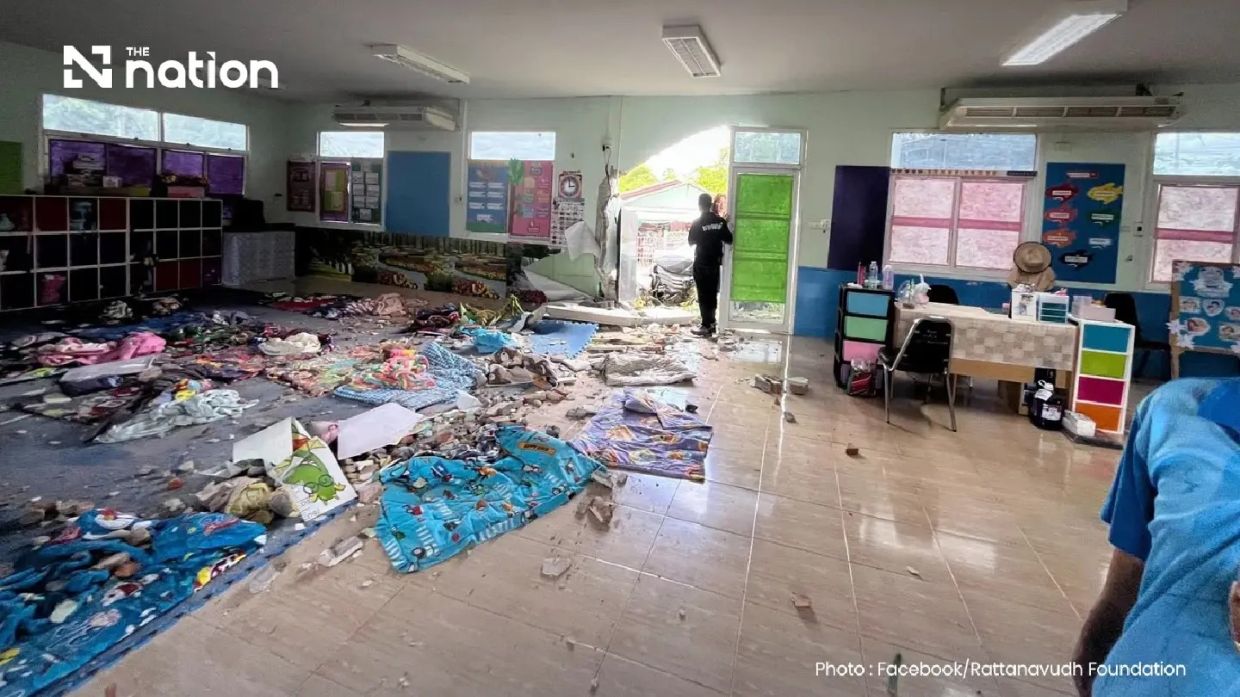
A tragic accident unfolded in Kanchanaburi Province, Thailand, on Friday, August 7, 2026, when a private saloon car unexpectedly veered out of control and ploughed into the Ban Nong Song Ton Child Development Centre in Mueang Kanchanaburi district. The collision caused significant alarm among residents and prompted an immediate emergency response, as the vehicle struck a classroom where young children were resting during their afternoon nap—a routine part of the daily schedule at the facility.
The impact of the crash proved substantial enough to cause structural damage to the building itself, with fragments and debris scattered across the classroom. Among the 34 children present at the centre that day, 15 sustained injuries ranging from head wounds to trauma from the scattered debris. Although the injuries were concerning, the situation could have been considerably worse given the force of the collision and the vulnerability of the young victims. Several children were also severely shaken by the incident, experiencing psychological trauma alongside their physical injuries.
Emergency services mobilized swiftly following the alert raised by the Rattanavudh Foundation. Personnel from both the Rattanavudh Foundation and the Phithak Kan Foundation arrived at the scene and provided urgent first aid to the injured children before transfer arrangements were made. Local authorities coordinated with rescue teams to clear the route through Mueang Kanchanaburi district, ensuring that emergency vehicles could transport the injured without delay through residential areas.
All 15 injured children were transported to Phaholpolpayuhasaena Hospital for comprehensive medical examination and treatment. Hospital staff conducted thorough assessments to determine the extent of injuries and appropriate care protocols. In subsequent updates, medical personnel confirmed that all 15 children had been stabilized and were safe, providing relief to parents, staff members, and the local community who had been anxiously awaiting news of their conditions.
The remaining 19 children who were present at the centre that day escaped without injury, though they would likely have experienced considerable distress witnessing the accident and its immediate aftermath. Staff members at the facility worked to provide reassurance and emotional support to uninjured children while coordinating the emergency response for their injured peers. The incident has raised important questions about safety protocols at childcare facilities and the measures in place to prevent vehicle access to areas where young children congregate.
For Malaysian readers and parents, this incident serves as a sobering reminder of potential safety vulnerabilities at childcare centres and early education facilities. While Thailand's emergency response appeared well-coordinated, the incident highlights the need for comprehensive safety reviews across childcare facilities throughout Southeast Asia. Many centres in Malaysia and the region may similarly lack adequate barriers or safeguards to prevent vehicles from entering areas where children play, sleep, or learn.
Childcare facility management and local authorities in Malaysia should consider implementing enhanced safety measures, including physical barriers such as bollards, reinforced gates, and controlled access points that prevent unauthorized or accidental vehicle entry into children's spaces. Regular safety audits and risk assessments can identify vulnerabilities in building design and infrastructure. Staff training in emergency response procedures and first aid becomes increasingly critical in ensuring that facilities can respond effectively if such incidents occur.
The psychological impact on children who witness accidents or experience trauma should not be underestimated. Early childhood educators and psychologists recommend that facilities develop comprehensive support protocols to help children process traumatic events. This may include counselling services, parent communication strategies, and gradual reorientation to normal routines in ways that restore children's sense of safety and security.
Parent communication also warrants careful attention following such incidents. Transparent, timely updates from facility management help prevent misinformation and rumours while allowing parents to make informed decisions about their children's continued attendance and wellbeing. Many childcare centres now recognize the importance of maintaining detailed emergency contact protocols and having contingency plans for various scenarios.
The broader question of vehicle safety near childcare facilities extends beyond individual facility management. Urban planning and traffic management strategies should consider the location of childcare centres when designing road networks and traffic patterns. In areas with high concentrations of young children, speed restrictions, additional signage, and traffic calming measures may be warranted to reduce accident severity should collisions occur.
As incidents like this occur periodically across the region, regulatory bodies in Malaysia and neighbouring countries continue to evolve standards for childcare facility design and operation. Building codes increasingly incorporate safety features designed to withstand vehicle impacts, while licensing requirements emphasize proper supervision, emergency preparedness, and physical security measures. Stakeholders—including childcare operators, parents, government agencies, and urban planners—share responsibility for creating environments where young children can learn and develop safely.
The fortunate outcome in Kanchanaburi, where all injured children recovered safely and returned to their families, reflects both effective emergency response and considerable good fortune. However, relying on luck rather than prevention remains inadequate. Continuous improvement in safety standards, infrastructure design, staff training, and emergency protocols remains essential across childcare facilities throughout Southeast Asia to prevent future tragedies and protect the region's youngest and most vulnerable members.

