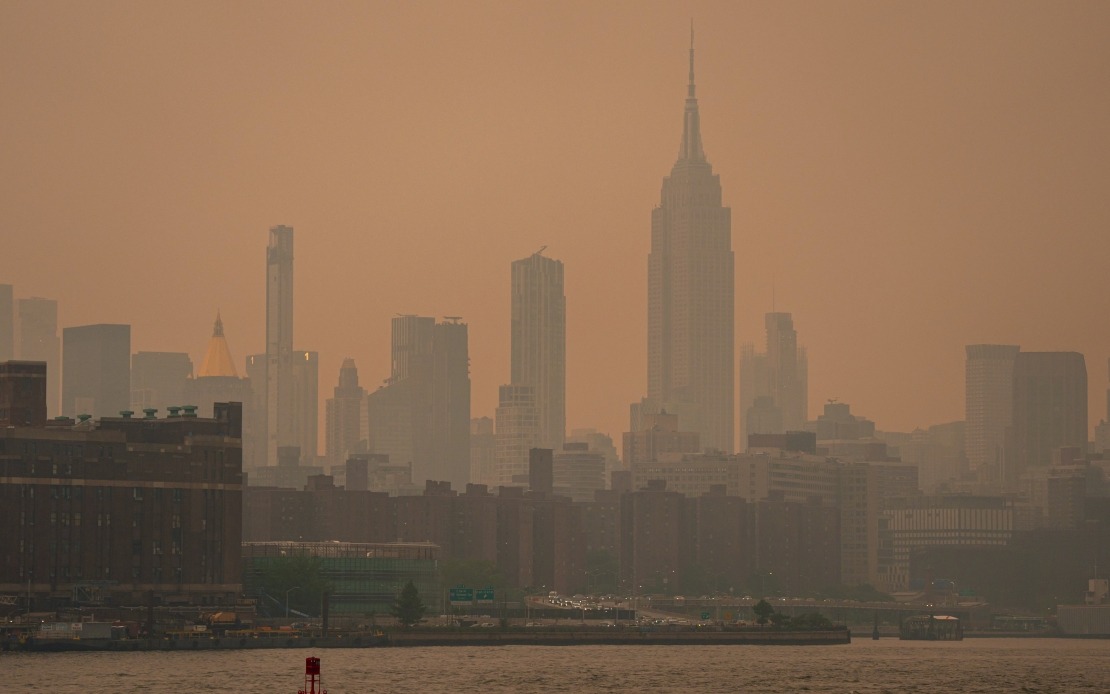
Mexican President Claudia Sheinbaum's journey to the World Cup final in New York encountered significant disruption on the weekend due to deteriorating air quality caused by smoke drifting southward from wildfires ravaging parts of Canada. The atmospheric conditions forced a complete cancellation of her originally scheduled commercial flight from Cancún on Saturday, which had already been postponed by two hours as meteorological conditions worsened throughout the day. Ultimately, the Mexican government arranged alternative transport, with Sheinbaum boarding a Defence Ministry aircraft that departed late Saturday evening, allowing her to reach New York in time for Sunday's Argentina versus Spain championship match in East Rutherford, New Jersey.
The complications surrounding Sheinbaum's travel underscore the growing cross-border environmental challenges facing North America. Wildfires across Canadian provinces have been exceptionally severe this season, with smoke plumes reaching major population centres as far south as the United States' eastern seaboard. The air quality degradation in New York became significant enough to disrupt the schedules of high-level government officials, illustrating how environmental crises transcend national boundaries and can impact diplomatic engagements. For Malaysian readers monitoring regional climate issues, the Canadian wildfire situation serves as a cautionary example of how environmental deterioration can cascade across vast distances, similar to transboundary haze challenges that periodically affect Southeast Asia.
Sheinbaum's attendance at the World Cup final represented a notable diplomatic gesture, particularly given the current tensions characterising Mexico-United States relations. The Mexican president had received an invitation directly from US President Donald Trump, a development that carried political significance beyond the sporting event itself. That Trump extended the invitation to both Sheinbaum and Canadian Prime Minister Mark Carney reflected the trilateral nature of World Cup hosting arrangements, yet the gesture also occurred against a backdrop of strained bilateral ties centred on trade disputes and security cooperation concerns. For observers of hemispheric diplomacy, the invitation signalled a willingness to engage despite underlying disagreements on substantive policy matters.
The previous interaction between Sheinbaum and Trump had been limited to a single meeting during the World Cup draw ceremony held in Washington the previous December. That gathering marked their only formal engagement to date, meaning the World Cup final attendance represented a rare opportunity for face-to-face dialogue between the Mexican and American leaders. Given the significance of bilateral relations between Mexico and the United States—spanning trade, migration, security, and energy cooperation—such meetings carry outsized importance for the region. Southeast Asian policymakers can draw parallels to how major sporting events sometimes serve as neutral venues for diplomatic engagement between countries experiencing tensions.
The involvement of Canadian Prime Minister Mark Carney added another layer to the event's political dimensions. The 2026 World Cup represented a historic co-hosting arrangement among the three North American nations, making the presence of all three leaders symbolically important. However, Carney's participation also underscored Canada's role as an often-overlooked participant in North American affairs, situated geographically and diplomatically between the United States and Mexico. The wildfire smoke that complicated Sheinbaum's travel ironically originated from Canadian territory, creating an ironic juxtaposition where environmental challenges emanating from one co-host nation impeded the attendance of another.
From a broader regional perspective, the incident highlights how climate-related disruptions are becoming increasingly consequential for international affairs. Air quality emergencies, whether from wildfires, industrial pollution, or other sources, now rank among the factors that can impede diplomatic movements and official schedules. This reality carries particular relevance for Southeast Asia, where transboundary haze from agricultural burning and forest fires has historically disrupted travel, commerce, and government operations. The Mexican president's experience demonstrates that no region or level of economic development insulates nations from these environmental pressures.
The Mexican government's swift deployment of a Defence Ministry aircraft to ensure Sheinbaum's attendance reflected the importance placed on her participation in the World Cup final. The overnight flight represented a significant logistical undertaking, yet officials deemed it necessary to maintain Mexico's representation at the event. This decision also spoke to the symbolic value of having the Mexican head of state present at a moment celebrating her nation's role in hosting the world's most popular sporting competition. The coordination required between Mexican and American authorities to facilitate her travel, despite existing tensions, demonstrated that practical cooperation persists even amid political friction.
The World Cup final itself carried implications beyond athletics and national pride. For Mexico, hosting the tournament alongside the United States and Canada represented a major international undertaking with economic, infrastructural, and diplomatic dimensions. Sheinbaum's presence at the championship match symbolised national commitment to the event's success. Her attendance, achieved despite environmental obstacles, would be documented and reported globally, reinforcing the message that Mexico remained fully invested in fulfilling its hosting obligations. The last-minute travel adjustments ultimately succeeded in ensuring her participation, though the incident illustrated the vulnerability of even carefully planned diplomatic schedules to unforeseen environmental events.
Looking at the implications for Malaysia and broader Southeast Asia, the Sheinbaum travel disruption offers instructive lessons about climate resilience and diplomatic flexibility. As environmental challenges intensify across regions, governments must build redundancy into official travel planning and maintain flexibility in scheduling. The Mexican government's ability to rapidly arrange alternative transport through its Defence Ministry aviation assets enabled Sheinbaum to fulfil her commitment. Similarly, Southeast Asian nations would benefit from strengthening their own logistical capabilities to manage disruptions caused by haze, floods, or other climate-related events that could impact official movements and international engagements.
The incident also underscores how major sporting events, while primarily cultural and athletic celebrations, remain inherently political occasions where nations assert their standing and leaders demonstrate commitment. The World Cup final attendance represented more than personal interest in football; it constituted a statement of national leadership and international engagement. For Mexico, ensuring Sheinbaum's presence despite environmental challenges reinforced the country's capacity to host and participate meaningfully in the tournament. The effort invested in overcoming the smoke-related obstacles demonstrated the priority placed on maintaining Mexico's diplomatic presence on the global stage.

