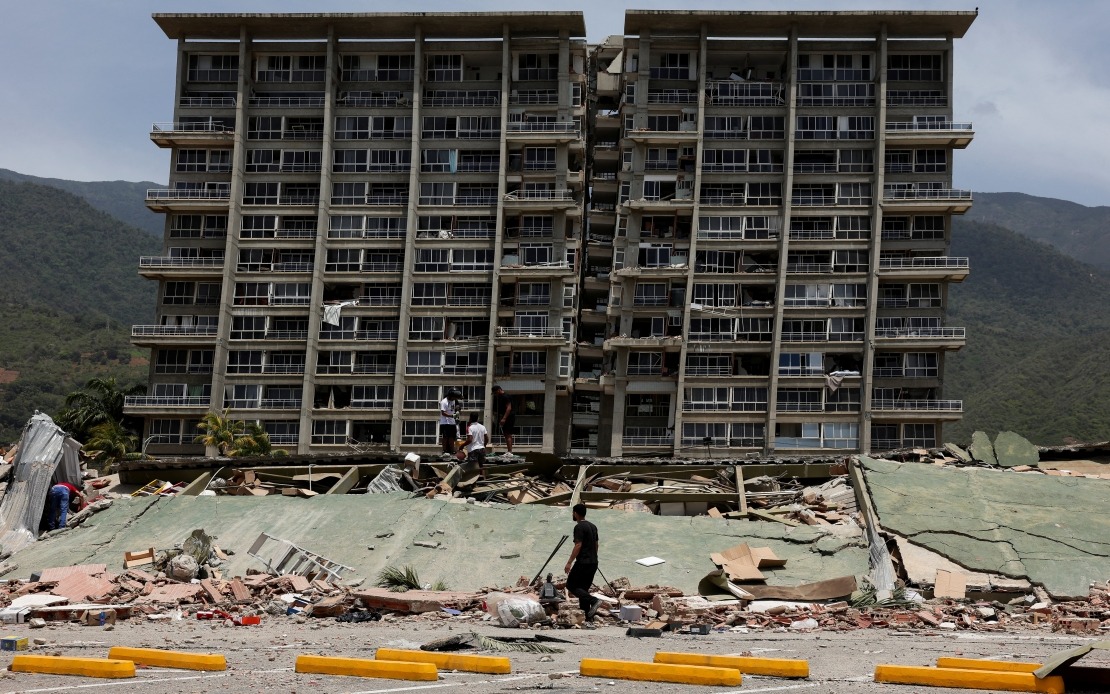
Canada has committed an initial US$5 million in emergency humanitarian assistance to help Venezuela respond to the aftermath of severe earthquakes that have left widespread destruction and significant loss of life across the nation. The announcement came from Canada's Foreign Ministry on Thursday, signalling Ottawa's readiness to mobilise resources alongside international partners to address the mounting humanitarian crisis in the South American country.
The earthquakes have inflicted what officials describe as immense casualty figures and extensive infrastructure damage, though the full scope of the disaster continues to emerge as assessment teams gain access to affected regions. Initial reports suggest that the tremors have impacted communities across Venezuela, with preliminary indications pointing to potentially hundreds of thousands of people requiring urgent assistance. The Canadian government has emphasised that comprehensive humanitarian coordination will be essential to ensure that resources reach the most vulnerable populations first.
Canada's new allocation will be channelled through established humanitarian organisations with proven expertise in emergency response operations. These funds will support the delivery of critical life-sustaining commodities, including emergency food supplies and clean drinking water, alongside essential sanitation infrastructure to prevent disease outbreaks. The assistance package also encompasses provision of emergency medical services and health support to treat earthquake-related injuries and illnesses, complemented by broader protection measures for displaced persons and logistical coordination to ensure efficient resource distribution across affected areas.
This latest commitment builds upon Canada's existing humanitarian engagement with Venezuela. Earlier in 2024, the Canadian government had already allocated nearly US$4.5 million in humanitarian funding to address chronic needs within the country, reflecting a sustained international commitment to supporting Venezuelans facing multiple overlapping crises. The additional US$5 million now brings Canada's total humanitarian investment in Venezuela for this year to approximately US$9.5 million, underscoring the country's elevated concern about the humanitarian trajectory in the region.
Foreign Minister Anita Anand characterised the earthquake devastation as particularly tragic, noting that families have suffered irreplaceable losses and that the social fabric of communities has been severely disrupted by the natural disaster. In her statement, Anand stressed that Canada recognises the profound human suffering in Venezuela and is positioning itself as a supportive partner during this critical period. The minister's remarks reflect broader Canadian diplomatic positioning toward Latin America, where Ottawa has sought to maintain humanitarian engagement despite broader geopolitical complexities surrounding Venezuela.
From a regional perspective, the Canadian assistance underscores how natural disasters in Latin America often trigger coordinated international responses that transcend normal diplomatic divisions. Venezuela has faced sustained international isolation over recent years due to political circumstances, yet humanitarian emergencies typically create space for renewed engagement from traditional donor countries. Canada's willingness to provide rapid financial support suggests that earthquake relief may create temporary windows for broader regional humanitarian cooperation and coordination among international actors.
The Canadian Foreign Ministry has indicated that senior officials are maintaining active communication with regional partners and humanitarian organisations operating throughout Venezuela. This ongoing engagement reflects recognition that humanitarian needs following major earthquakes are dynamic and evolve considerably as initial emergency response transitions toward medium-term recovery and reconstruction. Canadian officials have committed to refining their assistance strategy as situation assessments become more comprehensive and as coordination mechanisms with other international actors solidify.
Looking ahead, the Canadian government has signalled that additional information regarding the allocation and deployment of the new US$5 million commitment will be released in the coming days as implementation plans take shape. The ministry is continuing to monitor developments within Venezuela closely, suggesting that further assistance tranches may be considered depending on how the humanitarian situation develops. This phased approach to resource deployment reflects standard international practice in earthquake response, where initial funding is typically deployed rapidly while subsequent allocations await more detailed needs assessments.
For Southeast Asian observers, the Canadian response to the Venezuelan earthquake offers instructive parallels for regional disaster preparedness and international humanitarian coordination. Malaysia and its neighbours in ASEAN have developed considerable expertise in managing earthquake response and cross-border humanitarian assistance, particularly given the region's vulnerability to seismic activity. The Canadian model of combining rapid financial mobilisation with sustained coordination through established humanitarian partners represents best practice that regional governments increasingly emulate when structuring their own international assistance programmes.
The Venezuelan earthquake crisis also highlights how natural disasters can serve as catalysts for revitalising international humanitarian engagement in countries experiencing prolonged political tensions. As Malaysia navigates its own role in international humanitarian affairs, particularly through ASEAN mechanisms and bilateral relationships, the Canadian example demonstrates how technical disaster response can operate somewhat independently from broader diplomatic considerations. This separation of humanitarian assistance from political positioning has become increasingly important in a multipolar international environment where countries seek to maintain engagement across ideologically diverse partners while retaining principled positions on governance issues.
Canada's commitment also reflects growing recognition among developed nations that early and substantial humanitarian investment in earthquake-affected regions yields better long-term outcomes than delayed response. By mobilising resources rapidly and channelling them through experienced implementing partners, donor countries can reduce preventable deaths and suffering while building social resilience in vulnerable communities. For emerging economies in Southeast Asia managing development transitions, understanding how to attract and effectively deploy international humanitarian resources represents an important capacity-building priority that extends beyond emergency response into broader disaster risk management frameworks.

