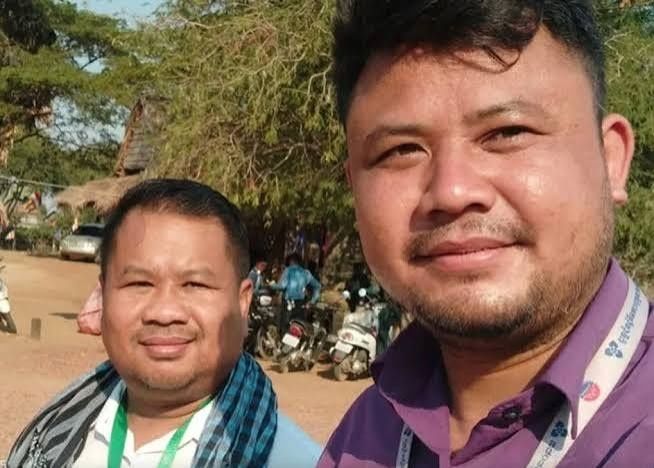
Cambodia's highest court is poised to deliver a pivotal judgment on Thursday, June 25, when it considers whether to overturn the convictions of two journalists sentenced to 14 years in prison for treason. Phorn Sopheap of Battambang Post TV Online and Pheap Pheara of TSP 68 TV Online were arrested in July after returning from reporting assignments near the Thailand border, accused of uploading photographs taken in a restricted military zone to Facebook. The Supreme Court's decision carries significance far beyond the two men's fates, serving as a barometer of judicial autonomy in a nation where such concerns have mounted steadily under current leadership.
The charges against the journalists stem from their coverage of border tensions that erupted in fierce clashes between Cambodian and Thai forces during 2024. The men assert they possessed proper authorization to enter the area where they conducted their photography, and they maintain they are being wrongfully prosecuted. Their legal representatives have petitioned the Supreme Court to reverse the guilty verdict issued by Siem Reap Provincial Court in December and to nullify their sentences, arguing the convictions rest on a flawed interpretation of national security laws.
One photograph captured by the journalists showing land mines became particularly contentious in regional diplomatic circles. Thai news organizations circulated the image widely, using it to substantiate Bangkok's assertions that Cambodia had recently deployed anti-personnel mines along their shared frontier, causing injuries to Thai military personnel engaged in border patrol operations. Cambodia's government categorically rejected such allegations, contending it respects international treaties prohibiting landmine use and suggesting any mines present were remnants from Cambodia's devastating internal conflicts of the preceding decades.
The armed clashes that consumed much of 2024, with major incidents in July and December, proved devastating for civilian populations on both sides of the border. Displacement reached hundreds of thousands across Thailand and Cambodia combined, while combat-related deaths numbered approximately 100 soldiers and civilians collectively. A ceasefire established in December has largely held, though underlying tensions persist and could potentially reignite. The journalists' photographs thus became entangled in a larger geopolitical narrative about border security and military capabilities.
In its December ruling, Siem Reap Provincial Court found both men guilty of supplying foreign entities with information harmful to national defense, the legal language typically deployed in espionage and treason prosecutions. When the lower appellate court upheld these convictions in March, international journalism organizations mobilized in response. A coordinated letter from more than a dozen national and international journalism bodies urging the government to abandon prosecution went largely unheeded, underscoring official intransigence on the matter.
The journalists' Supreme Court hearing arrives at a particularly sensitive moment for Cambodia's judiciary. Just days earlier, the same court upheld the incitement conviction of Rong Chhun, a 56-year-old opposition politician with significant grassroots support. Chhun was found guilty of fomenting social unrest after conducting meetings with communities displaced by government-backed infrastructure projects, actions that observers widely characterized as legitimate political engagement rather than criminal agitation. This back-to-back judicial affirmation of contested convictions has intensified scrutiny regarding the court system's relationship with political authority.
Human Rights Watch characterized the Chhun ruling as demonstrating Cambodia's courts lack genuine independence from the ruling Cambodian People's Party, an assessment that extends directly to the journalists' case. Government officials have pushed back against such criticism, asserting the Supreme Court operates with complete autonomy from executive influence. However, international monitoring organizations and regional analysts maintain substantial doubts about these claims, pointing to patterns of selective prosecution against critics and independent media practitioners.
The current government under Prime Minister Hun Manet, who assumed office in August 2023 after his father Hun Sen stepped down following nearly four decades in power, has yet to signal meaningful movement toward democratic reform or enhanced press freedoms. Although Hun Manet received Western education and his appointment generated initial optimism among some observers, his administration has demonstrated continuity with his predecessor's approach to controlling dissent and constraining independent expression. Legal actions against journalists and opposition figures have proceeded without apparent interruption under the younger leader's tenure.
International press freedom organizations have increasingly condemned Cambodia's deployment of broad national security statutes as instruments of censorship. The Committee to Protect Journalists, based in New York, specifically identified the prosecutions of Pheap Pheara and Phorn Sopheap as examples of governmental misuse of vague legislation to criminalize ordinary journalistic work. This characterization aligns with Cambodia's particularly poor standing in global press freedom assessments, where it ranks 161st among 180 nations and territories in the 2025 Reporters Without Borders World Press Freedom Index, placing it within the category of territories experiencing "very serious" threats to media independence.
For Malaysian and broader Southeast Asian readers, Cambodia's judicial trajectory holds concerning implications. The region has experienced expanding restrictions on media freedom and increasing reliance on national security rationales to prosecute journalists and political opponents across multiple countries. Cambodia's case demonstrates how ostensibly neutral legal codes protecting state security can become instruments of authoritarianism when applied selectively against government critics. The Supreme Court's forthcoming judgment will signal whether Cambodia's new leadership intends to recalibrate its approach or maintain the coercive tactics that have characterized governance for decades.

