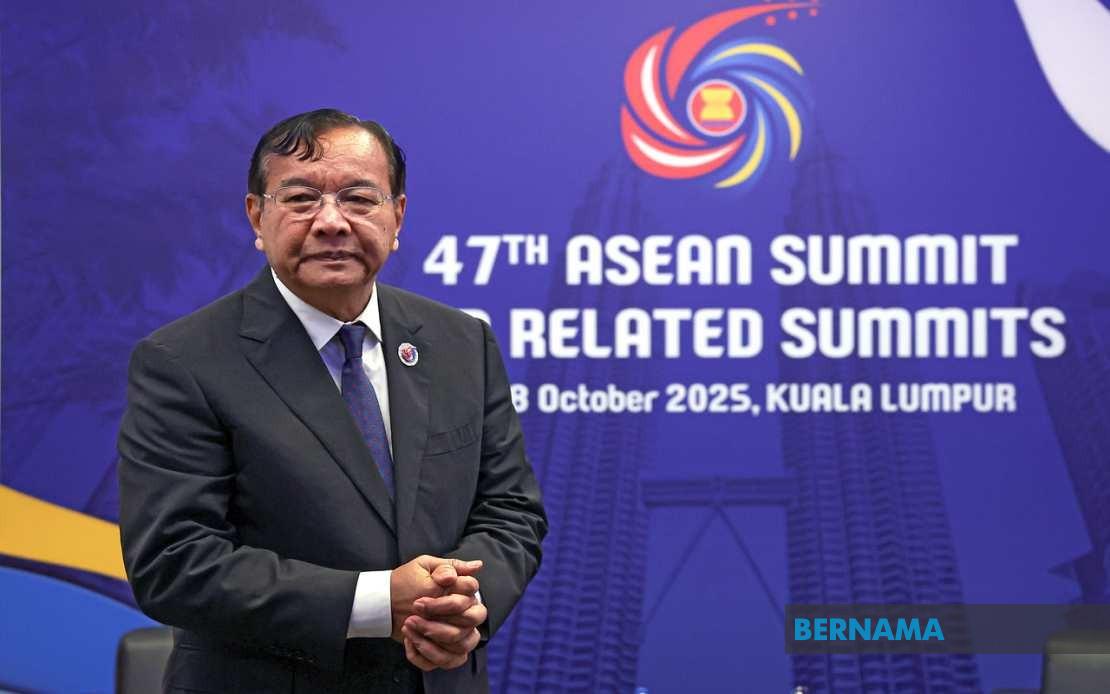
Cambodia's Deputy Prime Minister and Foreign Minister Prak Sokhonn arrived in Malaysia on Monday for a two-day official visit marked by the resumption of a dormant bilateral institution. The centerpiece of the trip will be Tuesday's third Malaysia-Cambodia Joint Commission for Bilateral Cooperation (JCBC) meeting in Kuala Lumpur, which Prak Sokhonn will co-chair alongside Malaysian Foreign Minister Datuk Seri Mohamad Hasan. The revival of this high-level dialogue mechanism represents a significant thaw in institutional engagement between Kuala Lumpur and Phnom Penh, having last convened in Siem Reap in 2006—a gap reflecting the shifting regional dynamics and internal preoccupations that have occupied both nations over the past two decades.
Prior to the formal commission meeting, Prak Sokhonn was scheduled to meet Prime Minister Datuk Seri Anwar Ibrahim on Monday to exchange courtesies and discuss bilateral matters of common concern. Such courtesy calls at the highest level of government typically serve to set the strategic tone for the substantive negotiations that follow, allowing leaders to signal their commitment to the relationship and identify priority areas for their respective foreign ministries. The fact that both the Malaysian Prime Minister and Foreign Minister are receiving the Cambodian delegation underscores Kuala Lumpur's intention to treat this resumption as a matter of genuine diplomatic importance rather than routine bilateral protocol.
The timing of the visit carries symbolic weight beyond immediate bilateral concerns. Wisma Putra, Malaysia's Foreign Ministry, emphasized that this engagement occurs in the lead-up to the 70th anniversary of diplomatic relations between the two countries in 2027. Rather than allowing this milestone to arrive without meaningful preparatory work, both governments appear intent on using the next few years to deepen institutional ties and establish momentum that can sustain the relationship into the next phase. This forward-looking approach suggests recognition that periodic high-level engagement, supported by functioning permanent mechanisms like the JCBC, creates the structural foundation for stable and productive relations.
The two-decade hiatus in JCBC meetings is itself noteworthy for what it reveals about regional dynamics. Between 2006 and 2024, both Malaysia and Cambodia navigated significant domestic and regional challenges. Malaysia experienced multiple changes in political leadership and direction, while Cambodia consolidated Hun Sen's influence before transition to new leadership. The region itself witnessed shifts in strategic alignments, particularly regarding great power competition and ASEAN cohesion. The fact that both nations are now prepared to reconvene this mechanism suggests they view the current moment as conducive to reinvigorated bilateral engagement, despite ongoing regional complexities.
Economic dimensions provide concrete substance to the diplomatic reinvigoration. Malaysia-Cambodia bilateral trade demonstrated impressive momentum in 2025, expanding 27.4 percent year-on-year to reach RM5 billion (US$1.17 billion). Malaysian exporters shipped RM4.13 billion (US$970 million) worth of goods to Cambodia while importing RM880 million (US$200 million) in return, indicating that trade flows run substantially in Malaysia's favor. This imbalance, while reflecting Cambodia's position in regional supply chains and development patterns, also suggests potential areas for future cooperation aimed at diversifying Cambodia's export offerings and deepening complementarities between the two economies.
Beyond merchandise trade, Malaysian direct investment in Cambodia represents a crucial dimension of bilateral economic relations. As of 2024, Malaysia had accumulated US$3.20 billion (RM13.07 billion) in cumulative investments across 162 registered projects operating within Cambodia. This investment stock positions Malaysia as the third-largest source of foreign capital for the Kingdom, a reflection both of Malaysia's industrial capacity and of Cambodia's reliance on regional partners for development financing. These 162 projects span various sectors from manufacturing to services, creating employment and technology transfer that bind the two economies together beyond simple cross-border transactions.
The prospective signing of Agreed Minutes at the conclusion of Tuesday's meeting will formalize whatever outcomes emerge from the bilateral discussions. Such agreed minutes typically serve as non-binding declarations of intent regarding cooperation frameworks, sector-specific collaboration targets, and procedural arrangements for future dialogue. They function more as roadmaps than enforceable legal instruments, reflecting the diplomatic practice of establishing momentum and common understanding without the rigidity of formal treaties. In the context of reviving an institution that has lain dormant for two decades, such agreed minutes will be particularly important in clarifying what the relaunched JCBC is meant to accomplish and how frequently it should convene.
For Malaysian readers, this diplomatic engagement carries implications across multiple registers. At the strategic level, robust Malaysia-Cambodia ties contribute to ASEAN cohesion and Southeast Asian stability, particularly given Cambodia's position in mainland Southeast Asia. Economically, the expansion of trade and investment relations offers opportunities for Malaysian businesses seeking growth markets in Cambodia while potentially attracting Cambodian enterprises interested in accessing Malaysian expertise and supply chain networks. Additionally, functioning bilateral mechanisms help prevent minor disputes from escalating and create channels for managing shared concerns, whether regarding cross-border movement, water resources, or other transnational issues.
The broader context of this visit also reflects the maturation of Malaysia's foreign policy approach under current leadership. Rather than viewing bilateral engagement as episodic or transactional, there appears to be recognition that sustained institutional mechanisms—even those that have fallen dormant—represent valuable infrastructure for regional relations. Reviving the JCBC alongside expanded trade and investment engagement signals a comprehensive approach to bilateral ties that encompasses economic, political, and institutional dimensions simultaneously. This multifaceted approach aligns with regional best practices and the standards expected of major Southeast Asian economies.
Looking forward, the successful execution of this visit and the relaunched JCBC will likely influence the trajectory of Malaysia-Cambodia relations throughout the 2020s. Regular convening of the commission, scheduled at predictable intervals and attended by senior figures, can help institutionalize engagement and prevent the relationship from drifting into the kind of dormancy that characterized recent decades. The convergence of economic growth, strategic interest, and diplomatic will evident in this visit suggests that conditions may now favor sustained collaboration. Whether these favorable conditions persist will depend on both governments' commitment to treating bilateral relations as a sustained priority rather than periodic diplomatic necessity.

