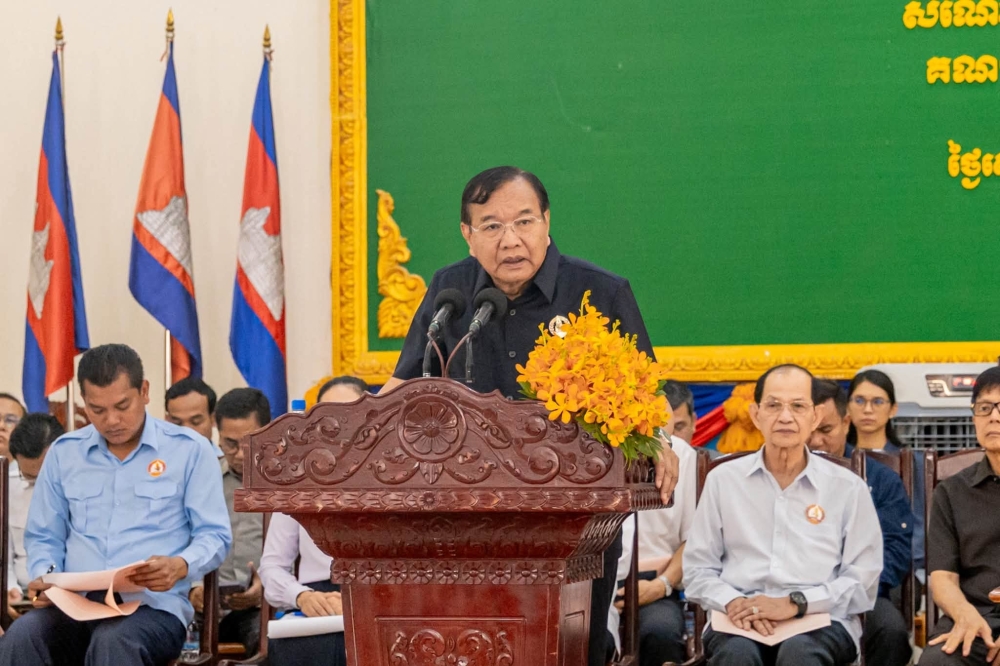
Cambodian Deputy Prime Minister and Minister of Foreign Affairs and International Cooperation Prak Sokhonn touched down in Malaysia this week, initiating a two-day official visit that underscores the ongoing commitment between Phnom Penh and Kuala Lumpur to strengthen ties across multiple sectors. The high-level visit, arriving in Sepang, represents a significant moment in bilateral relations as both nations work to deepen collaboration within the framework of the Association of Southeast Asian Nations and beyond.
Such visits at the deputy prime ministerial level typically involve substantive discussions on regional security, economic cooperation, and political coordination. For Malaysia, hosting Cambodia's senior foreign affairs official signals continued engagement with a key neighbour in mainland Southeast Asia, particularly given the region's evolving geopolitical landscape. The timing of Prak Sokhonn's arrival reflects the rhythm of diplomatic activity that characterises ASEAN nations' efforts to maintain regular high-level dialogue.
Cambodia, as a neighbouring ASEAN member, shares significant interests with Malaysia in areas ranging from maritime security to trade facilitation. The visit provides an opportunity to address bilateral issues that may have accumulated since the last formal engagement at this level. Such dialogues often cover topics including investment flows, labour migration, tourism promotion, and educational exchanges—all areas where Malaysia and Cambodia have substantial mutual interests.
For Malaysian readers, understanding the importance of Cambodian relations requires recognising Cambodia's strategic position as a gateway to both mainland Southeast Asia and the Mekong subregion. Cambodia's political stability and economic trajectory directly affect regional connectivity initiatives that Malaysia participates in, including the ASEAN Connectivity Master Plan and various infrastructure projects. Prak Sokhonn's tenure as foreign minister places him at the centre of Cambodia's diplomatic efforts to navigate complex regional dynamics.
The Deputy Prime Minister's portfolio—encompassing both foreign affairs and international cooperation—suggests that discussions may extend beyond traditional diplomatic channels into development partnerships and multilateral forum coordination. Malaysian policymakers would be keen to understand Cambodia's positions on critical regional matters, including maritime disputes, transboundary water management, and the implementation of ASEAN agreements.
Bilateral visits of this nature often result in discussions about enhancing trade volumes. Malaysia remains an important trading partner for Cambodia, while Cambodian exports—particularly agricultural products and light manufactures—represent meaningful economic activity within Malaysia's import profile. The visit creates space for both governments to identify new avenues for commercial cooperation and address any impediments to trade flows.
From a regional architecture perspective, Cambodia's voice matters considerably within ASEAN. As a nation that has historically maintained a more neutral diplomatic positioning, Cambodia often plays a bridging role in Southeast Asian forums. Prak Sokhonn's visit to Malaysia provides an opportunity for both nations to align on ASEAN agenda items and coordinate positions on regional and international challenges that will be discussed in forthcoming multilateral meetings.
The security dimension of Malaysia-Cambodia relations also merits attention. Both nations share interests in combating transnational crime, including human trafficking, drug smuggling, and cybercrime. Bilateral security cooperation, while less visible than trade discussions, forms an essential foundation for regional stability. Deputy Prime Minister visits typically include discussions on law enforcement cooperation and intelligence-sharing frameworks.
Cultural and people-to-people exchanges represent another dimension of these relations. Malaysia hosts a significant Cambodian diaspora, while Malaysian investors and workers have interests throughout Cambodia. Educational scholarships, tourism promotion, and cultural festivals all contribute to the broader relationship between the two societies. Official visits at this level often result in renewed commitments to expand such exchanges.
For Malaysian businesses, Prak Sokhonn's visit signals continued openness from the Cambodian government to foreign investment and economic cooperation. Companies operating across Southeast Asia monitor such high-level visits as barometers of bilateral relations, as they affect the ease of doing business and the predictability of regulatory environments.
The visit also reflects Cambodia's broader diplomatic strategy of maintaining strong relationships across ASEAN. By regularly engaging with major regional economies like Malaysia, Cambodia demonstrates its commitment to multilateral cooperation while simultaneously protecting its own interests within the regional framework. This balanced approach has characterised Cambodian diplomacy in recent years.
Looking forward, the outcomes of Prak Sokhonn's visit may establish frameworks for future cooperation or provide impetus to existing partnership mechanisms. Both nations benefit from maintaining regular high-level contact, as it prevents misunderstandings and creates channels for addressing concerns before they escalate. Such visits, while often understated in media coverage, represent the quiet diplomacy that underpins regional stability and economic cooperation.

