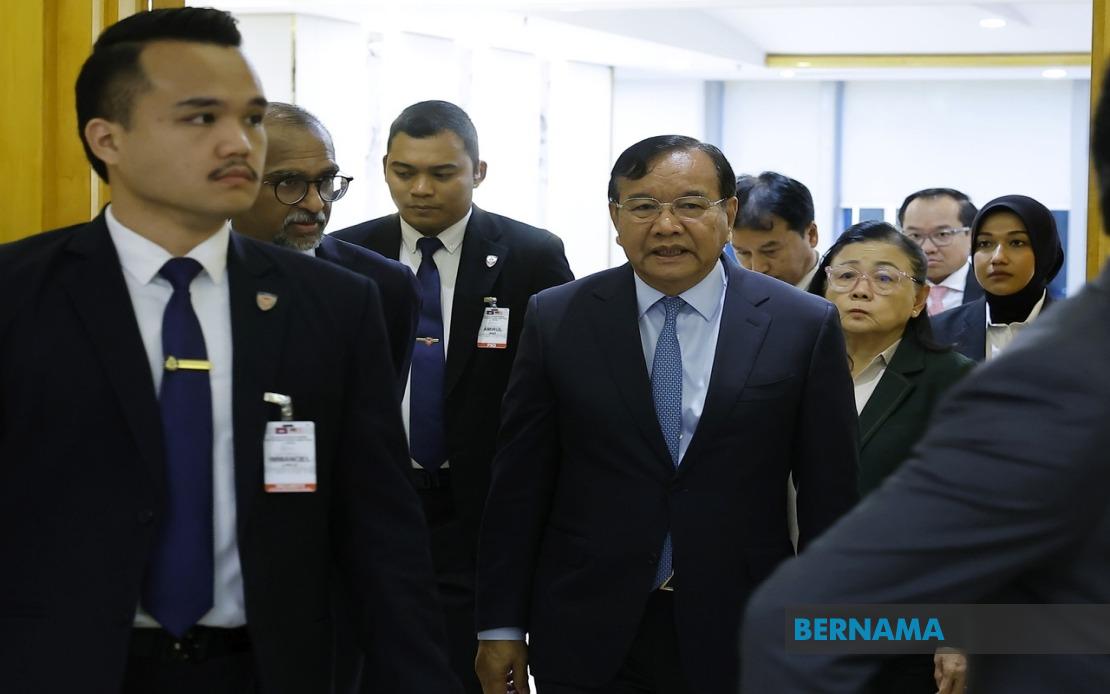
Cambodian Deputy Prime Minister and Minister of Foreign Affairs and International Cooperation Prak Sokhonn left Malaysia on August 4 following a two-day diplomatic visit that underscored the strengthening relationship between Phnom Penh and Kuala Lumpur. His departure from Kuala Lumpur International Airport Terminal 1 on an afternoon flight to Phnom Penh signalled the conclusion of high-level talks aimed at deepening bilateral engagement across multiple sectors and preparing for a significant diplomatic milestone.
The timing of Sokhonn's visit carried particular symbolic weight, as his itinerary was structured around preparations for the upcoming 70th anniversary celebration of Malaysia-Cambodia diplomatic relations scheduled for 2027. This forward-looking approach reflected a deliberate commitment from both nations to not merely commemorate their shared history but to harness the momentum for substantive cooperation in the years ahead. The visit served as an early signal that both capitals intend to make the milestone year a transformative period for their partnership rather than a mere ceremonial occasion.
During his stay, Sokhonn held a crucial meeting with Prime Minister Datuk Seri Anwar Ibrahim, where the two leaders discussed avenues for strengthening strategic cooperation. The discussion touched upon contemporary economic priorities including the digital economy and artificial intelligence, reflecting recognition that 21st-century partnerships must adapt to technological transformation. Additionally, collaboration in the halal industry, food security, and human capital development emerged as priority areas, indicating shared concerns about regional economic resilience and development.
A landmark moment in the visit came when Sokhonn co-chaired the 3rd Malaysia-Cambodia Joint Commission for Bilateral Cooperation Meeting with Foreign Minister Datuk Seri Mohamad Hasan. This gathering assumed outsized significance because it marked the reinvigoration of a bilateral mechanism that had been inactive for two decades. The restoration of this institutional framework suggested both countries recognised the necessity of formal structures to coordinate their expanding interests and prevent misunderstandings that might otherwise accumulate during periods of reduced formal engagement.
The economic dimensions of the partnership presented an increasingly compelling narrative. Malaysian-Cambodian bilateral trade demonstrated remarkable momentum, surging 27.4 percent year-on-year to reach RM5 billion in 2025, equivalent to approximately USD1.17 billion. This growth trajectory exceeded typical regional trade expansion rates and signalled that businesses in both nations were actively seizing opportunities within the bilateral relationship. Malaysian exports to Cambodia accounted for the majority of this trade value at RM4.13 billion, while Cambodia's exports to Malaysia totalled RM880 million, illustrating that while Malaysia maintained a trade surplus, Cambodia's export performance was also expanding.
Beyond trade flows, Malaysia's investment position in Cambodia underscored the depth of economic integration. As of 2024, accumulated Malaysian foreign direct investment in Cambodia totalled USD3.20 billion across 162 registered projects, cementing Malaysia's standing as the third-largest foreign investor in the Kingdom. This substantial capital deployment represented confidence in Cambodia's investment climate and economic prospects, and it created networks of Malaysian business interests that had a vested stake in long-term Cambodia stability and growth. For Malaysian investors, Cambodia represented an important component of their regional diversification strategy, particularly given Cambodia's younger demographics and developing consumer market.
From a Southeast Asian perspective, the strengthened Malaysia-Cambodia relationship carried implications extending beyond bilateral concerns. The two nations occupy different positions within ASEAN's strategic landscape—Malaysia as a more developed economy with significant regional influence, and Cambodia as a nation undergoing rapid transformation. Enhanced cooperation could facilitate knowledge transfer and capacity building that strengthened the broader regional bloc. Furthermore, given geopolitical complexities in Southeast Asia, deeper Malaysia-Cambodia ties contributed to intra-ASEAN cohesion and demonstrated the organisation's capacity for members to forge substantive partnerships despite occasional policy differences.
The resumption of the Joint Commission mechanism also reflected pragmatic diplomacy adapted to contemporary circumstances. Institutional gaps can create dangerous vacuums where misunderstandings fester, particularly when nations share a border and have intricate historical relationships. By reactivating this coordinating body after two decades of dormancy, both countries were essentially creating a mechanism to address emerging issues proactively rather than reactively. This structural improvement suggested maturity in both capitals' approach to bilateral management.
For Malaysian policymakers, the visit reinforced Cambodia's importance within Malaysia's broader Southeast Asian strategy. As Malaysia pursues regional economic integration and seeks to expand its role in ASEAN affairs, strong bilateral relationships with all member states remain foundational. Cambodia's economic growth trajectory and its increasing regional significance made it an attractive partner for Malaysian businesses and investors seeking to diversify their ASEAN exposure. The digital economy and artificial intelligence themes highlighted in bilateral discussions reflected both countries' recognition that technological capabilities would determine their competitive position in coming decades.
The diplomatic calendar leading toward 2027 now includes concrete initiatives that extend beyond ceremonial commemoration. Both nations appear committed to translating the 70th anniversary into a catalyst for deepening institutional ties, expanding commercial opportunities, and creating enduring frameworks for cooperation. Sokhonn's departure marked not an endpoint but rather a waypoint in an intensifying diplomatic and economic engagement that both capitals view as mutually beneficial and strategically significant for their respective development trajectories and their shared regional interests.

