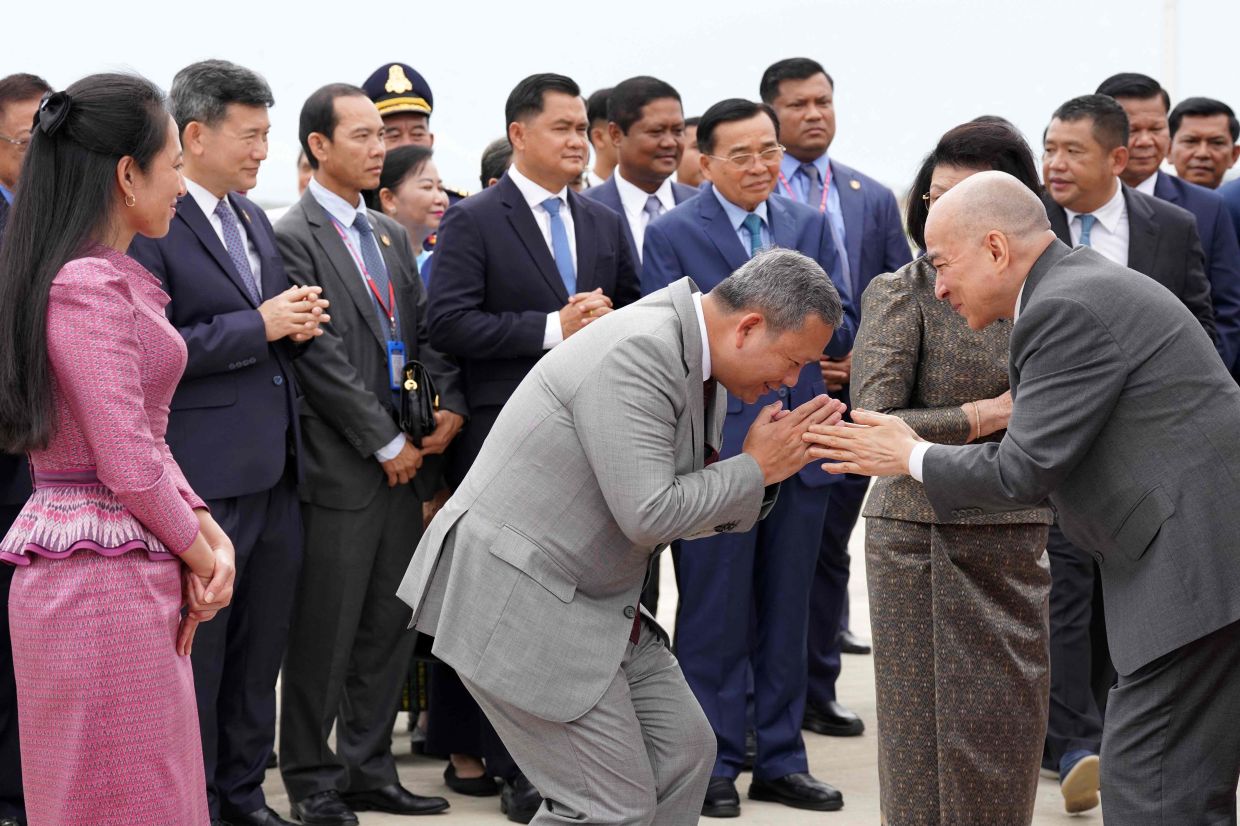
King Norodom Sihamoni of Cambodia touched down in Phnom Penh on Friday afternoon, concluding an extended medical sojourn in China where he underwent treatment for prostate cancer. The 73-year-old monarch's homecoming marked the conclusion of a carefully managed health crisis that has kept him away from his duties since early in the year, when he initially travelled to Beijing for routine health assessments that would reveal his condition.
The palace issued statements throughout the treatment period outlining the king's progress, with officials emphasizing the success of the surgical intervention performed by Chinese medical specialists. According to announcements released on Tuesday, his condition had shown marked improvement over the preceding three months, providing reassurance to Cambodia's population about the stability of the monarchy during an extended absence from public view. The timing of the treatment and recovery process underscores the significant role that Chinese medical facilities and expertise continue to play in the region's geopolitical landscape, particularly among Southeast Asian leaders seeking advanced healthcare outside their own borders.
Sihamoni's arrival was marked by a ceremonial reception befitting the national significance of the occasion. Former Prime Minister Hun Sen, who remains one of Cambodia's most influential political figures despite stepping down from his executive role, was present to greet the returning monarch. Hun Manet, Hun Sen's son and the current Prime Minister, also welcomed his king, with the state-run broadcaster TVK documenting the scene for national audiences. Hun Sen subsequently posted about the safe arrival on his Facebook page, reinforcing the narrative of successful recovery and maintaining public confidence in the continuity of Cambodia's governance.
The king's medical situation represents a significant moment in contemporary Cambodian history, given the established pattern within the royal family of seeking treatment abroad for serious health conditions. Sihamoni ascended to the throne in 2004 following his father's abdication, which itself occurred after King Norodom Sihanouk underwent cancer treatment in the same Chinese capital. That earlier precedent established Beijing as a trusted venue for royal medical care, a choice that reflects both the advancement of Chinese healthcare infrastructure and the diplomatic relationships binding Cambodia and China.
Before his accession to the throne nearly two decades ago, Sihamoni spent the majority of his adult years outside Cambodia, pursuing an artistic career that shaped his cosmopolitan worldview and multilingual capabilities. His fluency in Khmer, French, Czech, and English reflects a life spent navigating international cultural and diplomatic circles, experiences that distinguished him from many contemporary Southeast Asian leaders whose careers followed more conventional political trajectories. This background has positioned him as a culturally refined figurehead, though his extended absence from Cambodia due to medical treatment has inevitably limited his public engagement during a period when national leadership presence matters significantly.
The king's disclosed cancer diagnosis in April followed months of speculation about his health after his initial departure for Beijing. The public acknowledgment of his condition, rather than allowing rumours to proliferate unchecked, represented a calculated approach to managing the flow of information and maintaining institutional credibility. This transparency, while limited in scope, contrasts with historical patterns in Southeast Asian monarchies where health matters of senior figures were often shrouded in deliberate ambiguity.
Cambodia's political landscape has undergone considerable shifts in recent years, with Hun Manet's elevation to the Prime Minister's office representing a generational transition within the dominant political structure. The visible presence of both Hun Sen and his successor in welcoming the king home signals the importance placed on maintaining the appearance of political harmony and institutional continuity at the highest levels of Cambodian governance. The monarchy, despite its largely ceremonial constitutional role, carries profound symbolic weight in Cambodian culture and national identity.
The reliance on Chinese medical infrastructure for royal treatment reflects broader patterns of economic and strategic interdependence between Cambodia and China. As Beijing expands its influence throughout Southeast Asia through economic investments, infrastructure projects, and strategic partnerships, the provision of advanced medical services to regional elites represents another dimension of this multifaceted relationship. The choice to seek treatment in China rather than alternative medical destinations signals Cambodia's alignment with Chinese interests in a region where such positioning carries substantial political implications.
Sihamoni's recovery and homecoming provide Cambodia with an opportunity to reset its political narrative after months of uncertainty regarding the health of its sovereign. The relatively smooth management of the medical crisis, with regular updates and a successful conclusion announced through official channels, demonstrates the palace's capacity for crisis communication in the modern era. As the king resumes his ceremonial and constitutional responsibilities, the monarchy can once again serve its institutional function as a stable element within Cambodia's political system, providing continuity and legitimacy to the governance structures that operate within its symbolic framework.

