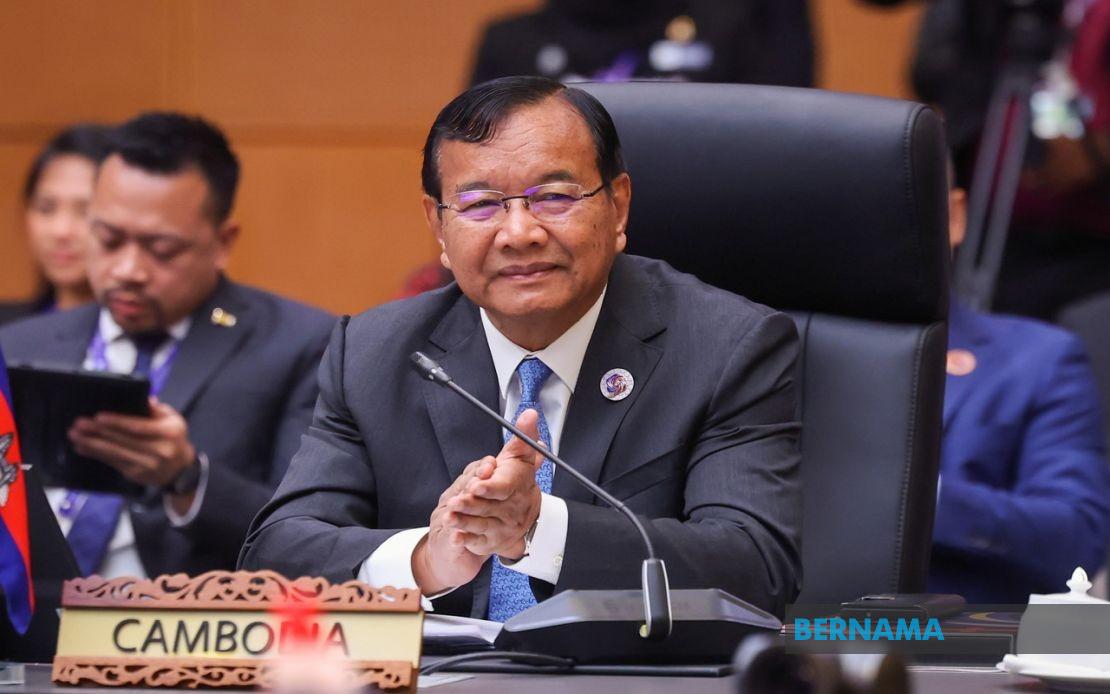
Cambodia's Deputy Prime Minister and Foreign Minister Prak Sokhonn touched down in Malaysia on August 3, marking the beginning of a two-day official visit designed to reinvigorate the strategic partnership between Kuala Lumpur and Phnom Penh. His arrival at Kuala Lumpur International Airport Terminal 1 at 1.48 pm signals renewed momentum in bilateral engagement at a senior level, coming at a time when Southeast Asian nations are recalibrating their regional relationships amid broader geopolitical shifts.
The timing of Sokhonn's visit reflects the growing importance both countries place on their bilateral relationship. Malaysia has consistently positioned itself as a key economic and diplomatic partner for Cambodia, and this high-level engagement underscores that commitment. The two-day programme represents more than ceremonial courtesy; it provides a structured opportunity to address substantive issues affecting both nations and their citizens.
Upon arrival, Sokhonn was received by Cambodian Ambassador to Malaysia Ouk Chandara and Malaysian Government chief ceremony officer Datuk Rozainor Ramli, reflecting the official nature of the visit. The delegation's composition and reception protocols indicate both governments view this engagement as substantive rather than routine. Sokhonn's immediate schedule includes a courtesy call on Prime Minister Datuk Seri Anwar Ibrahim, a customary but symbolically important gesture that establishes the hierarchy and seriousness of the visit.
The centrepiece of Sokhonn's visit is the third meeting of the Cambodia-Malaysia Joint Commission for Bilateral Cooperation, scheduled for the following day in Kuala Lumpur. This forum serves as the primary mechanism for reviewing implementation progress on previously agreed bilateral initiatives and assessing the health of the relationship across multiple sectors. Such commissions are typically comprehensive in scope, examining trade dynamics, investment flows, people-to-people exchanges, security cooperation, and cultural initiatives.
During the JCBC meeting, officials will undertake a detailed review of the agreed minutes from the second commission, evaluating which commitments have been fulfilled and identifying any obstacles requiring ministerial attention. This systematic review process ensures that bilateral cooperation remains grounded in concrete outcomes rather than aspirational rhetoric. It also provides an opportunity to refresh the bilateral agenda with new initiatives responsive to changing circumstances in both nations and the broader region.
Beyond the formal commission meeting, Sokhonn will engage in bilateral talks with Malaysian Foreign Minister Datuk Seri Mohamad Hasan. These direct ministerial discussions typically address sensitive issues, strategic priorities, and emerging challenges that require senior diplomatic handling. Such conversations often yield announcements of new cooperation frameworks, agreements, or mutual commitments that reflect the current state of bilateral relations and future direction.
The economic dimension of Malaysia-Cambodia ties has become increasingly significant. In 2025, bilateral trade between the two countries demonstrated robust expansion, growing 27.4 per cent year-on-year to reach RM5 billion, equivalent to USD1.17 billion. This substantial growth reflects deepening commercial integration and suggests that Malaysian and Cambodian businesses have identified complementary opportunities for mutual benefit across various sectors.
Malaysia's investment presence in Cambodia further underscores the economic interdependence between the two nations. As of 2024, Malaysian cumulative investments in Cambodia totalled USD3.20 billion, roughly RM13.07 billion, distributed across 162 registered projects. This investment portfolio positions Malaysia as Cambodia's third-largest foreign investor, a distinction that carries both economic significance and geopolitical implications. The diversity of projects indicates Malaysian engagement spans multiple sectors including manufacturing, services, infrastructure, and real estate.
This substantial investment relationship creates mutual incentives for stable and cooperative bilateral relations. Malaysian investors require a predictable business environment and consistent policy frameworks in Cambodia, while Cambodia benefits from capital inflows, employment generation, technology transfer, and integration into Malaysian-anchored regional supply chains. These economic ties effectively create stakeholder communities in both nations with vested interests in deepening bilateral cooperation.
For Malaysian readers, Sokhonn's visit carries particular relevance given the significant number of Malaysian companies operating in Cambodia and Cambodian nationals present in Malaysia. The strengthening of official bilateral frameworks through mechanisms like the JCBC directly impacts business confidence, regulatory predictability, and the ease with which commercial transactions can be conducted between the two nations. Likewise, the visit reflects Malaysia's broader strategy of maintaining strong relationships with all ASEAN neighbours while maintaining regional balance.
The visit also occurs within the context of ASEAN's ongoing efforts to enhance intra-regional cooperation and economic integration. Cambodia and Malaysia, both members of the Association of Southeast Asian Nations, have mutual interests in advancing regional initiatives, coordinating on international issues, and ensuring that ASEAN remains unified on matters of collective concern. High-level bilateral visits like Sokhonn's reinforce these broader institutional frameworks.
Looking forward, this official visit represents an opportunity for both governments to address any bilateral irritants that may have accumulated and to set an ambitious agenda for the next phase of cooperation. Whether the discussions yield new agreements in trade facilitation, enhanced visa protocols, cultural exchanges, or security cooperation will become clear in coming days as official statements are released. For now, Sokhonn's arrival demonstrates that Malaysia-Cambodia relations remain active, high-priority engagements in both capitals' diplomatic calendars.

