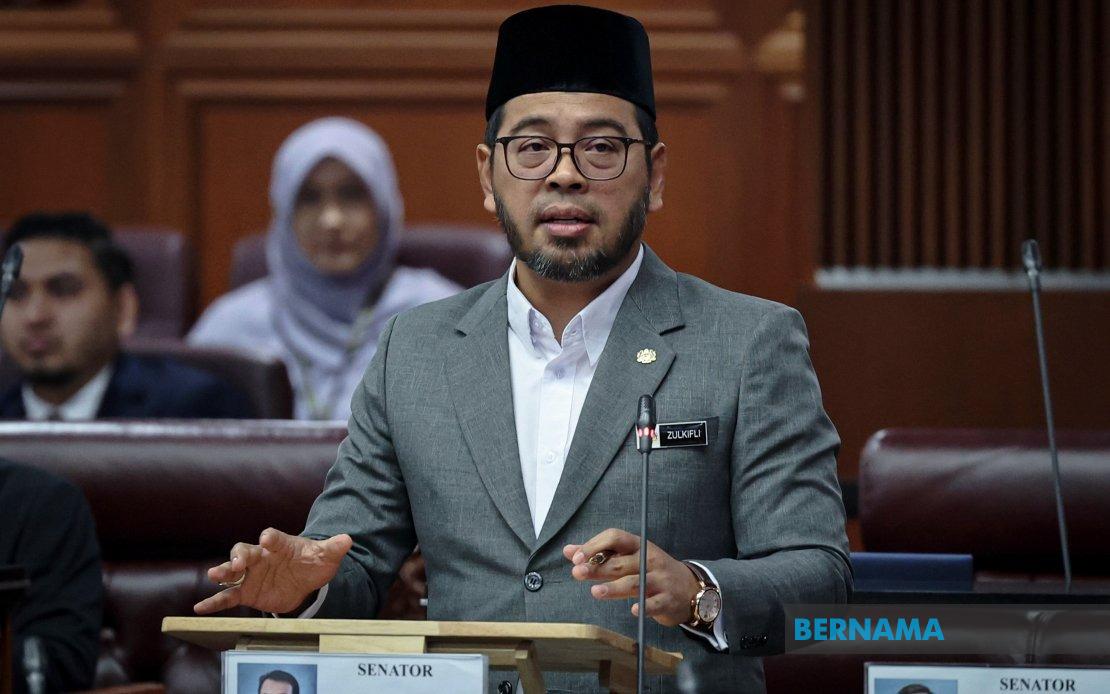
The Malaysian government plans to deliberate on whether to publicly disclose the final Royal Commission of Inquiry report into Tabung Haji, one of the nation's most significant Islamic financial institutions. Dr Zulkifli Hasan, Minister in the Prime Minister's Department (Religious Affairs), made the announcement in the Dewan Negara on July 22, indicating that Cabinet will weigh the matter before reaching a decision. His statement comes amid persistent public debate surrounding the institution's restructuring and mounting calls for transparency regarding how the crisis was handled.
The push toward transparency reflects lingering public confusion about the circumstances surrounding Tabung Haji's troubled period and the interventions undertaken to stabilise it. Allegations have circulated suggesting that senior Treasury officials inappropriately disposed of the institution's valuable assets, fuelling speculation about mismanagement at the highest levels of Malaysia's financial administration. These claims have sustained public scepticism, particularly among the millions of Malaysian Muslims who entrust their savings and hajj contributions to Tabung Haji each year.
Zulkifli firmly rejected the narrative that assets were sold off improperly, characterising such allegations as "untrue and false." He reframed the 2018 restructuring as an essential rescue operation designed to preserve a financial institution serving Malaysia's Muslim population. According to his account, the real crisis stemmed from severe misappropriation of depositor funds that occurred before 2018, creating a financial catastrophe that threatened the institution's viability and the security of hundreds of millions of ringgit in Muslim savings.
The decision to transfer underperforming and problematic Tabung Haji assets to the government-owned special purpose vehicle Urusharta Jamaah Sdn Bhd (UJSB) was a collective Cabinet determination made in 2018, not an individual action by Treasury officials as some have suggested. This distinction carries significant weight in assessing whether the restructuring represented prudent crisis management or misguided policy, a question that continues to divide analysts and observers across Malaysia's political spectrum.
The severity of Tabung Haji's financial distress in 2018 is evident from the numbers. The Auditor-General and Bank Negara Malaysia both documented serious structural problems, with the institution's asset-liability deficit reaching RM10.9 billion that year. The situation deteriorated rapidly when approximately RM6 billion was withdrawn by anxious depositors over a compressed timeframe, as confidence in the institution collapsed. Simultaneously, attempts to secure standby loans to bridge the liquidity crisis failed, leaving Malaysian authorities with limited options.
Without intervention, the consequences could have been catastrophic for Malaysia's financial system and for Muslim depositors. Government modelling indicated that if Tabung Haji had failed completely, the state would have assumed liabilities totalling approximately RM74.5 billion, since deposits were and remain fully guaranteed by the government. This staggering potential liability underscored the urgency of stabilisation efforts and justified the extraordinary measures undertaken, even if those measures generated controversy.
The rescue operation has demonstrably succeeded in revitalising the institution. Tabung Haji's deposit base has grown substantially from approximately RM69.4 billion in 2019 to over RM95.1 billion by mid-2025, a recovery that vindicates the intervention strategy. More significantly for ordinary depositors, the profit distribution rate has improved markedly from just 1.25 per cent in 2018 to 3.5 per cent for 2025, representing the highest returns in eight years. For millions of Muslim Malaysians saving for the hajj pilgrimage, this recovery translates into tangible financial benefits.
Another achievement worth noting is the stability achieved in hajj pilgrimage costs. Despite persistent inflationary pressures affecting global travel and services, Tabung Haji has maintained unchanged hajj package pricing for three consecutive years spanning 2024 to 2026. This stability insulates Malaysian pilgrims from the currency fluctuations and cost escalations that have affected hajj expenses in neighbouring countries, demonstrating the institution's commitment to accessibility for ordinary Malaysians undertaking this fundamental religious obligation.
The question of whether to release the RCI report publicly reflects broader tensions in Malaysian governance between transparency and institutional discretion. Public release would likely satisfy demands for accountability and help dispel lingering suspicions about how decisions were made and who benefited from the restructuring. However, officials may harbour concerns about potential misinterpretation of technical financial matters or unintended consequences of exposing sensitive details about the crisis management process.
From a Malaysian and Southeast Asian perspective, the Tabung Haji situation carries implications beyond finance. As the region's largest Islamic financial institution serving millions of depositors across multiple countries, Tabung Haji's stability matters for Islamic finance confidence throughout the region. A transparent resolution of the RCI report's findings could strengthen faith in Islamic financial institutions' governance standards and crisis resilience, while sustained opacity might reinforce doubts about transparency in managing critical financial institutions.
The Cabinet's forthcoming deliberation will ultimately determine whether Malaysia's commitment to transparency outweighs concerns about managing the narrative around a crisis that, while successfully resolved, remains politically sensitive. Whatever decision emerges, the institution itself appears to have moved past its nadir, though questions about governance failures and accountability remain.

