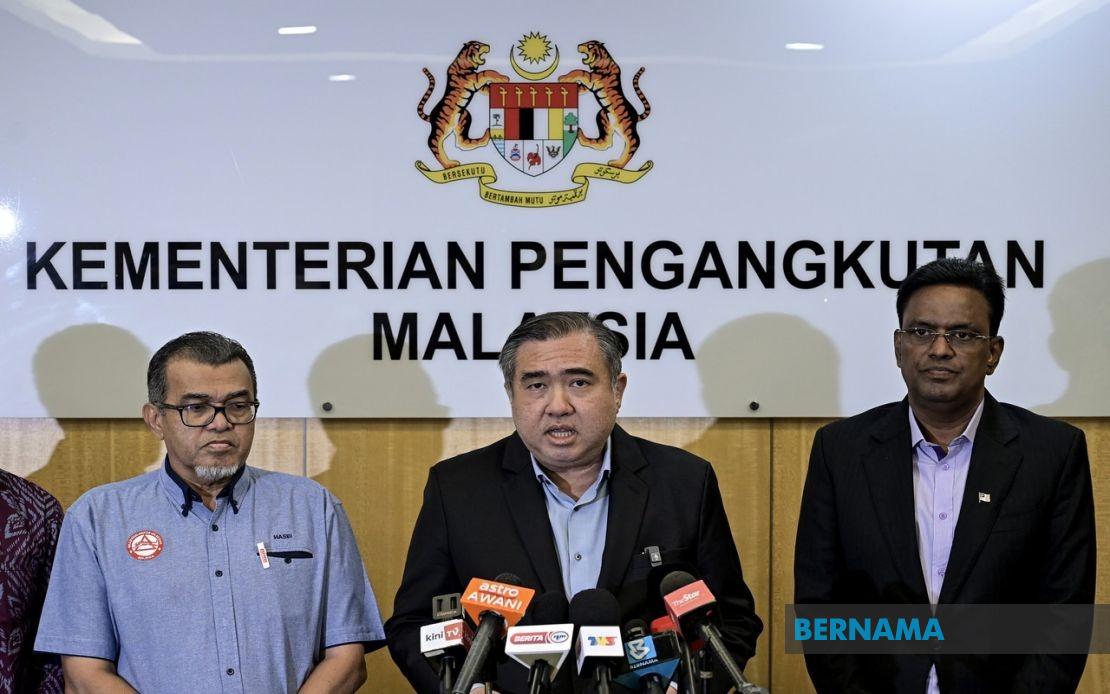
The Malaysian Cabinet has moved to strengthen protections for road accident victims by endorsing amendments to the Road Transport Act 1987 (Act 333) that would allow courts to impose compensation orders on convicted offenders. Transport Minister Anthony Loke announced the decision on Wednesday, signalling the government's commitment to creating an additional layer of accountability for those responsible for traffic incidents. The proposal represents a significant shift in how Malaysia's legal system approaches road safety enforcement, moving beyond traditional penalties to address the financial and personal toll of accidents on victims and their families.
Under the proposed amendments, courts would gain discretionary power to order offenders to pay compensation as a supplementary punishment rather than as an automatic, government-administered payment. This approach emphasises judicial oversight, ensuring that compensation amounts reflect the unique circumstances of each case. The determination would consider multiple factors including the severity of the offence, the extent of injuries sustained or fatality, the documented losses experienced by the victim or next of kin, and crucially, the offender's financial capacity to pay. By placing this responsibility in the hands of the courts, the mechanism respects individual case complexities while preventing arbitrary or disproportionate rulings.
The legislative scope of the amendments is deliberately broad, targeting numerous categories of road offences that pose particular danger to the public. Driving under the influence of alcohol or drugs and reckless driving would fall within the compensation framework, along with other serious traffic violations. This encompassing approach reflects recognition that Malaysia continues to struggle with high rates of road fatalities and injuries, a persistent public health challenge across Southeast Asia. By extending compensation requirements across multiple offence categories, the government aims to create consistent deterrent effects across the spectrum of dangerous driving behaviours rather than limiting accountability to only the most severe incidents.
A critical aspect of the government's design is its explicit preservation of victims' existing legal rights. The compensation mechanism operates independently of insurance claims and civil litigation channels, meaning families and injured parties retain the ability to pursue additional remedies through established legal procedures. This layered approach ensures that the new criminal compensation framework complements rather than replaces civil and insurance protections. For Malaysian consumers and accident survivors, this represents an expansion of available recovery avenues without eliminating any existing options, though it does introduce an additional administrative pathway through the courts.
Transport Minister Loke emphasised that compensation constitutes an additional punishment layer, not a substitute for existing penalties. Prison sentences, fines, and driving disqualifications remain fully intact, with compensation imposed on top of these traditional sanctions. This clarification is important for understanding the deterrent logic underlying the proposal. By increasing the total consequences of traffic violations, the government hopes to reshape offender behaviour through heightened perception of risk and cost. For road users in Malaysia, this could theoretically translate into greater compliance with traffic laws, though the effectiveness of such multi-layered penalties depends on implementation rigour and public awareness.
The implementation pathway involves substantial preparatory work before parliamentary consideration. The Ministry of Transport intends to engage extensively with relevant stakeholders, including federal and state agencies, the insurance industry, and other interested parties. These consultation sessions will refine operational details that currently remain under examination. Key questions requiring resolution include determining which cases qualify for compensation orders, establishing clear definitions of serious injury categories, and developing procedures for situations where offenders lack financial capacity to pay. The comprehensiveness of this preparatory phase suggests the government recognises the complexity of integrating compensation mechanisms into existing criminal justice frameworks.
Particularly significant is the government's intention to seek cross-party parliamentary support through a special select committee process. Minister Loke indicated that a dedicated committee would scrutinise the bill in detail before parliamentary debate, a mechanism designed to build consensus across political divides. This approach acknowledges that road safety and victim protection transcend typical partisan boundaries and benefit from broad legislative backing. For Malaysian stakeholders invested in traffic safety outcomes, cross-party support increases the likelihood of sustained policy implementation and reduces vulnerability to reversal or substantial modification following electoral cycles.
The timeline envisions tabling the bill at parliament's year-end sitting, contingent upon completing the drafting and engagement processes. This schedule provides several months for stakeholders to contribute substantive input, though it represents an ambitious target given the scope of consultation required. Successful achievement would place the legislation before lawmakers in the final parliamentary session of 2024, potentially enabling passage before the 2025 calendar begins. However, transport policy experts note that parliamentary schedules often shift, and complex legislation sometimes faces unexpected delays, so the stated timeline should be regarded as aspirational rather than definitive.
The retroactive provisions of the legislation deserve careful attention. The amendments would apply exclusively to offences committed after the law receives parliamentary approval, adhering to fundamental legal principles preventing retroactive punishment. This means existing cases and convictions would remain subject to sentencing frameworks in effect at the time of original trial. While this protects legal certainty and due process, it also means accident victims injured prior to the amendments' passage would not benefit from the new compensation mechanisms. This temporal limitation represents a necessary legal boundary but underscores why timely parliamentary passage matters for maximising prospective victim protection.
Regionally, Malaysia's initiative adds to a broader Southeast Asian trend toward strengthening victim-centred approaches in road traffic legislation. Singapore and Thailand have previously implemented compensation mechanisms, and other regional nations are evaluating similar reforms. Malaysia's approach, emphasising judicial discretion and case-by-case evaluation, reflects lessons learned from international experiences. For Malaysian policymakers and the broader region, this signals growing recognition that effective road safety strategies must address not only offender punishment but also victim welfare and family financial security. The proposed amendments thus represent both a localised policy response to Malaysia's specific road safety challenges and a contribution to evolving regional best practices in traffic law enforcement.

