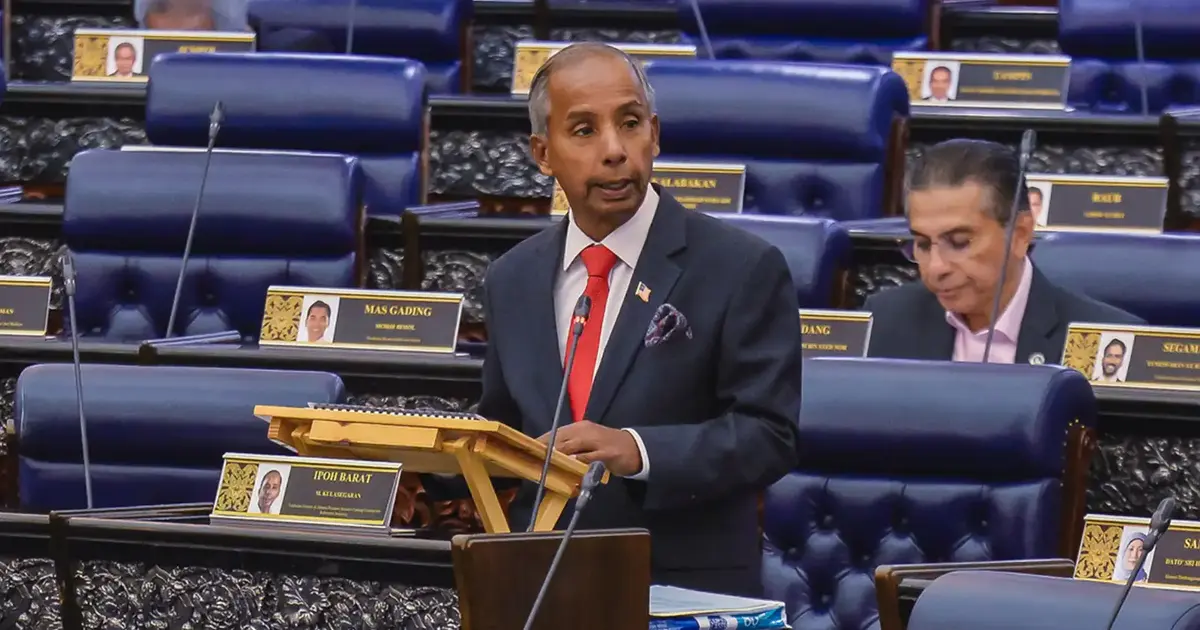
Members of Parliament may be permitted to view CCTV footage documenting the Taiping prison riot, though the Malaysian government must first secure Cabinet approval for such disclosure, according to Deputy Minister in the Prime Minister's Department (Law and Institutional Reform) Kula Segaran. The announcement suggests a potential pathway for parliamentary oversight of the incident, a significant development given intense legislative scrutiny over the disturbance and its handling by prison authorities.
Kula's statement reflects the delicate balance authorities must strike between transparency and legal propriety. The minister emphasised that the government cannot unilaterally release sensitive security footage without proper authorisation from the highest executive level. This cautious approach underscores the institutional complexities surrounding classified penitentiary materials and their potential use as evidence in ongoing litigation.
The Taiping prison riot has generated considerable political attention, with various opposition and backbench MPs demanding answers about the circumstances of the uprising, the response from prison officers, and any security lapses that may have contributed to the disturbance. Access to CCTV footage would provide lawmakers with objective visual documentation of events, potentially addressing concerns about transparency and institutional accountability. Such access could strengthen parliamentary confidence in prison management and inform future legislative discussions on custodial reform.
However, the government's insistence on Cabinet approval first reflects legitimate concerns about interfering with judicial processes. Active court cases related to the riot—whether involving charges against prisoners, civil liability matters, or related prosecutions—require that evidence remain protected and untainted. Premature or unauthorised disclosure to MPs could theoretically compromise legal proceedings or create complications if footage enters public discourse before trial conclusions. This concern is particularly acute in Malaysian legal contexts where sub judice considerations carry significant weight.
The procedural requirement for Cabinet sign-off also reflects broader principles of executive privilege and institutional hierarchy. CCTV recordings from correctional facilities typically constitute sensitive security material. While prisons are ostensibly public institutions accountable to elected representatives, footage capturing prison operations, inmate locations, officer positions, and security protocols raises legitimate operational security questions. Prison authorities must protect such information to maintain facility security and prevent future breaches.
Kula's measured comments suggest the government is not categorically refusing parliamentary access but rather insisting on proper channels. This distinction matters for democratic accountability. Rather than stonewalling legitimate oversight, officials are indicating that a formal process exists. The Cabinet, comprising senior ministers with diverse portfolios and constitutional responsibilities, can weigh competing interests—legislative transparency against judicial integrity and institutional security—in reaching a principled decision.
For Malaysian lawmakers, this represents an opportunity to reinforce parliament's investigative role. Legislators have constitutional prerogatives to oversee government institutions, including the prison system. Organised parliamentary inquiries into prison disturbances establish important precedents for custodial accountability. Should the Cabinet grant approval, MPs could examine footage to assess whether prison response protocols were followed, whether force was applied proportionately, and whether warning systems functioned appropriately. Such scrutiny can identify systemic vulnerabilities and inform recommendations for operational improvements.
The Taiping incident itself underscores persistent challenges within Malaysia's correctional system. Prison riots reflect underlying tensions—overcrowding, inadequate rehabilitation programmes, conflict between inmate factions, or grievances regarding conditions and treatment. Understanding what triggered the Taiping disturbance and how events unfolded remains crucial for policymakers seeking to prevent future incidents. Visual documentation from CCTV would provide unambiguous records compared to written reports, which can be subject to interpretation or dispute.
From a regional perspective, Malaysia's handling of this matter demonstrates how Commonwealth democracies navigate tensions between institutional transparency and proper legal procedure. Other Southeast Asian nations frequently face criticism over prison conditions and accountability gaps. Malaysia's willingness to contemplate parliamentary access to sensitive penitentiary materials, conditional though it may be, positions the country relatively favourably within regional human rights discourse. Conversely, indefinite withholding of footage could fuel suspicions about concealment or cover-ups.
The timeline for Cabinet consideration remains unclear. Kula did not specify when the government intends to seek ministerial approval or what criteria the Cabinet might apply in evaluating such requests. This ambiguity creates uncertainty for MPs keen to investigate prison governance. Establishing clear procedures and reasonable timeframes for such decisions would enhance institutional predictability and strengthen democratic processes.
Ultimately, the government's conditional stance appears pragmatic rather than obstructionist. By indicating that parliamentary access is possible pending appropriate approvals, authorities acknowledge legitimate oversight functions while protecting judicial interests and operational security. The forthcoming Cabinet decision will reveal whether this represents genuine commitment to transparency or merely procedural delaying. For Malaysian democracy and prison reform advocates, the substance of that decision carries consequences extending well beyond the Taiping incident alone.

