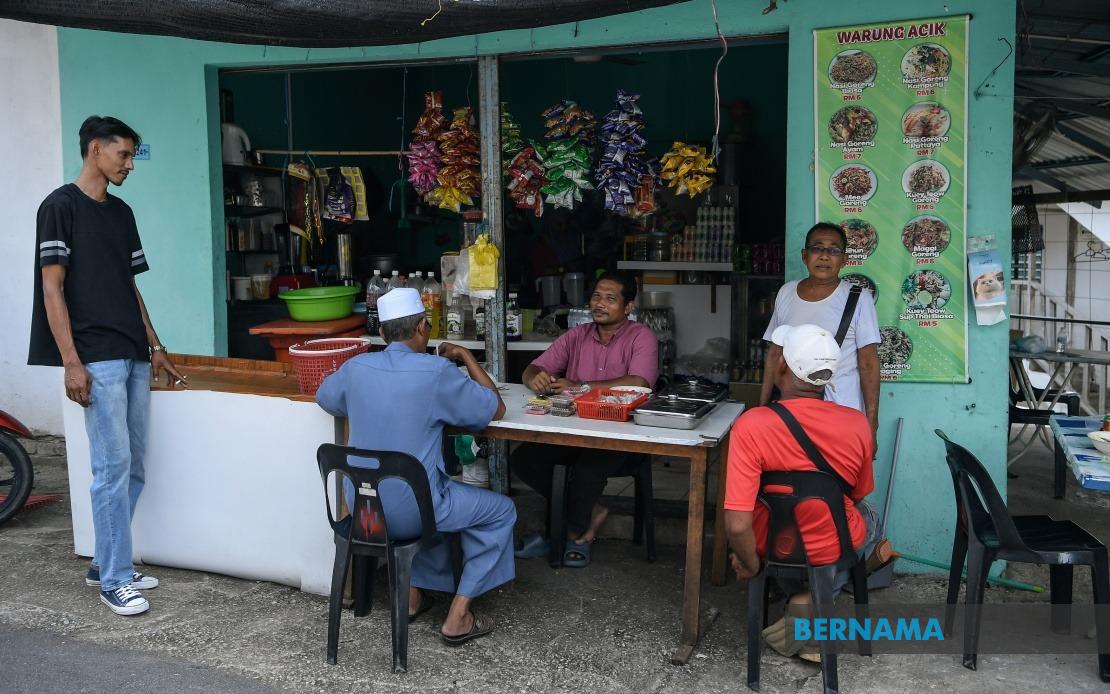
The fishing village of Bukit Malut in Langkawi is fighting back against years of damaging stereotypes and unsubstantiated claims linking it to refugee settlements from Myanmar. Community leaders and residents have grown increasingly vocal about the toll that relentless negative perceptions have taken on their neighbourhood, arguing that social media rumours and unfounded accusations have poisoned public opinion without any factual basis. The campaign to rehabilitate the area's image reflects broader tensions surrounding irregular migration in Malaysia and the way coastal communities often become lightning rods for public anxiety about border security.
According to Mohamad Fadzli Abdullah, chairman of the Bukit Malut Neighbourhood Watch, the settlement has endured decades of guilt by association. Whenever reports emerge of irregular migrants reaching Langkawi's shores, local residents find themselves automatically blamed despite having no involvement in such incidents. This pattern of scapegoating has created a cycle where the community struggles to shake off its tarnished reputation regardless of evidence. The neighbourhood watch leader emphasised that residents have become weary of defending themselves against allegations that lack any concrete foundation, yet continue to circulate freely in public discourse.
A significant part of Bukit Malut's defence against these allegations rests on geographic reality and security infrastructure. The settlement's proximity to multiple enforcement agencies—including the Malaysian Maritime Enforcement Agency, Royal Malaysian Customs Department, and Royal Malaysian Navy installations—would make it extraordinarily difficult for smuggling operations or clandestine refugee landings to occur undetected. The presence of these well-resourced security forces operating in the immediate vicinity provides substantial natural surveillance that renders the area an improbable location for the kind of covert activities attributed to it. This geographical argument undermines the practical logic of the accusations levelled against the community.
Contrary to claims that Bukit Malut operates as a restricted or dangerous zone, community leaders stress that the area welcomes visitors and remains an ordinary residential neighbourhood subject to regular police and military oversight. The notion that the public cannot freely enter the settlement or that security concerns should deter people from visiting is flatly rejected by residents as misinformation. Instead, they invite sceptics to visit in person and observe the normal, everyday life of families going about their daily routines. This openness represents an attempt to demystify the community and counter narratives constructed through rumour and social media rather than direct experience.
The demographic composition of Bukit Malut further contradicts accusations of harbouring foreign nationals. Approximately 85 percent of households are headed by fishermen who rely on daily maritime labour, while the remaining population consists of traders, vehicle rental operators, government employees, military and police personnel, and university graduates working across various professional sectors. This occupational diversity reflects a settled, economically integrated community with considerable stakes in Malaysian society. The presence of uniformed personnel and civil servants among the resident population also suggests that any large-scale irregular migrant presence would be immediately apparent to authorities living within the community itself.
The human impact of these stigmatising narratives extends into families and education. Hasanah Zakaria, a 42-year-old resident who has lived in Bukit Malut for over two decades, recounted how negative perceptions have affected her child's school experience, particularly at a boarding institution elsewhere in Langkawi. Despite such challenges, she actively encourages her child to disregard the allegations and concentrate on academic progress rather than internalise community stigma. Her testimony reveals how reputational damage extends beyond collective standing to individual psychosocial consequences, particularly for young people developing their identities within communities bearing such labels.
Abas Salam, a 62-year-old who ranks among Bukit Malut's earliest settlers in the Kampung Tanjung Lembung section, brings three decades of direct observation to bear on the refugee allegations. Throughout his residence in the area, he has never witnessed Myanmar nationals or other foreign migrants establishing settlements in the community. As one of the original developers of the neighbourhood, Abas participated in constructing homes, mosques, and Islamic schools with minimal external support during the settlement's formative years. His testimony carries particular weight because it comes from someone with intimate historical knowledge of the area's development and transformation over time.
The question of national identity carries particular resonance in Bukit Malut's dispute with public perception. Residents emphatically identify as Malaysian citizens of Kedah Malay-Muslim background, and they view suggestions that they are Rohingya or other foreign nationals as both false and deeply offensive. This conflation of the community with refugee populations represents a form of delegitimisation that questions their belonging in Malaysia itself. By explicitly asserting their citizenship status and ethnic Malaysian identity, residents are rejecting the implicit suggestion that their presence in the country requires justification or scrutiny beyond that applied to other Malaysian communities.
The broader context of these disputes involves Malaysia's ongoing challenges with irregular maritime migration and transnational security concerns. Coastal communities throughout the peninsula have faced increased scrutiny and suspicion as authorities and the public grapple with managing refugee flows and maintaining border security. Bukit Malut's situation exemplifies how anxieties about migration and security can create stigmatised communities that become repositories for public fears and conspiracy theories. The concentration of security infrastructure in the area—rather than reassuring the public—may have paradoxically reinforced speculation about clandestine activities, as the visible presence of enforcement agencies suggested to some observers that hidden problems required monitoring.
The campaign to rehabilitate Bukit Malut's image ultimately reflects a struggle for dignity and accurate representation in public discourse. Residents are not merely defending their neighbourhood against factual allegations but fighting against narratives that have taken on a life independent of evidence. Social media amplification of unfounded claims, combined with selective reporting that associates the area exclusively with migration crises, has created a distorted public perception that endures despite contrary evidence. By directly engaging media and articulating their community's actual character, residents are attempting to reclaim narrative control and insist on being represented through their own voices rather than through the filter of speculation and hearsay that has dominated external discussion.
Moving forward, the Bukit Malut case raises important questions about how communities bearing geographic proximity to security challenges can resist becoming scapegoats in broader policy debates. The residents' call for an end to stigmatisation resonates beyond their specific neighbourhood to touch on issues of community resilience, media literacy, and the responsibility of public institutions to counter misinformation actively. For Malaysian policymakers and regional observers, the Bukit Malut experience demonstrates how migration and security concerns, if not carefully managed with factual accuracy and respect for communities, can generate cycles of blame and suspicion that undermine social cohesion without advancing actual security objectives.

