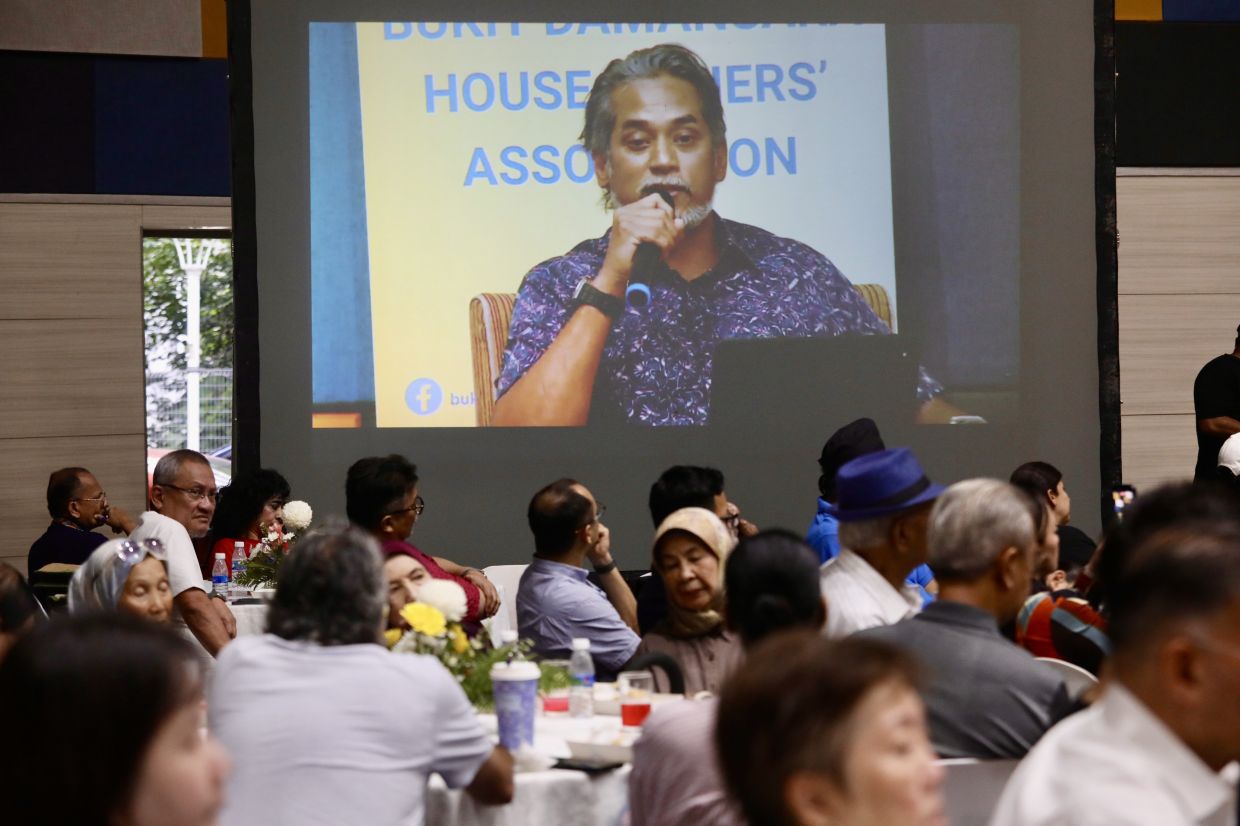
Kuala Lumpur's Bukit Damansara community has intensified pressure on Dewan Bandaraya Kuala Lumpur (DBKL) to rescind a controversial building permit for the vertical expansion of a semi-detached residence, with homeowners asserting that the municipality failed to conduct proper neighbourhood consultation before approving the project. The issue dominated a town hall gathering organised by the Bukit Damansara Home Owners' Association, drawing approximately 400 residents to the three-hour public forum themed "Your Voice Matters", which represented the first major community dialogue since Khairy Jamaluddin assumed the presidency of the association in early August.
The grievance centres on a property that originally stood as a conventional double-storey semi-detached unit in keeping with the established architectural character of the neighbourhood. City Hall granted initial approval in December 2025 for the owner to construct an additional storey, transforming the residence into a three-storey structure. The decision triggered immediate resident backlash, prompting authorities to issue a stop-work order in January 2026. However, the permit was subsequently reinstated in June, allowing construction to resume and progress to approximately 10% completion with structural pillars now in place alongside the original building.
Resident A. Zakki, who articulated the community's position during the session, emphasised that opposition stems from multiple interconnected concerns rather than mere nimbyism. Beyond the visual and aesthetic disruption to the streetscape's architectural uniformity, residents have documented tangible physical consequences: construction vibrations and structural work have generated visible cracks in immediately adjoining homes, raising legitimate worries about property integrity and long-term damage. Zakki revealed that a formal signature campaign has secured commitments from 19 neighbouring households expressing explicit opposition to the project, demonstrating substantial grassroots consensus within the immediate vicinity.
The community's demand for permit withdrawal carries particular weight given DBKL's stated commitment to participatory urban governance. Khairy moderated the dialogue while key decision-makers attended in person, including Rosli Nordin, executive director of DBKL's Planning Department, alongside Brickfields deputy police chief Supt Ahmad Firdaus Mustafia Kamal. This configuration enabled residents to directly interface with the municipal authority responsible for permit decisions, though the presence of officials did not immediately yield commitments to reverse the controversial approval. Rosli committed only that City Hall would acknowledge the documented hardships experienced by residents, a measured response that fell short of the community's explicit withdrawal demands.
The controversy reflects broader tensions within Malaysia's urban governance regarding stakeholder consultation protocols and the balance between individual property rights and collective neighbourhood integrity. The sequential issuance and revocation of the stop-work order, followed by permit reinstatement, suggests either inconsistent internal decision-making or a shift in municipal stance following the initial suspension. For residents, this administrative trajectory undermines confidence in DBKL's deliberative processes and raises questions about whether property owner appeals received disproportionate weight compared to neighbourhood objections. The permit's restoration merely two months after the halt provides insufficient time for meaningful community engagement or impact assessment.
The town hall expanded beyond the single renovation issue to encompass broader neighbourhood infrastructure challenges. Traffic congestion affecting the Bukit Damansara vicinity, particularly during school drop-off and pick-up hours between 7am–7.30am and 2pm–4pm, emerged as a secondary concern impacting both SK Bukit Damansara and Stella Maris International School Damansara. Supt Ahmad Firdaus acknowledged that traffic management is proceeding through established channels, while the school's Parent-Teacher Association chairman Ameirul Azraie Mustadza disclosed that financial constraints have prevented engagement of Rela volunteer traffic monitoring services despite earlier consideration of this option. The school has correspondingly sought police traffic enforcement support, noting that inconsistent rather than daily police presence undermines comprehensive traffic management effectiveness.
Water infrastructure emerged as a tertiary community priority during the dialogue session. Bukit Damansara residents have experienced multiple pipeline burst incidents within recent months, prompting calls for Air Selangor to undertake comprehensive inspection and systematic replacement of the aging water distribution network serving the neighbourhood. An Air Selangor representative present at the town hall acknowledged awareness of the recurring burst episodes and indicated that the company maintains plans for pipeline network modernisation throughout Bukit Damansara, though specific timelines and resource allocation remain unclear. This commitment, while acknowledging the problem, provided no concrete reassurance regarding implementation urgency or completion schedules that residents could rely upon.
Khairy framed the town hall gathering as embodying a community-centric governance philosophy designed to dissolve institutional barriers between residents and decision-making structures. He characterised the forum as "an open dialogue bridging the gap between community members and decision-makers", suggesting his role extends beyond association presidency to encompassing personal follow-up responsibility for facilitating problem resolution across the identified issues. This positioning carries implications beyond the immediate renovation dispute, implicitly committing the association leadership to sustained engagement with DBKL regarding traffic, water, and infrastructure matters affecting the broader neighbourhood. Whether these undertakings translate into substantive outcomes will significantly influence resident perception of the association's effectiveness in channelling community concerns toward municipal responsiveness.
The Bukit Damansara situation encapsulates challenges confronting Malaysian urban residential communities as municipalities balance development approval processes against established neighbourhood character preservation. The semi-detached renovation case particularly illustrates how single-property approvals can cascade across adjacent properties through structural, aesthetic, and functional externalities that transcend individual property boundaries. For Malaysian homeowners generally, the episode underscores the importance of proactive neighbourhood mobilisation and formal documentation of opposition during initial permit phases, as post-approval reversal proves substantially more difficult than preventing approval advancement. The resolution of this dispute will likely signal to other Kuala Lumpur neighbourhoods whether DBKL considers community petition campaigns and documented resident harm as sufficiently weighty factors to reconsider previously approved permits.

