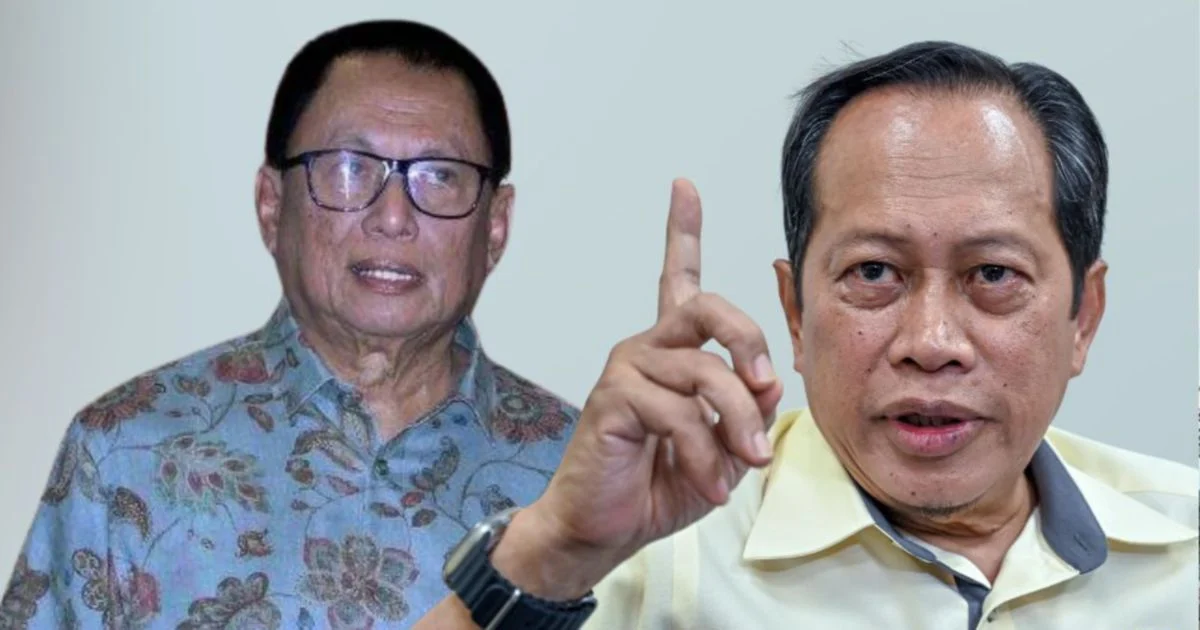
Johor UMNO's deputy chairman Datuk Seri Ahmad Maslan has delivered a cautionary message to party members aspiring to senior roles, underscoring that the development of competent leadership figures cannot be rushed or circumvented through quick-fix solutions. Speaking in Johor Baru, Maslan framed political advancement as a methodical process that demands patience and persistence rather than the sprint-like acceleration some ambitious politicians might envision for their careers.
The remarks reflect broader discussions within Malaysia's largest Malay-Muslim political party about succession planning and the gradual transition of power to younger members. UMNO has long grappled with balancing respect for senior figures with the need to inject fresh perspectives and energy into its ranks. Maslan's intervention suggests party leadership remains concerned about managing expectations among emerging politicians who may perceive themselves as ready for immediate elevation to prominent candidacies or ministerial consideration.
Central to Maslan's argument is the assertion that genuine readiness for leadership encompasses far more than ambition or perceived potential. The experience accumulated through years of grassroots engagement, committee work, and progressively demanding responsibilities forms the actual foundation upon which effective leaders are built. This accumulation of practical knowledge—understanding constituency dynamics, navigating party machinery, building coalition networks—cannot be condensed into a shorter timeline without compromising the quality and robustness of future leadership.
For Malaysian political observers, Maslan's remarks carry particular weight given UMNO's historical dominance and the party's institutional memory regarding how to cultivate capable administrators and parliamentarians. The party's dominance in national politics for nearly seven decades has been underpinned partly by its capacity to identify and develop talent across its sprawling membership. However, this same mechanism has occasionally become a source of friction when younger members feel stalled by the prevalence of older figures still occupying key positions.
The timing of these comments appears relevant to current discussions within Malaysian politics about generational transition. As senior UMNO figures edge closer to conventional retirement ages, questions intensify about whether the pipeline of successor candidates is adequately prepared. Maslan's emphasis on gradual development suggests the party hierarchy believes hasty promotions could prove counterproductive, potentially elevating candidates insufficiently grounded in party culture and strategic thinking.
From a Southeast Asian perspective, UMNO's approach to leadership succession reflects patterns visible across established political organizations throughout the region. The tension between rewarding potential and maintaining institutional standards exists in parties across Thailand, Indonesia, and the Philippines. Whether a political movement can successfully bridge this gap often determines its longevity and effectiveness in governance.
Maslan's intervention also implicitly addresses concerns about merit-based advancement within UMNO's structure. By insisting on time, experience, and demonstrated commitment as prerequisites for high office, he articulates a vision where positions are earned rather than allocated through patronage or rapid factional ascendancy. Such messaging can help maintain internal party cohesion by signalling that advancement follows comprehensible rules rather than favour.
For younger UMNO members listening to this counsel, the practical implication is clear: sustained engagement across multiple organizational levels remains the expected pathway. Building networks, demonstrating competence in assigned roles, and accumulating demonstrated understanding of policy issues and constituency management are investments that cannot be accelerated without cost. The marathon metaphor explicitly rejects the notion that political success can be achieved through short-term intensity or singular moments of visibility.
The broader Malaysian political landscape context matters here as well. With competing parties like Pakatan Harapan and various Sabah-Sarawak-based coalitions also developing their own leadership benches, UMNO faces implicit pressure to ensure its succession planning doesn't lag. Simultaneously, the party must retain experienced members whose institutional knowledge and networks remain valuable. Maslan's formulation—patience combined with serious preparation—attempts to square this circle by suggesting that proper development creates leaders more durable and capable than those promoted prematurely.
Within UMNO's organizational structure, the deputy chairman's reminders also carry internal political significance. Such statements often signal the thinking of party leadership regarding criteria for advancement and party discipline. Members contemplating their own trajectories receive guidance about expected timelines and required accomplishments. This reduces ambiguity and potentially mitigates disappointment when rapid promotions don't materialize.
For Malaysian voters assessing their political options, comments like Maslan's provide insight into how major parties conceptualize leadership development. A party consciously investing in systematic preparation of future figures suggests institutional thinking oriented toward continuity and competence. This contrasts with organizational patterns emphasizing quick wins or personality-driven advancement.
Moving forward, the effectiveness of UMNO's approached to leadership development will become increasingly visible as key positions transition hands in coming years. Maslan's emphasis on methodical preparation sets the rhetorical framework within which these transitions will be evaluated. Whether the party successfully produces capable, experienced leaders through this deliberate process, or whether controlled advancement stifles necessary innovation and energy, will shape UMNO's competitive position in Malaysian politics for the next political generation.

