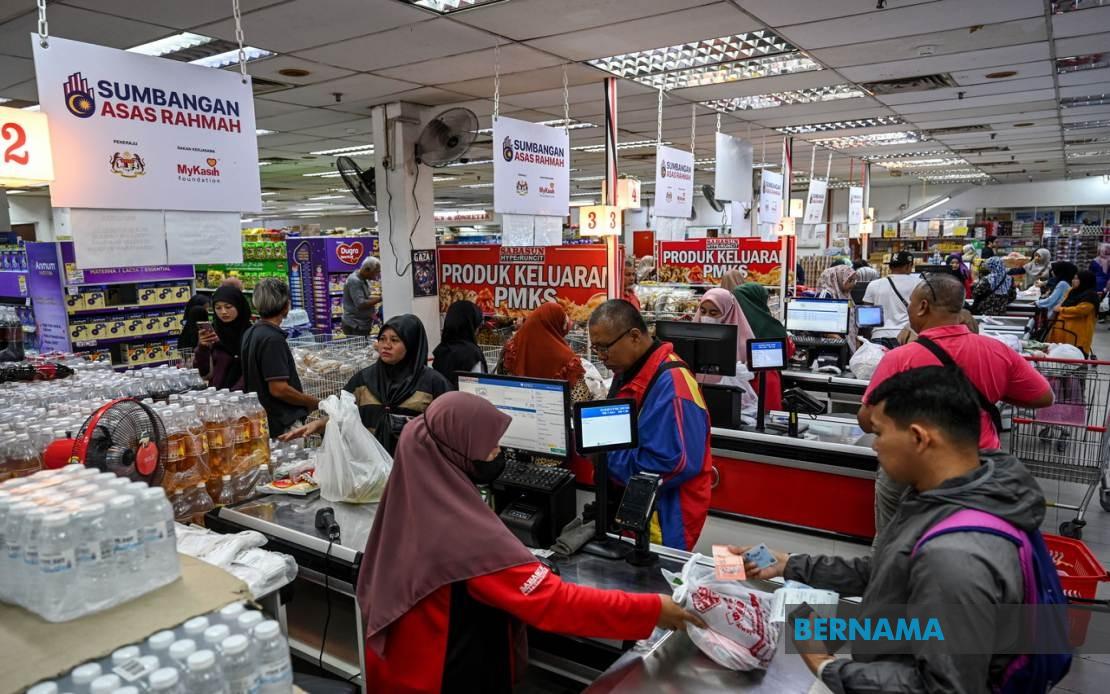
Prime Minister Datuk Seri Anwar Ibrahim has signalled that the MADANI Government is actively examining whether to enhance financial support under its two flagship cash assistance programmes, the Sumbangan Tunai Rahmah (STR) and Sumbangan Asas Rahmah (SARA), should economic conditions allow such expansion. Speaking at an event in Ipoh on July 19, Anwar indicated that any decision to raise benefit levels would form part of deliberations for the forthcoming federal budget.
The possibility of boosting these assistance schemes reflects the government's ongoing commitment to cushioning lower-income households against cost-of-living pressures, a priority that has remained central to MADANI's policy agenda since taking office. These two programmes have become cornerstones of the administration's social safety net, directly reaching millions of Malaysians through periodic cash transfers designed to provide relief during economic uncertainty. The fact that enhancement is being seriously contemplated signals confidence among policymakers that fiscal space may exist to expand support, though officials remain cautious about making firm commitments until economic indicators are finalised.
According to Anwar, the discussion regarding potential increases to STR and SARA assistance took place with Treasury Secretary-General Tan Sri Johan Mahmood Merican, underscoring the formal nature of these considerations within Malaysia's budgetary planning process. Rather than a casual suggestion, this dialogue between the Prime Minister and the country's chief financial administrator indicates structured evaluation of expansion possibilities. The involvement of senior treasury officials means that any proposals would be rigorously tested against revenue projections, fiscal sustainability concerns, and competing spending demands across various ministries and programmes.
Addressing recipients of STR and SARA directly during the event, Anwar conveyed a conditional message of hope while maintaining transparency about the economic prerequisites for increased allocations. His statement that "if the economy allows, we discussed whether it would be possible to increase the assistance further" demonstrates an acknowledgment that Malaysia's fiscal capacity remains dependent on broader macroeconomic performance, including factors such as export earnings, tax revenues, and global commodity price movements. This qualified language avoids overpromising to voters whilst demonstrating administrative attentiveness to their financial circumstances, a delicate political balance for any government navigating tighter budgets.
For Malaysian households dependent on these cash transfers, the signal carries both tangible and psychological weight. STR and SARA have provided predictable injections of liquidity for recipients, with the schemes typically delivering funds on a quarterly or semi-annual basis. Even modest increases to per-recipient or per-household amounts can meaningfully affect household purchasing power and ability to manage essential expenses such as food, utilities, and transportation. An expansion would represent a direct validation of beneficiary advocacy and reflect government responsiveness to real economic pressures that ordinary Malaysians continue to face amid inflation concerns and wage stagnation in certain sectors.
Beyond the cash assistance schemes, Anwar also used the Ipoh gathering to address the welfare and recognition of volunteer security personnel, particularly members of RELA, the Malaysian Volunteer Corps Department. The Prime Minister acknowledged that those serving in security and disaster response roles perform essential duties that protect public safety and community resilience. This attention to volunteer welfare, he indicated, would be reflected in dedicated budget allocations, with the government committing RM3 million for RELA member welfare this year, matching the previous year's provision.
However, Anwar's remark that RM3 million "is certainly not enough" carries important implications for RELA operations and volunteer morale. By publicly acknowledging the inadequacy of current funding levels, the PM signalled both appreciation for volunteer contributions and frustration with resource constraints. This statement could prompt internal Treasury discussions about whether escalating volunteer support merits higher priority in upcoming budget deliberations, particularly given RELA's visible role during natural disasters, security emergencies, and community policing initiatives throughout Malaysia.
The government's dual focus—on direct assistance to low-income civilians through STR and SARA alongside support for volunteer security personnel through RELA—reflects an integrated social welfare philosophy. Rather than viewing these categories as separate spending priorities, the MADANI administration appears to treat them as complementary elements of social cohesion: protecting household financial stability while investing in the volunteer infrastructure that safeguards communities. This approach recognises that citizen security and citizen welfare are mutually reinforcing objectives.
From a Southeast Asian perspective, Malaysia's experience with broad-based cash assistance schemes offers relevant lessons. Countries across the region grapple with similar challenges of balancing welfare expenditure against fiscal consolidation, particularly as global interest rates remain elevated and remittance flows face headwinds. The Malaysian government's deliberative process—carefully evaluating economic conditions before expanding programmes—differs from some neighbouring approaches that have rapidly expanded transfers with less formal fiscal assessment. Whether Malaysia's cautious pragmatism proves more sustainable than more ambitious neighbouring models will become apparent over the medium term.
The timeline for final budget decisions remains uncertain, though Anwar's comments suggest that concrete proposals regarding STR and SARA increases will feature prominently in budget formulation discussions over coming weeks. Treasury officials will need to model various expansion scenarios against revenue forecasts and determine which adjustments to assistance levels remain fiscally prudent. Recipients and advocacy groups tracking government welfare policy will scrutinise the forthcoming budget announcement closely to assess whether these preliminary discussions translate into actual benefit enhancements or remain aspirational statements.
Ultimately, the decision to proceed with STR and SARA increases will depend on several interconnected economic factors: performance of Malaysia's export sector, particularly palm oil and semiconductor markets; tourism recovery trends; foreign direct investment inflows; and the trajectory of domestic consumption patterns. Should these indicators strengthen during the remainder of 2024, policymakers would possess greater latitude to implement the increases Anwar has flagged. Conversely, external shocks or domestic economic softness could force abandonment of expansion plans, necessitating alternative approaches to welfare delivery. For now, the Prime Minister's measured optimism reflects realistic political communication: acknowledging public aspirations for enhanced support whilst grounding expectations in economic realities.

