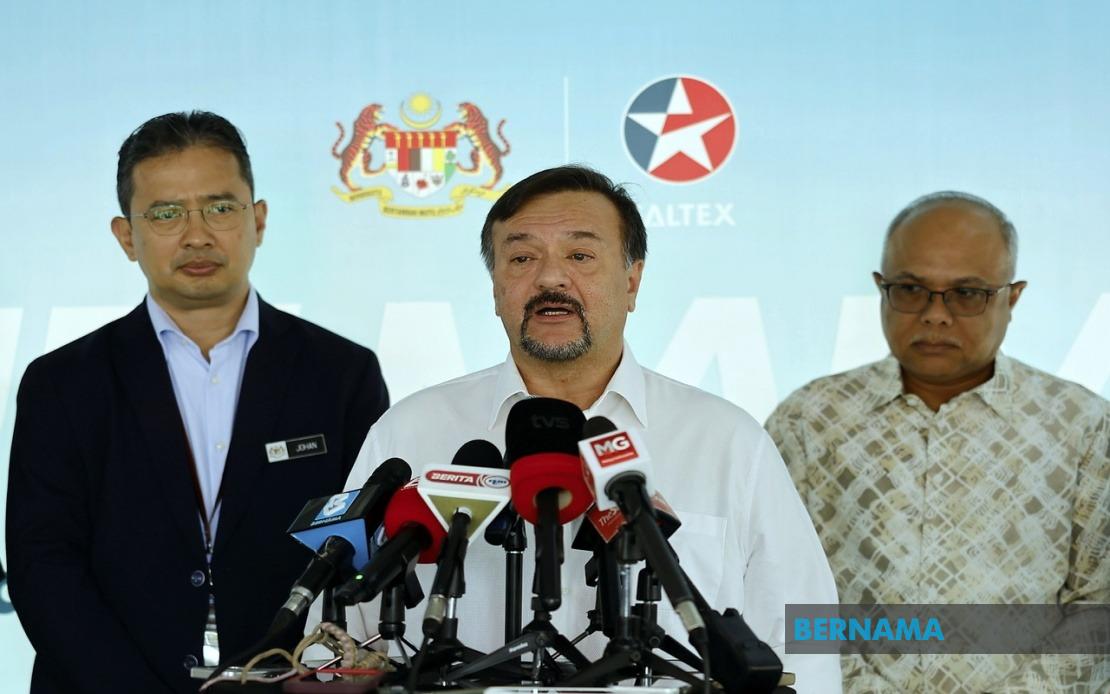
The Malaysian government has officially launched its nationwide consultation process for the 2027 Budget, with Finance Minister II Datuk Seri Amir Hamzah Azizan confirming that the Finance Ministry and partner agencies are actively gathering input across the country. The comprehensive engagement programme precedes the budget's scheduled presentation to Parliament this October, signalling the government's intention to ensure broad stakeholder participation in the budget formulation process.
Amir Hamzah, speaking after attending an event in Putrajaya, stressed that the government is adopting a deliberate and measured approach to budget construction. This methodology reflects the administration's commitment to maintaining consistency between fiscal policy and the nation's overarching economic and development objectives. By conducting widespread consultations before finalising budget allocations, policymakers aim to incorporate diverse perspectives from ministries, agencies, and regional bodies into the final document.
The 2027 Budget framework is anchored firmly in the MADANI Economy initiative, which represents the government's flagship approach to economic development. At its conceptual core, this framework emphasises a dual-track strategy designed to strengthen economic dynamism across all levels of society. The "ceiling" objective focuses on enhancing Malaysia's competitive positioning and innovation capacity, particularly in high-value sectors, while the "floor" dimension prioritises expanding economic opportunities and safety nets for lower-income households and underserved communities.
This dual-focus approach reflects the government's recognition that sustainable development requires both stimulating growth at the top tier of the economy and ensuring that disadvantaged segments can participate meaningfully in economic expansion. By simultaneously pursuing competitiveness improvements and inclusive growth measures, policymakers attempt to chart a path toward broader-based prosperity rather than growth concentrated in specific sectors or income brackets.
Several recently unveiled national strategies are shaping the budgetary direction alongside the MADANI framework. The 13th Malaysia Plan provides a medium-term development roadmap, while the National Semiconductor Strategy positions Malaysia within the global semiconductor supply chain at a moment of geopolitical and technological shift. The National Energy Transition Roadmap addresses the imperative to shift toward renewable and cleaner energy sources while managing economic implications for existing energy sectors and workers. These complementary policy initiatives create an integrated framework within which the 2027 Budget must operate.
Amir Hamzah refrained from disclosing specific budget priorities or allocations during his remarks, emphasising that detailed proposals should not be pre-empted ahead of the formal parliamentary presentation. However, he reiterated the government's unwavering commitment to maintaining policy consistency and pursuing Malaysia's stated objective of attaining developed-nation status by 2030. This aspiration, while ambitious, provides a unifying long-term target against which 2027 spending decisions can be evaluated.
For perspective, the previous budget cycle provides a baseline for understanding fiscal scale and structure. Budget 2026, which totalled RM419.2 billion, allocated RM338.2 billion to operating expenditure and RM81 billion to development spending. Additionally, the government optimised RM50.8 billion in investments channelled through government-linked investment companies, Federal statutory bodies, and public-private partnerships to amplify the reach and effectiveness of government initiatives. The 2027 Budget will likely operate within a comparable framework, though exact figures remain subject to finalisation through the ongoing consultation process.
The phased approach to budget development allows line ministries and stakeholders to articulate priorities and constraints before allocation decisions are locked in. This consultative methodology enables officials to identify potential synergies between different policy objectives and to anticipate implementation challenges that might emerge during budget execution. For Malaysian observers, the emphasis on structured engagement suggests an intention to avoid reactive policymaking and instead align spending with clearly articulated strategic priorities.
The timing of these consultations is significant within Malaysia's political and economic calendar. With parliamentary presentation scheduled for October, the government is maintaining a timeline that allows adequate debate and scrutiny before the fiscal year begins. This procedural regularity contrasts with periods of political uncertainty and provides a measure of predictability to businesses and investors seeking to anticipate government policy direction.
For the broader Southeast Asian context, Malaysia's budget consultation process reflects regional trends toward integrating climate goals, technological competitiveness, and inclusive growth into fiscal planning. The emphasis on energy transition and semiconductor strategy aligns Malaysia with regional and global imperatives around decarbonisation and technology self-sufficiency. Neighbouring countries pursuing similar policy objectives may observe how Malaysia operationalises these competing priorities within a single budget framework.
The consultation process also provides an opportunity for the Finance Ministry to recalibrate spending in response to evolving economic conditions. Inflationary pressures, labour market developments, and regional trade dynamics may have shifted since the previous budget cycle, necessitating adjustments to sector-specific allocations and revenue projections. Input gathered during these sessions will help officials distinguish between structural changes requiring permanent budgetary adjustments and cyclical variations that might be addressed through flexibility within existing allocations.
Stakeholders including industry associations, civil society organisations, and state governments will likely use the consultation window to advocate for priorities relevant to their constituencies. The inclusivity of the process may enhance the legitimacy of the final budget and reduce post-presentation controversies about fairness or oversight. However, the government will ultimately need to balance competing demands within a finite fiscal envelope, necessitating difficult prioritisation decisions in sectors ranging from defence and infrastructure to education and health.

