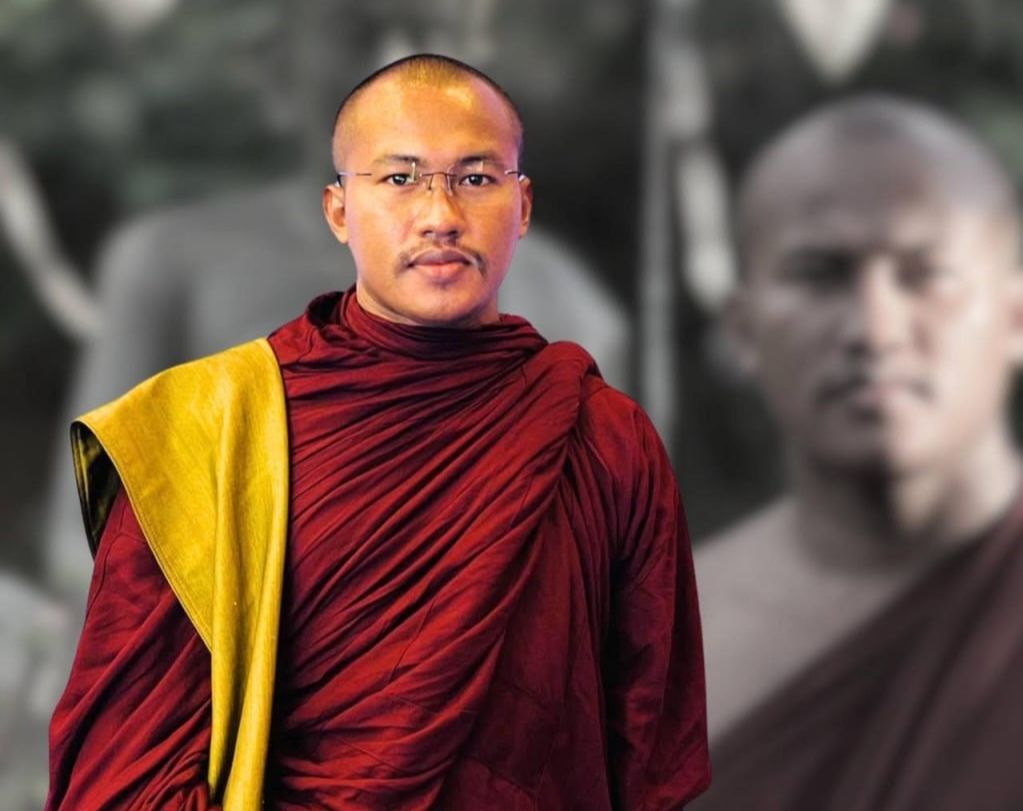
A broad coalition of 50 civil society organisations, labour unions and grassroots groups in Cambodia has formally demanded the immediate release of Chea Vuthy, a 27-year-old former Buddhist monk and citizen journalist, following his conviction and sentencing to 18 months in prison by the Phnom Penh Municipal Court on August 19. The case has ignited significant concern among rights advocates and media watchdogs, who contend that prosecuting an individual for private online communications represents a troubling escalation in restrictions on freedom of expression within the kingdom.
Vuthy's offence stemmed from a comment he made in August 2025 within a private Messenger group comprising approximately 20 people. The remark addressed issues surrounding provincial territories and the treatment of persons displaced by fighting, situated within the broader context of the Cambodia-Thailand border dispute. Notably, Vuthy acknowledged making the statement within the closed group but maintained that he never published the message publicly. The court, however, convicted him under Articles 494 and 495 of Cambodia's Criminal Code, finding him guilty of incitement, and imposed an additional fine of two million riel, equivalent to roughly $500. The private Messenger message itself constituted the sole evidence presented by prosecutors to substantiate the charges.
The joint statement, released on August 20 under the auspices of the Cambodian League for the Promotion and Defense of Human Rights (LICADHO), articulated the coalition's profound reservations about both the verdict and its implications for fundamental freedoms. The organisations emphasised that a communication confined to such a small, closed group—one without public visibility or broader dissemination—cannot reasonably satisfy the legal threshold necessary to justify criminal prosecution, much less a substantial custodial sentence. This reasoning directly challenges Cambodia's application of incitement statutes to private, non-public discourse, marking a significant battleground in the nation's treatment of speech rights.
The signatories grounded their objections in international human rights frameworks to which Cambodia has voluntarily committed itself. They referenced Article 19 of the International Covenant on Civil and Political Rights, which Cambodia has ratified, noting that while legitimate restrictions on expression may be imposed to protect national security, public order, or the rights of others, any such limitations must be prescribed by law, pursue a legitimate objective, and satisfy tests of necessity and proportionality. By this standard, the coalitions argued, Vuthy's sentence fails the proportionality examination. A private message shared with two dozen individuals over a messaging platform does not present the kind of imminent threat to national security or public order that would justify removal of liberty, the groups contended.
The case occurs within a troubling pattern of speech-related prosecutions linked to the long-standing territorial dispute between Cambodia and Thailand. LICADHO has documented numerous instances in which Cambodian citizens and officials have faced criminal charges or convictions following social media posts commenting on the border conflict. In May, a chef received an identical 18-month sentence for incitement-related statements on social media, while in June, a deputy school director was sentenced to two years in prison for comparable conduct. These parallel prosecutions suggest a systematic approach by authorities to suppress commentary on the border issue, raising concerns that the criminal justice system may be serving as an instrument to restrict public discourse on matters of national significance.
Vuthy's arrest occurred in April at Wat Por Veal pagoda in Battambang province, where he was residing as a monk. Provincial police acting in plainclothes took him into custody, and he was subsequently defrocked and placed into pretrial detention. He currently languishes at Phnom Penh's Police Judicial Prison (PJ), where he awaits the outcome of his appeal. An appeal court in the Cambodian capital had previously denied his request for bail in June, foreclosing a potential pathway to temporary liberty pending trial. His attorney, Em Chantha, has signalled an intention to pursue an appeal, arguing that the evidentiary foundation against his client remained insufficient and that private Messenger communications do not meet the legal standard for incitement.
Before his arrest, Vuthy had established a modest but visible presence as a commentator on environmental matters, deforestation, and human rights abuses. His work as a citizen journalist brought attention to issues that often receive insufficient coverage in mainstream Cambodian media. This professional focus on accountability and environmental stewardship appears to have made him a target for prosecution, particularly once his commentary touched on the sensitive border question. The selection of charges and the severity of the sentence therefore suggest that Vuthy's vulnerability derived not merely from the content of a single private message but from his broader pattern of critical documentation and commentary.
The coalition of signatories represents an unusually comprehensive gathering of Cambodia's civil society infrastructure. Endorsers included LICADHO, the Cambodian Center for Human Rights (CCHR), the Cambodian Human Rights and Development Association (ADHOC), and the Cambodian Center for Independent Media (CCIM), alongside media organisations such as the Cambodian Journalists Alliance Association (CamboJA) and the Overseas Press Club of Cambodia (OPCC). Labour and economic justice groups, including the Center for Alliance of Labor and Human Rights (CENTRAL), joined with electoral monitors and grassroots networks such as the Prey Lang Community Network, creating a broad coalition spanning human rights, media freedom, labour, and environmental constituencies. This diversity of signatories underscores the perceived gravity of the case across disparate sectors of Cambodian civil society.
The Cambodian government has responded with measured disavowal of responsibility. Tep Asnarith, the spokesperson for the Ministry of Information, stated that the executive branch does not intervene in judicial determinations and that courts exercise independent authority in their rulings and procedures. Asnarith asserted that Vuthy retains the right to legal representation and to pursue appellate remedies. However, he also urged civil society organisations to evaluate such cases with balance and factual precision, implicitly suggesting that the coalition's statement lacked sufficient rigor in its assessment. This posture allows the government to maintain a veneer of non-interference whilst offering implicit support for the judicial outcome.
For Malaysia and the broader Southeast Asian region, the Vuthy case illuminates ongoing tensions between state security imperatives and fundamental freedoms within ASEAN-member democracies. Cambodia's willingness to prosecute private online speech, particularly when touching on sensitive geopolitical issues such as border disputes, signals a broader regional trend toward restrictive approaches to digital communication. Malaysian policymakers and civil society observers should note the pattern of prosecution, the severity of sentencing, and the systematic targeting of commentary on the Cambodia-Thailand border as cautionary indicators of how incitement statutes can migrate from legitimate protective functions toward instruments of speech suppression. The case also demonstrates the critical role that transnational civil society networks, such as LICADHO and regional human rights mechanisms, must play in documenting and opposing such practices.
The appeal process will prove decisive in determining whether Cambodian jurisprudence evolves toward greater recognition of distinctions between private and public speech, or whether the incitement doctrine becomes increasingly weaponised against critics and commentators. International observers and ASEAN human rights bodies will be monitoring the outcome closely, as will Malaysian advocates concerned with protecting expressive freedoms within the region. The coalition's forceful joint statement signals that Cambodia's civil society, despite considerable operating constraints, retains capacity to mobilise in defence of fundamental principles—a resilience that may prove essential if judicial outcomes begin to trend further toward restriction.

